Rupprecht Anne, Sittner Dana, Smorodchenko Alina, Hilse Karolina E, Goyn Justus, Moldzio Rudolf, Seiler Andrea E M, Bräuer Anja U, Pohl Elena E
Institute of Physiology, Pathophysiology and Biophysics, University of Veterinary Medicine, Vienna, Austria ; Institute of Cell Biology and Neurobiology, Charité - Universitätsmedizin, Berlin, Germany.
Institute of Cell Biology and Neurobiology, Charité - Universitätsmedizin, Berlin, Germany ; Department of Experimental Toxicology and ZEBET, German Federal Institute for Risk Assessment (BfR), Berlin, Germany.
PLoS One. 2014 Feb 11;9(2):e88474. doi: 10.1371/journal.pone.0088474. eCollection 2014.
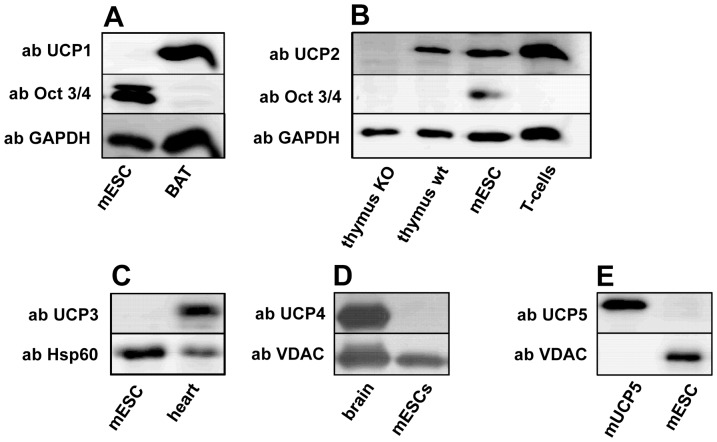
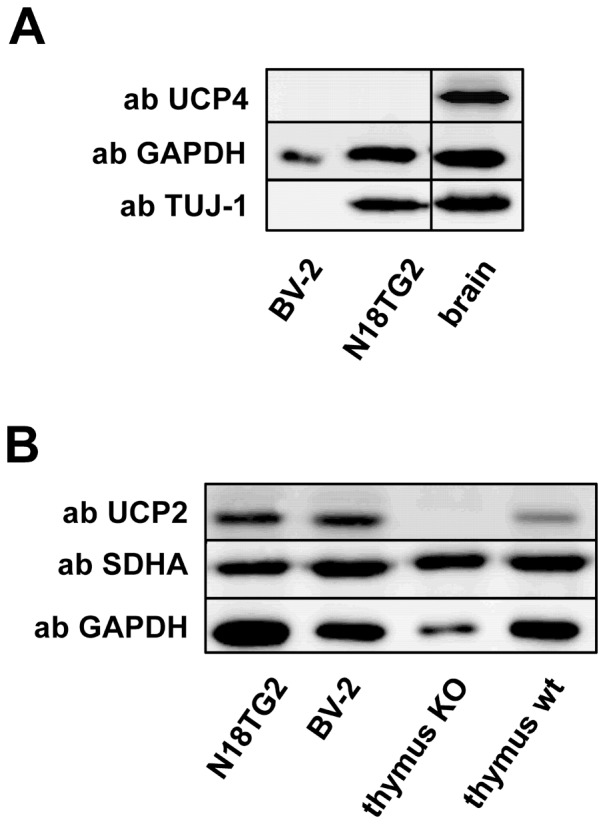
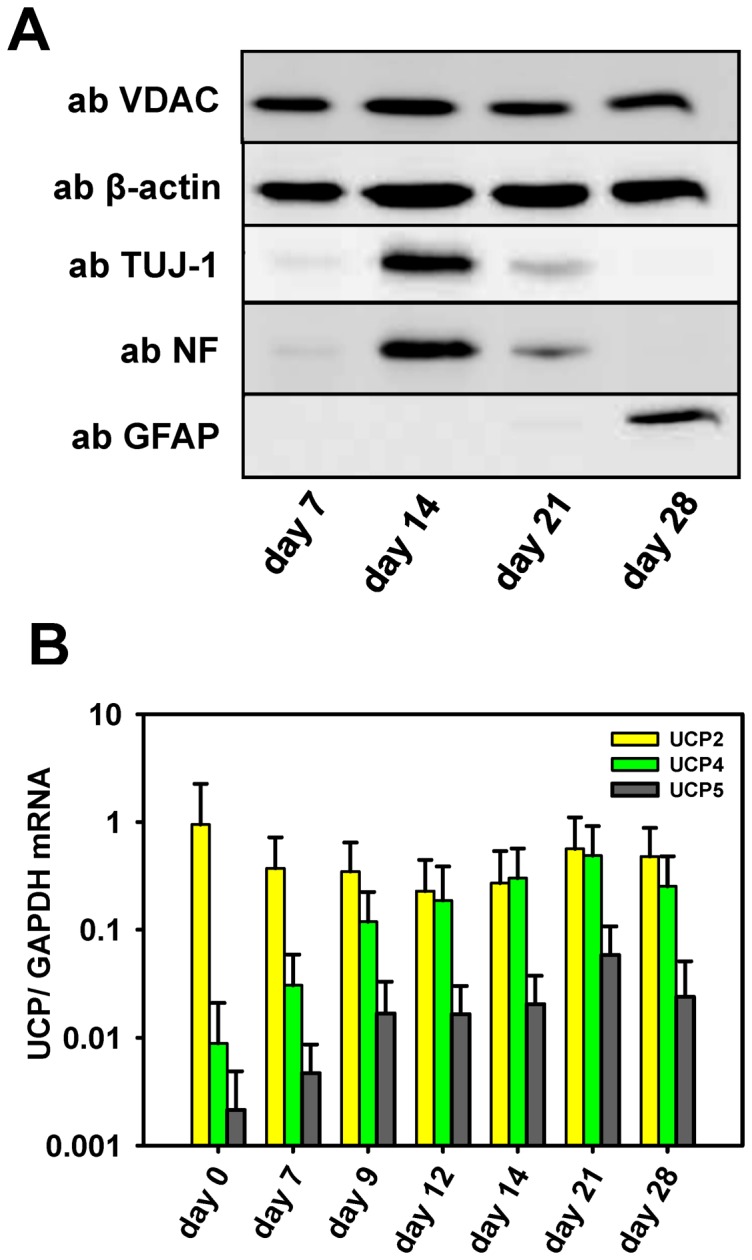
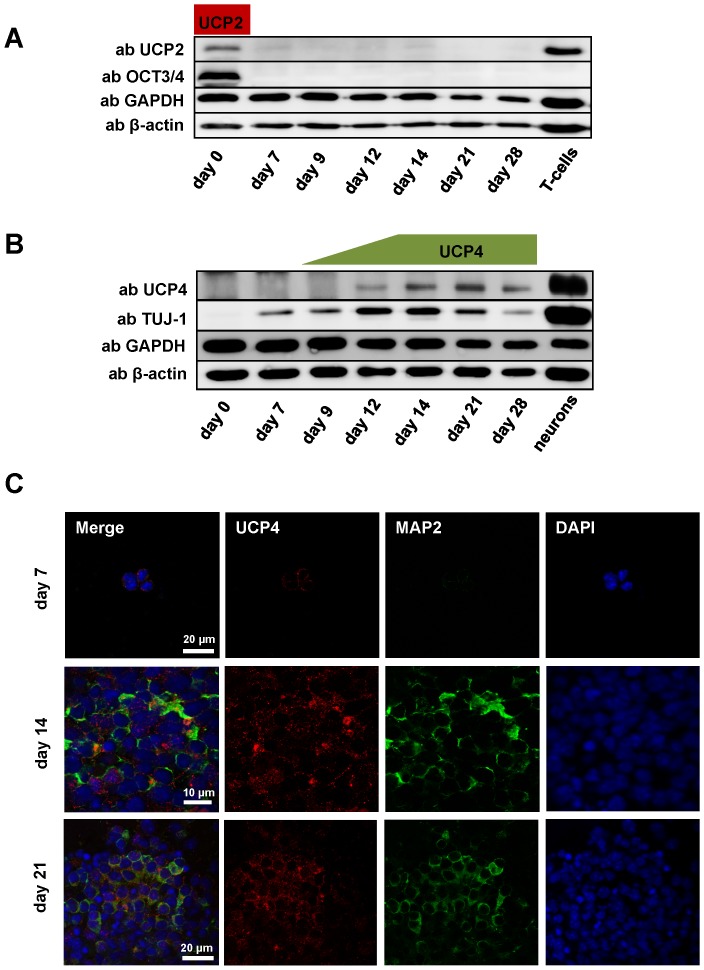
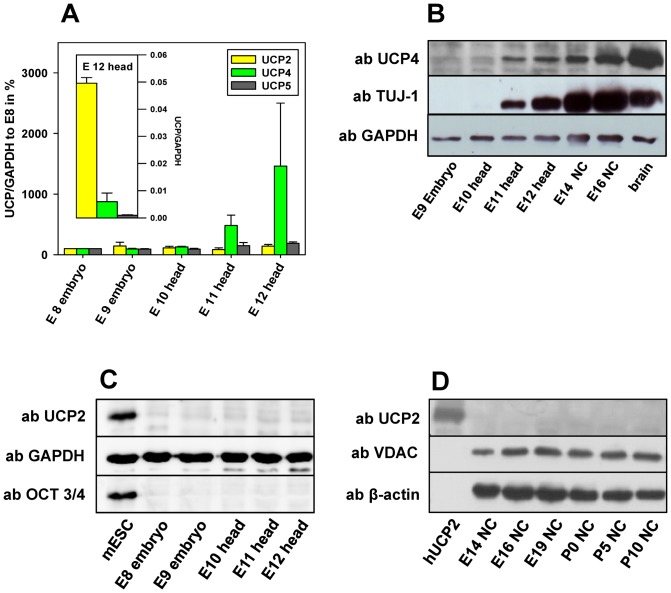
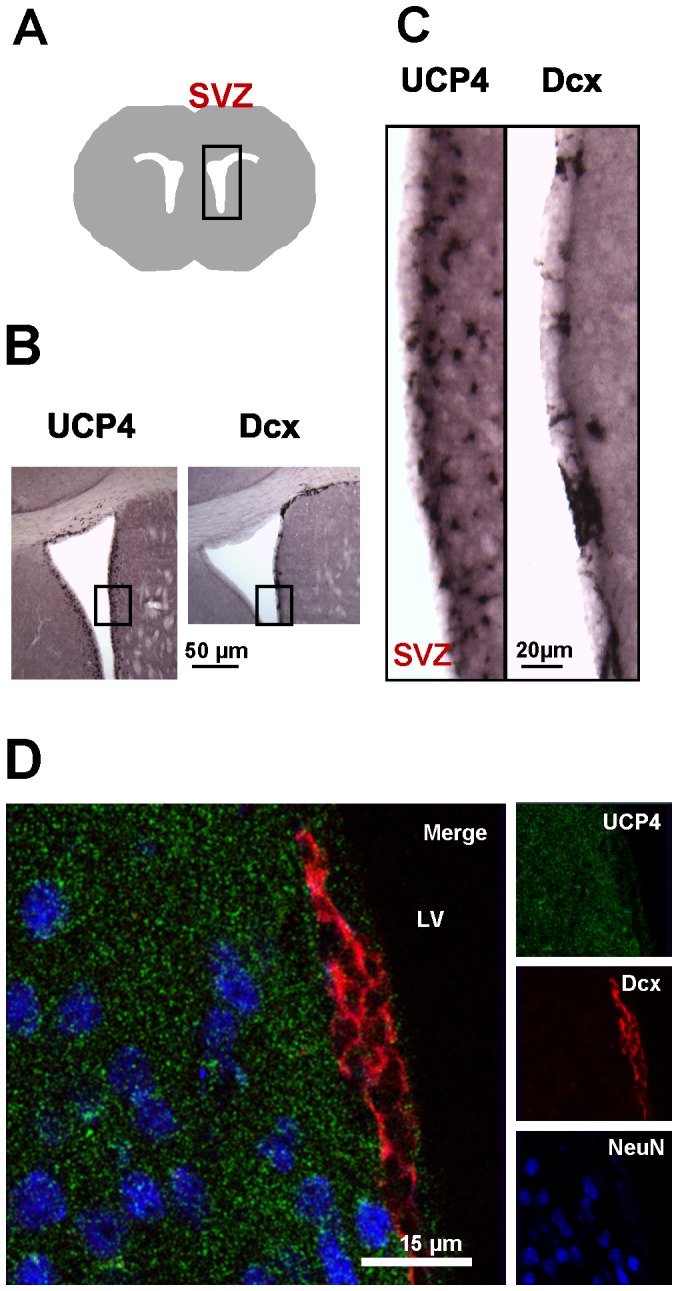
Apart from the first family member, uncoupling protein 1 (UCP1), the functions of other UCPs (UCP2-UCP5) are still unknown. In analyzing our own results and those previously published by others, we have assumed that UCP's cellular expression pattern coincides with a specific cell metabolism and changes if the latter is altered. To verify this hypothesis, we analyzed the expression of UCP1-5 in mouse embryonic stem cells before and after their differentiation to neurons. We have shown that only UCP2 is present in undifferentiated stem cells and it disappears simultaneously with the initiation of neuronal differentiation. In contrast, UCP4 is simultaneously up-regulated together with typical neuronal marker proteins TUJ-1 and NeuN during mESC differentiation in vitro as well as during murine brain development in vivo. Notably, several tested cell lines express UCP2, but not UCP4. In line with this finding, neuroblastoma cells that display metabolic features of tumor cells express UCP2, but not UCP4. UCP2's occurrence in cancer, immunological and stem cells indicates that UCP2 is present in cells with highly proliferative potential, which have a glycolytic type of metabolism as a common feature, whereas UCP4 is strongly associated with non-proliferative highly differentiated neuronal cells.
除了首个被发现的家族成员解偶联蛋白1(UCP1)外,其他UCP(UCP2 - UCP5)的功能仍不清楚。在分析我们自己的研究结果以及他人之前发表的结果时,我们假设UCP的细胞表达模式与特定的细胞代谢相吻合,并且如果后者发生改变,UCP的表达模式也会随之改变。为了验证这一假设,我们分析了小鼠胚胎干细胞在分化为神经元前后UCP1 - 5的表达情况。我们发现,未分化的干细胞中仅存在UCP2,并且它在神经元分化开始时同时消失。相反,在体外小鼠胚胎干细胞分化过程以及体内小鼠大脑发育过程中,UCP4与典型的神经元标记蛋白TUJ - 1和NeuN同时上调。值得注意的是,几个经过测试的细胞系表达UCP2,但不表达UCP4。与此发现一致,具有肿瘤细胞代谢特征的神经母细胞瘤细胞表达UCP2,但不表达UCP4。UCP2在癌症、免疫细胞和干细胞中的存在表明,UCP2存在于具有高增殖潜能的细胞中,这些细胞具有糖酵解型代谢这一共同特征,而UCP4则与非增殖性的高度分化神经元细胞密切相关。