Center for Metabolic Disease Research (CMDR).
Cardiovascular Research Institute (CVRC), and.
JCI Insight. 2022 Aug 8;7(15):e155475. doi: 10.1172/jci.insight.155475.
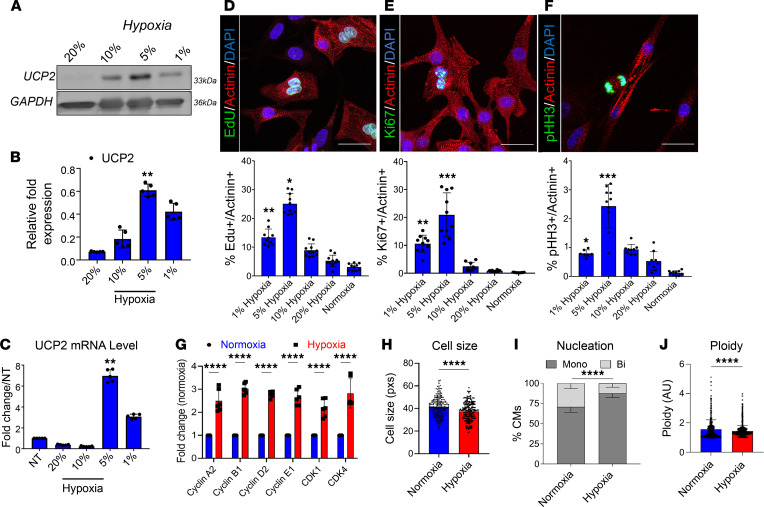
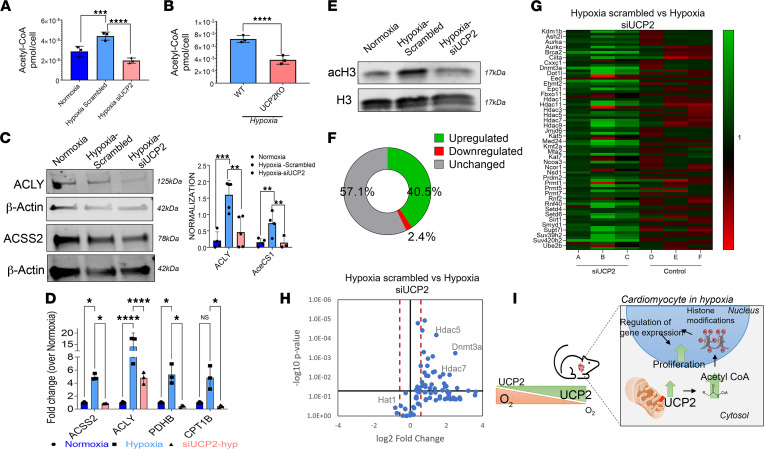
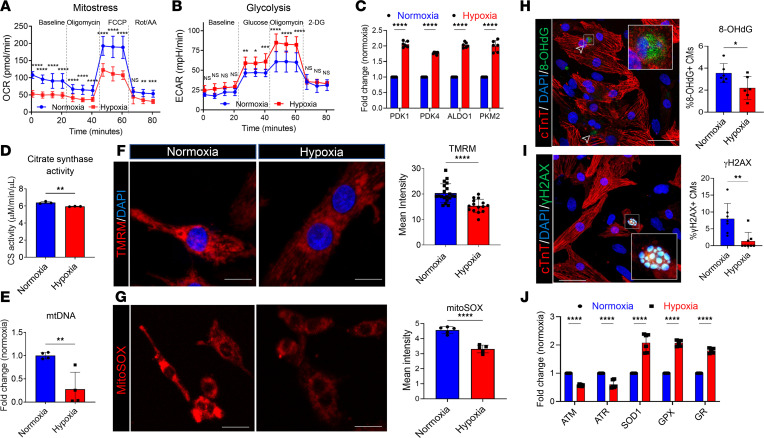
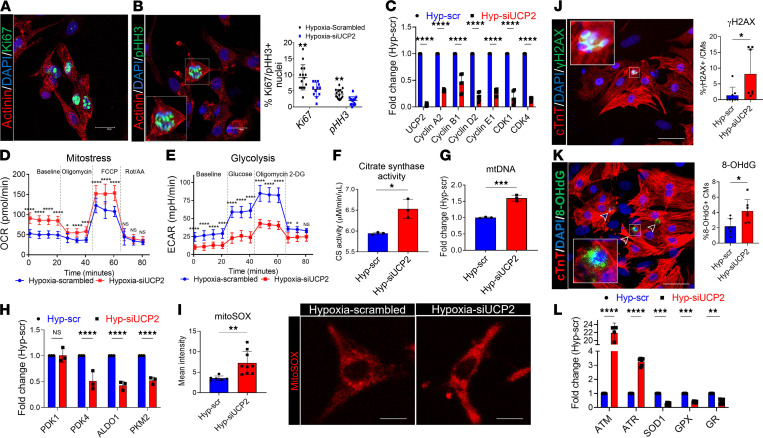
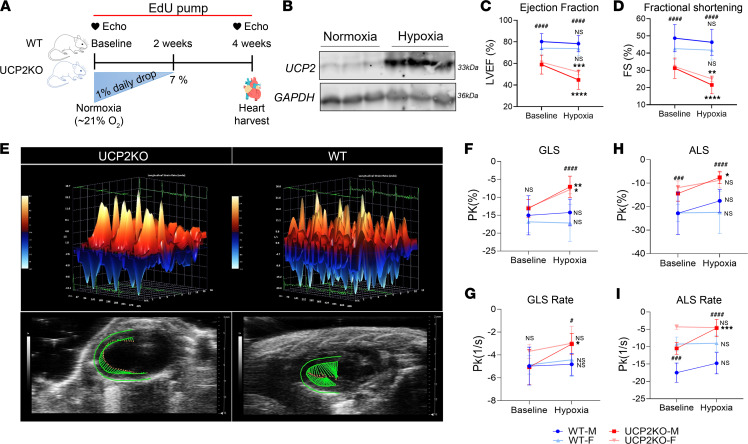
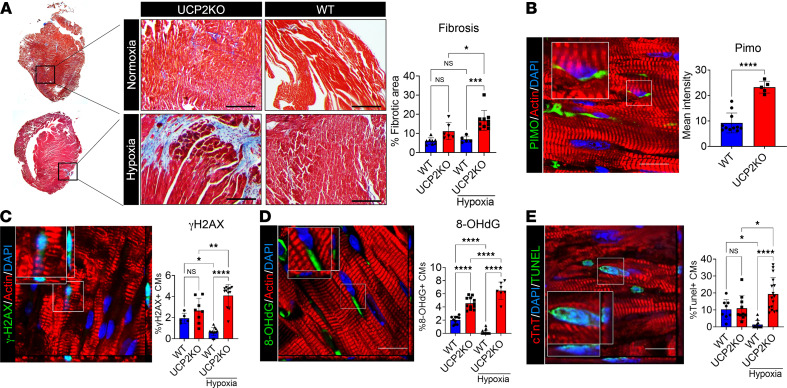
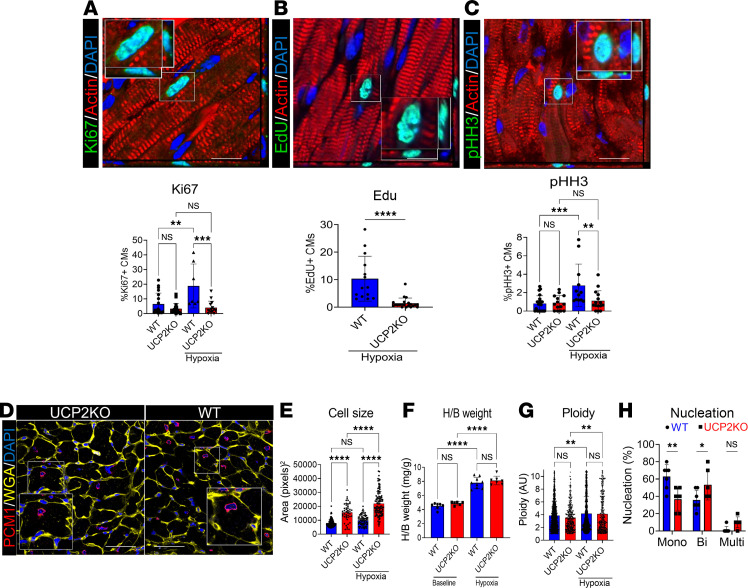
Developmental cardiac tissue is regenerative while operating under low oxygen. After birth, ambient oxygen is associated with cardiomyocyte cell cycle exit and regeneration. Likewise, cardiac metabolism undergoes a shift with cardiac maturation. Whether there are common regulators of cardiomyocyte cell cycle linking metabolism to oxygen tension remains unknown. The objective of the study is to determine whether mitochondrial UCP2 is a metabolic oxygen sensor regulating cardiomyocyte cell cycle. Neonatal rat ventricular myocytes (NRVMs) under moderate hypoxia showed increased cell cycle activity and UCP2 expression. NRVMs exhibited a metabolic shift toward glycolysis, reducing citrate synthase, mtDNA, mitochondrial membrane potential (ΔΨm), and DNA damage/oxidative stress, while loss of UCP2 reversed this phenotype. Next, WT and mice from a global UCP2-KO mouse line (UCP2KO) kept under hypoxia for 4 weeks showed significant decline in cardiac function that was more pronounced in UCP2KO animals. Cardiomyocyte cell cycle activity was reduced, while fibrosis and DNA damage was significantly increased in UCP2KO animals compared with WT under hypoxia. Mechanistically, UCP2 increased acetyl-CoA levels and histone acetylation, and it altered chromatin modifiers linking metabolism to cardiomyocyte cell cycle under hypoxia. Here, we show a potentially novel role for mitochondrial UCP2 as an oxygen sensor regulating cardiomyocyte cell cycle activity, acetyl-CoA levels, and histone acetylation in response to moderate hypoxia.
发育中的心脏组织在低氧条件下具有再生能力。出生后,周围环境中的氧气会导致心肌细胞退出细胞周期并停止增殖。同样,心脏代谢也会随着心脏成熟而发生转变。目前尚不清楚是否存在调节心肌细胞细胞周期的共同代谢因子,将代谢与氧张力联系起来。本研究旨在确定线粒体 UCP2 是否为调节心肌细胞细胞周期的代谢性氧传感器。在适度低氧条件下培养的新生大鼠心室肌细胞(NRVMs)显示出细胞周期活性增加和 UCP2 表达增加。NRVMs 表现出向糖酵解代谢的转变,降低柠檬酸合酶、mtDNA、线粒体膜电位(ΔΨm)和 DNA 损伤/氧化应激,而 UCP2 的缺失逆转了这种表型。接下来,WT 和来自全球 UCP2-KO 小鼠系(UCP2KO)的小鼠在低氧环境下饲养 4 周后,心脏功能明显下降,在 UCP2KO 动物中更为明显。与 WT 相比,UCP2KO 动物在低氧条件下心肌细胞的细胞周期活性降低,而纤维化和 DNA 损伤明显增加。从机制上讲,UCP2 增加了乙酰辅酶 A 水平和组蛋白乙酰化,并改变了连接代谢和心肌细胞细胞周期的染色质修饰物,从而在低氧条件下发挥作用。本研究表明,线粒体 UCP2 作为一种氧传感器,可能具有调节心肌细胞细胞周期活性、乙酰辅酶 A 水平和组蛋白乙酰化的新作用,以应对适度低氧。