Pérez-Muñuzuri Alejandro, Couce-Pico Maria Luz, Baña-Souto Ana, López-Suárez Olalla, Iglesias-Deus Alicia, Blanco-Teijeiro José, Fernández-Lorenzo José Ramón, Fraga-Bermúdez José María
Neonatology Service, Department of Paediatrics, Clinical Hospital of the University of Santiago de Compostela, Santiago de Compostela, Spain.
Ophthalmology Service, Clinical Hospital of the University of Santiago de Compostela, Santiago de Compostela, Spain.
PLoS One. 2014 Feb 11;9(2):e88781. doi: 10.1371/journal.pone.0088781. eCollection 2014.
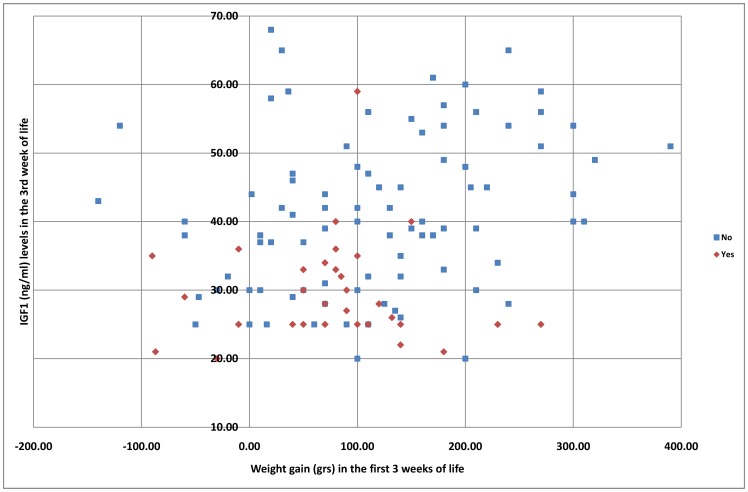
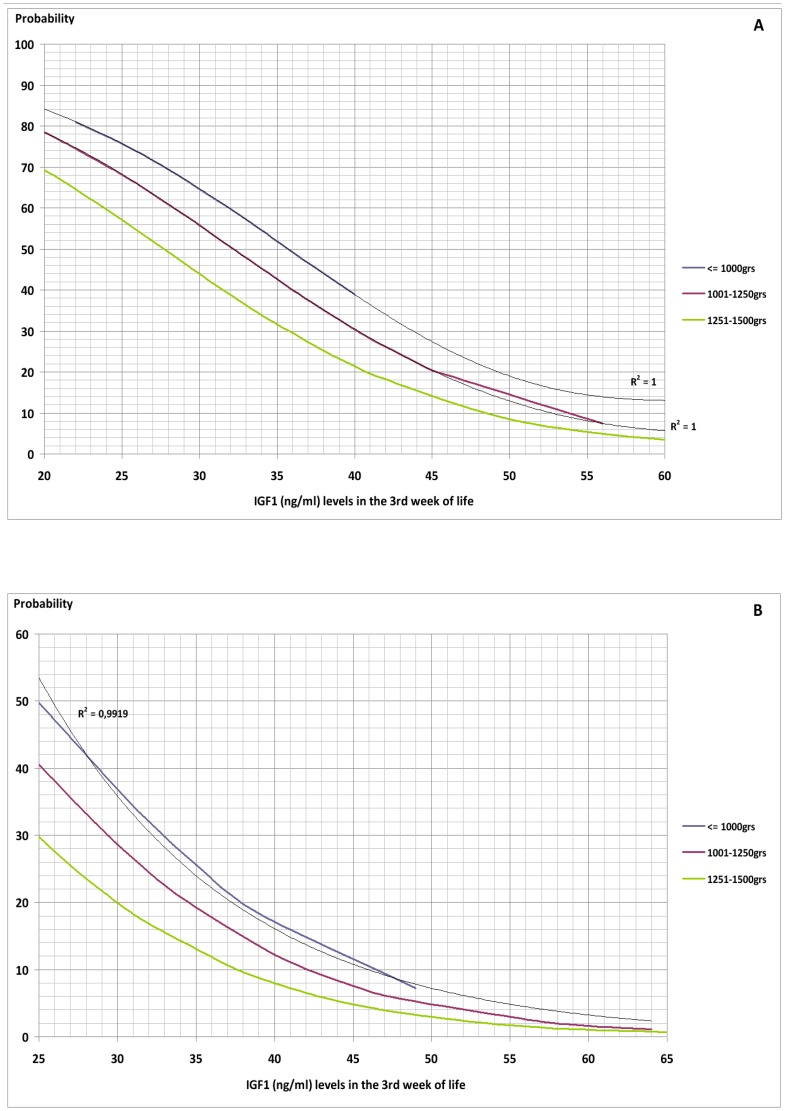
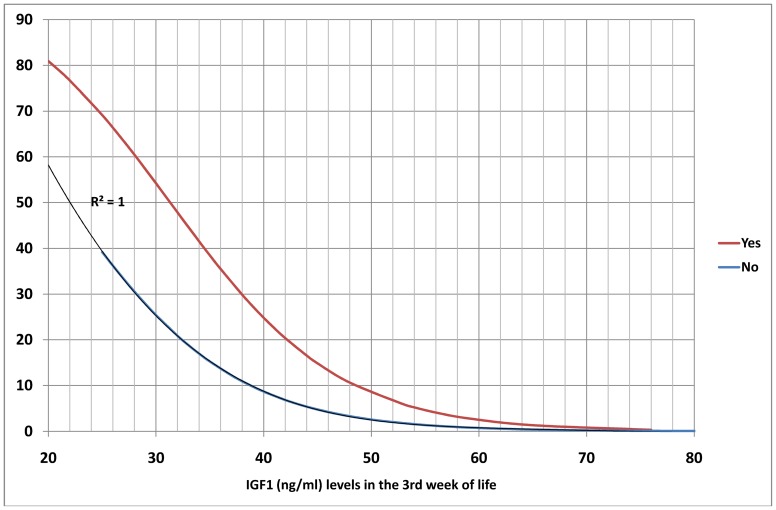
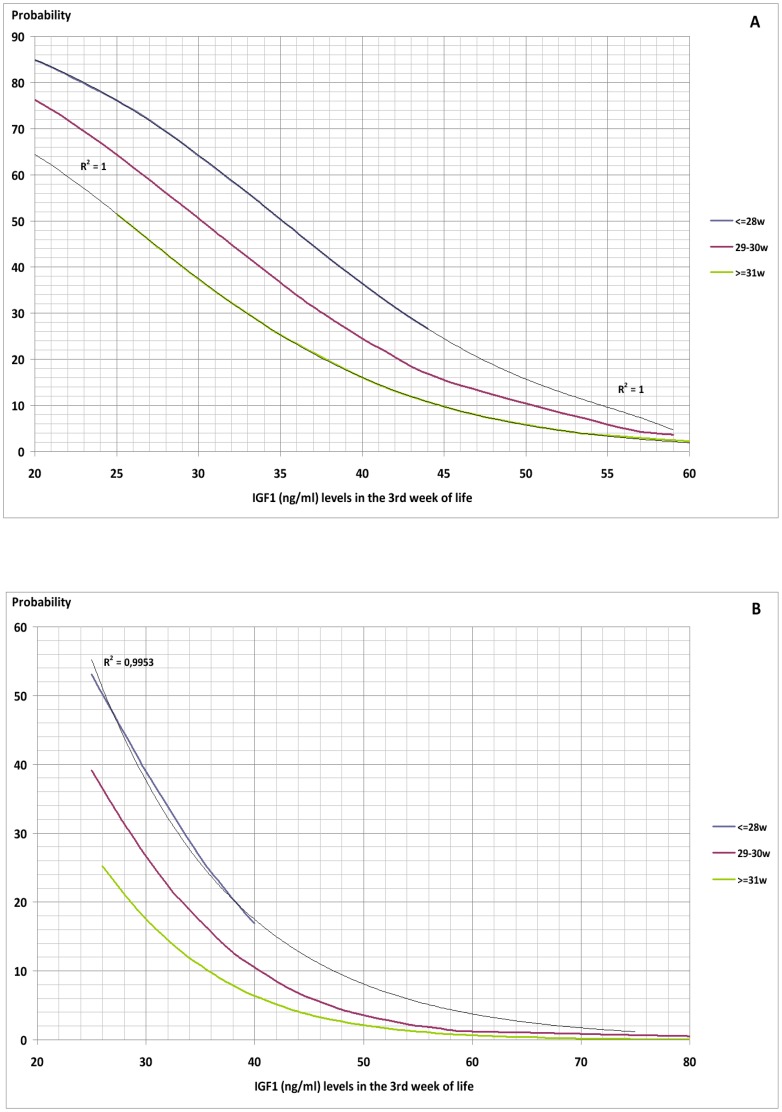
Following current recommendations for preventing retinopathy of prematurity (ROP) involves screening a large number of patients. We performed a prospective study to establish a useful screening system for ROP prediction and we have determined that measuring serum levels of IGF1 at week three and the presence of sepsis have a high predictive value for the subsequent development of ROP. A total of 145 premature newborn, with birthweight <1500 g and/or <32 weeks gestational age, were enrolled. 26.9% of them showed some form of retinopathy. A significant association was found between the development of retinopathy and each of the following variables: early gestational age, low birthweight, requiring mechanical ventilation, oxygen treatment, intracranial haemorrhage, sepsis during the first three weeks, bronchopulmonary dysplasia, the need for erythrocyte transfusion, erythropoietin treatment, and low levels of serum IGF1 in the third week. A multiple logistic regression analysis was used to obtain curves for the probability of developing ROP, based on the main factors linked with ROP, namely serum levels of IGF1 and presence of sepsis. Such preclinical screening has the ability to identify patients with high-risk of developing retinopathy and should lead to better prediction for ROP, while at the same time optimising the use of clinical resources, both human and material.
遵循当前预防早产儿视网膜病变(ROP)的建议需要对大量患者进行筛查。我们开展了一项前瞻性研究,以建立一个用于ROP预测的有效筛查系统,并且我们已经确定,在出生后第三周测量血清IGF1水平以及是否存在败血症对于ROP的后续发展具有较高的预测价值。总共纳入了145例出生体重<1500 g和/或胎龄<32周的早产新生儿。其中26.9%表现出某种形式的视网膜病变。在视网膜病变的发展与以下各变量之间发现了显著关联:孕早期、低出生体重、需要机械通气、氧疗、颅内出血、出生后前三周的败血症、支气管肺发育不良、需要红细胞输血、促红细胞生成素治疗以及第三周血清IGF1水平低。使用多元逻辑回归分析,基于与ROP相关的主要因素,即血清IGF1水平和败血症的存在,得出ROP发生概率的曲线。这种临床前筛查有能力识别出发生视网膜病变高危的患者,应该能够对ROP做出更好的预测,同时优化人力和物力等临床资源的使用。