Aronson Doron, Nakhleh Morad, Zeidan-Shwiri Tawfiq, Mutlak Michael, Lavie Peretz, Lavie Lena
Department of Cardiology, Rambam Medical Center, Haifa, Israel.
Lloyd Rigler Sleep Apnea Research Laboratory, The Ruth and Bruce Rappaport Faculty of Medicine, Technion, Israel Institute of Technology, Haifa, Israel.
PLoS One. 2014 Feb 11;9(2):e88878. doi: 10.1371/journal.pone.0088878. eCollection 2014.
Sleep disordered breathing (SDB), characterized by nightly intermittent hypoxia, is associated with multiple pathophysiologic alterations that may adversely affect patients with acute myocardial infarction (AMI). This prospective study investigated whether the metabolic perturbations associated with SDB are present when these patients develop AMI and if they affect clinical outcomes.
We prospectively enrolled 180 AMI patients. SDB was defined as oxygen desaturation index (ODI) >5 events/hour based on a Watch Pat-100 sleep study. Blood samples were obtained for high-sensitivity C-reactive protein (hs-CRP) and markers of oxidative stress (lipid peroxides [PD] and serum paraoxonase-1 [PON-1] (arylesterase activity). Echocardiography was performed to evaluate cardiac dimensions and pulmonary artery systolic pressure.
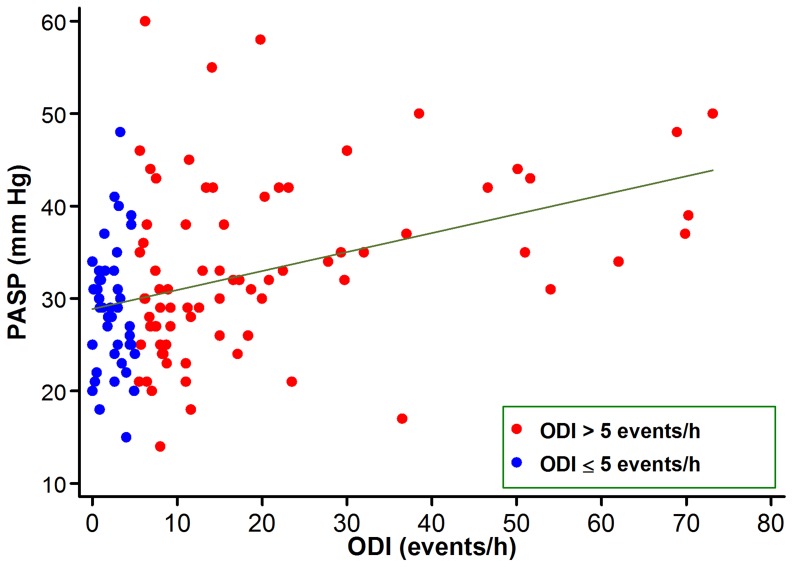
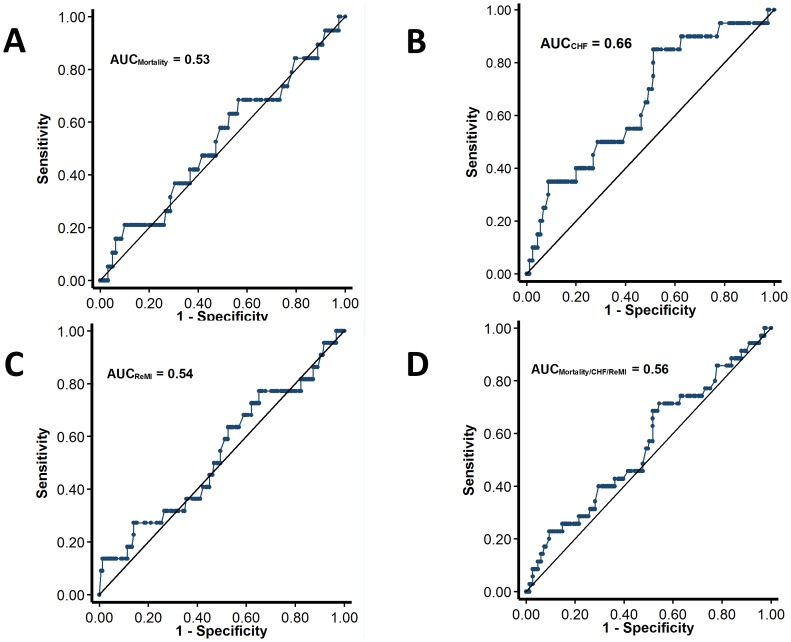
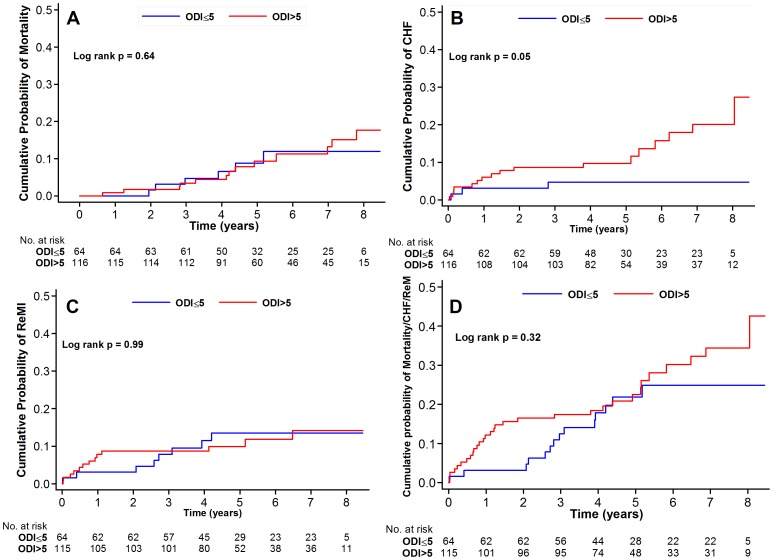
SDB was present in 116 (64%) patients. Hs-CRP levels, PD and PON-1 were similar in patients with and without SDB. Echocardiography revealed higher left atrial dimension (4.1 ± 0.5 vs 3.8 ± 0.5 cm; P = 0.003) and a significant positive correlation between ODI and pulmonary artery systolic pressure (r = 0.41, P<0.0001). After a median follow up of 68 months, no significant differences were observed between the study groups with regard to clinical outcomes, including death, heart failure, myocardial infarction and unstable angina.
There is a high prevalence of previously undiagnosed SDB among patients with AMI. SDB in the setting of AMI is associated with higher pulmonary artery systolic pressure. SDB was not associated with adverse clinical outcomes.
睡眠呼吸障碍(SDB)以夜间间歇性低氧为特征,与多种病理生理改变相关,这些改变可能对急性心肌梗死(AMI)患者产生不利影响。这项前瞻性研究调查了这些患者发生AMI时是否存在与SDB相关的代谢紊乱,以及它们是否影响临床结局。
我们前瞻性纳入了180例AMI患者。根据Watch Pat-100睡眠研究,SDB定义为氧饱和度下降指数(ODI)>5次/小时。采集血样检测高敏C反应蛋白(hs-CRP)以及氧化应激标志物(脂质过氧化物[PD]和血清对氧磷酶-1[PON-1](芳基酯酶活性))。进行超声心动图检查以评估心脏大小和肺动脉收缩压。
116例(64%)患者存在SDB。有和没有SDB的患者hs-CRP水平、PD和PON-1相似。超声心动图显示左心房内径更大(4.1±0.5 vs 3.8±0.5 cm;P = 0.003),且ODI与肺动脉收缩压之间存在显著正相关(r = 0.41,P<0.0001)。中位随访68个月后,研究组在包括死亡、心力衰竭、心肌梗死和不稳定型心绞痛等临床结局方面未观察到显著差异。
AMI患者中既往未诊断的SDB患病率很高。AMI患者中的SDB与较高的肺动脉收缩压相关。SDB与不良临床结局无关。