a MSc, MPH, PhD, Clinical Assistant Professor, is affiliated to the Vanderbilt Institute for Global Health , Vanderbilt University , Nashville , TN , USA.
SAHARA J. 2013;10(3-4):119-30. doi: 10.1080/17290376.2014.885847. Epub 2014 Feb 17.
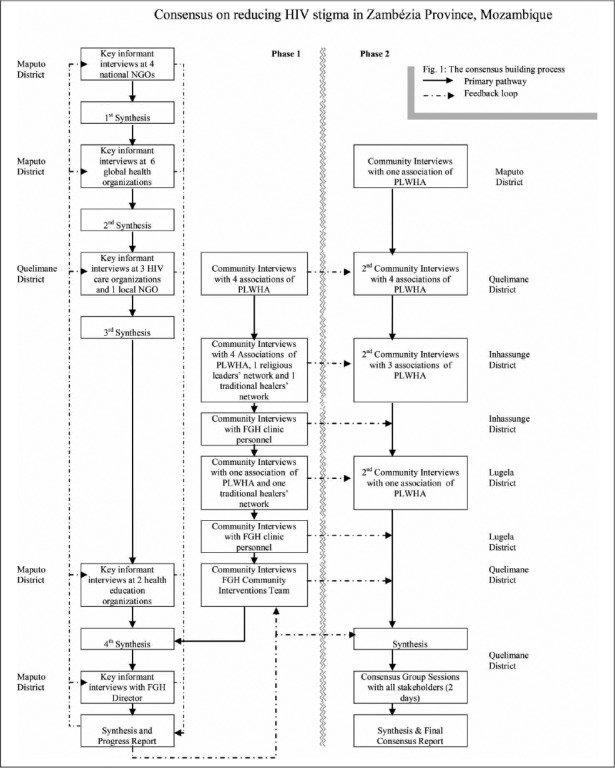
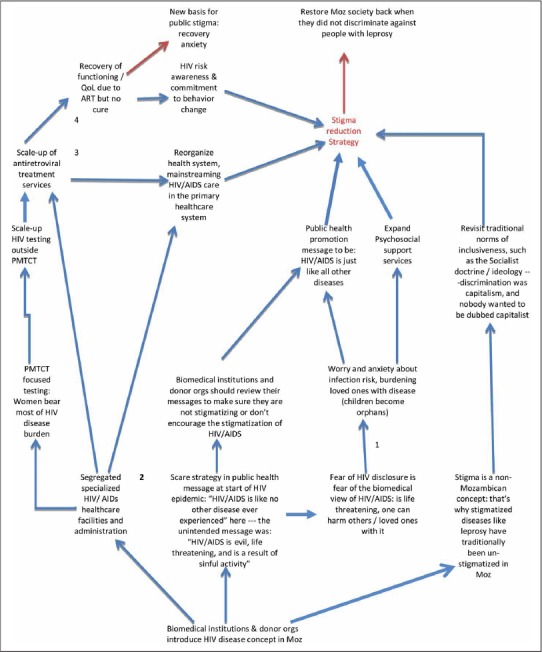
Stigma has been implicated in poor outcomes of human immunodeficiency virus (HIV)/acquired immunodeficiency syndrome (AIDS) care. Reducing stigma is important for HIV prevention and long-term treatment success. Although stigma reduction interventions are conducted in Mozambique, little is known about the current nature of stigma and the efficacy and effectiveness of stigma reduction initiatives. We describe action research to generate consensus on critical characteristics of HIV stigma and anti-stigma interventions in Zambézia Province, Mozambique. Qualitative data gathering methods, including in-depth key-informant interviews, community interviews and consensus group sessions, were utilized. Delphi methods and the strategic options development analysis technique were used to synthesize qualitative data. Key findings are that stigma enacted by the general public might be declining in tandem with the HIV/AIDS epidemic in Mozambique, but there is likely excessive residual fear of HIV disease and community attitudes that sustain high levels of perceived stigma. HIV-positive women accessing maternal and child health services appear to shoulder a disproportionate burden of stigma. Unintentional biases among healthcare providers are currently the critical frontier of stigmatization, but there are few interventions designed to address them. Culturally sensitive psychotherapies are needed to address psychological distress associated with internalized stigma and these interventions should complement current supports for voluntary counseling and testing. While advantageous for defining stakeholder priorities for stigma reduction efforts, confirmatory quantitative studies of these consensus positions are needed before the launch of specific interventions.
污名与人类免疫缺陷病毒 (HIV)/获得性免疫缺陷综合征 (AIDS) 护理的不良结局有关。减少污名对 HIV 预防和长期治疗成功很重要。尽管在莫桑比克开展了减少污名的干预措施,但对污名的当前性质以及减少污名倡议的效果和有效性知之甚少。我们描述了在莫桑比克赞比西亚省开展的行动研究,以就 HIV 污名和抗污名干预措施的关键特征达成共识。使用了定性数据收集方法,包括深入的关键信息提供者访谈、社区访谈和共识小组会议。德尔菲法和战略选择开发分析技术用于综合定性数据。主要发现是,随着莫桑比克 HIV/AIDS 疫情的发展,公众实施的污名将可能与疫情同步减少,但对 HIV 疾病的过度恐惧和维持高感知污名的社区态度可能仍然存在。获得母婴保健服务的 HIV 阳性妇女似乎承受着不成比例的污名负担。医疗保健提供者之间的无意偏见目前是污名化的关键前沿,但几乎没有旨在解决这些偏见的干预措施。需要进行文化敏感的心理疗法来解决与内化污名相关的心理困扰,这些干预措施应补充目前对自愿咨询和检测的支持。虽然有利于确定减少污名努力的利益相关者的优先事项,但在推出具体干预措施之前,需要对这些共识立场进行确认性定量研究。