Saxena Rachit K, von Wettberg Eric, Upadhyaya Hari D, Sanchez Vanessa, Songok Serah, Saxena Kulbhushan, Kimurto Paul, Varshney Rajeev K
International Crops Research Institute for the Semi-Arid Tropics (ICRISAT), Hyderabad, Andhra Pradesh, India.
Department of Biological Sciences, Florida International University, Miami, Florida, United States of America ; Fairchild Tropical Botanic Garden, Kushlan Institute for Tropical Science, Miami, Florida, United States of America.
PLoS One. 2014 Feb 12;9(2):e88568. doi: 10.1371/journal.pone.0088568. eCollection 2014.
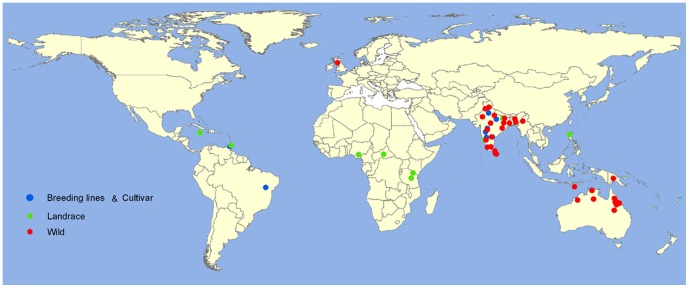
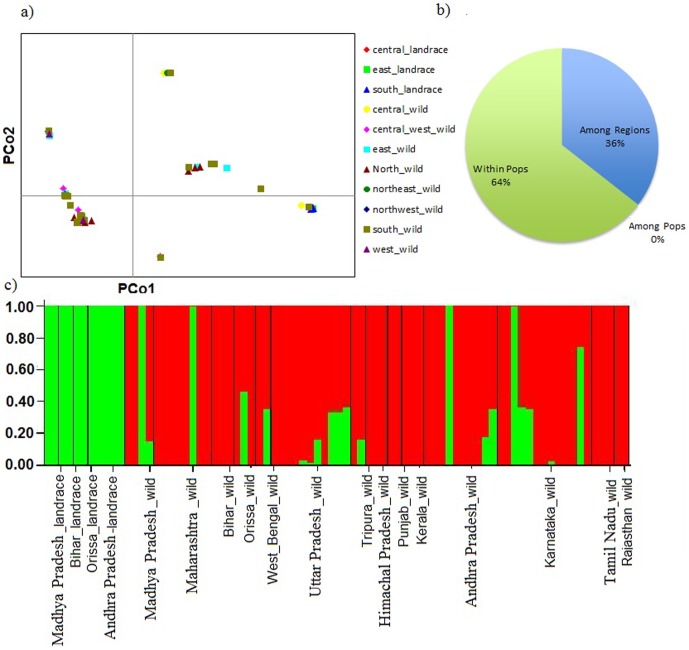
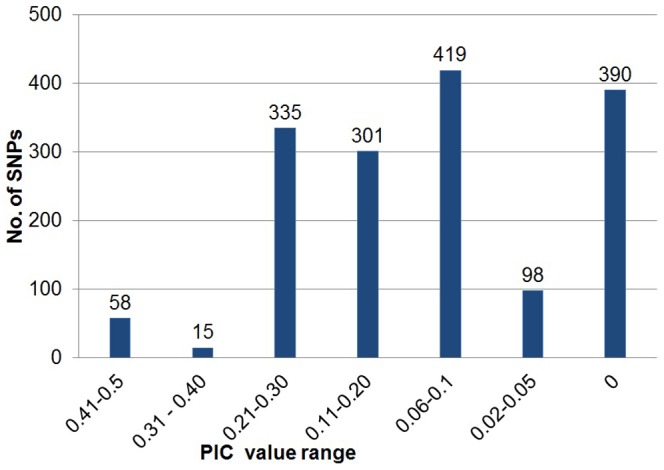
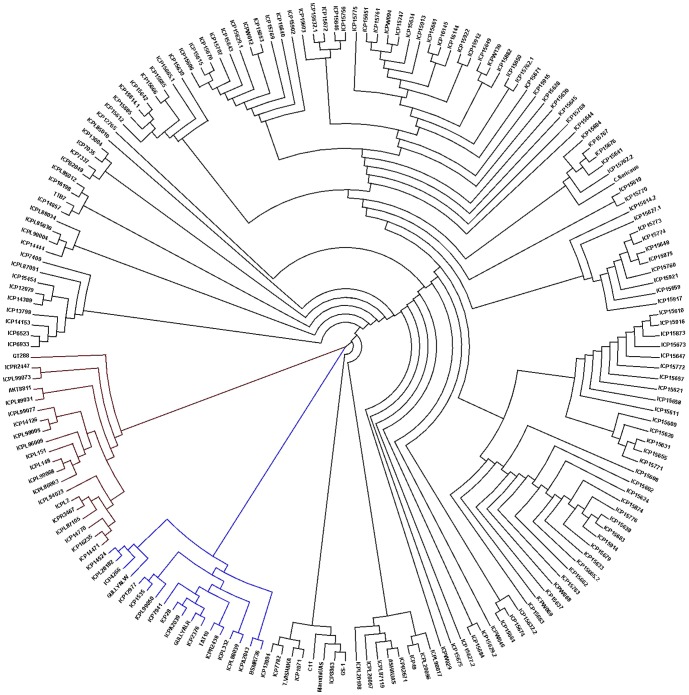
Understanding genetic structure of Cajanus spp. is essential for achieving genetic improvement by quantitative trait loci (QTL) mapping or association studies and use of selected markers through genomic assisted breeding and genomic selection. After developing a comprehensive set of 1,616 single nucleotide polymorphism (SNPs) and their conversion into cost effective KASPar assays for pigeonpea (Cajanus cajan), we studied levels of genetic variability both within and between diverse set of Cajanus lines including 56 breeding lines, 21 landraces and 107 accessions from 18 wild species. These results revealed a high frequency of polymorphic SNPs and relatively high level of cross-species transferability. Indeed, 75.8% of successful SNP assays revealed polymorphism, and more than 95% of these assays could be successfully transferred to related wild species. To show regional patterns of variation, we used STRUCTURE and Analysis of Molecular Variance (AMOVA) to partition variance among hierarchical sets of landraces and wild species at either the continental scale or within India. STRUCTURE separated most of the domesticated germplasm from wild ecotypes, and separates Australian and Asian wild species as has been found previously. Among Indian regions and states within regions, we found 36% of the variation between regions, and 64% within landraces or wilds within states. The highest level of polymorphism in wild relatives and landraces was found in Madhya Pradesh and Andhra Pradesh provinces of India representing the centre of origin and domestication of pigeonpea respectively.
了解木豆属植物的遗传结构对于通过数量性状基因座(QTL)定位或关联研究实现遗传改良,以及通过基因组辅助育种和基因组选择使用选定标记至关重要。在开发了一套全面的1616个单核苷酸多态性(SNP)并将其转化为用于木豆(Cajanus cajan)的经济高效的竞争性等位基因特异性PCR(KASPar)分析方法后,我们研究了包括56个育种系、21个地方品种和来自18个野生种的107份种质在内的不同木豆品系内部和之间的遗传变异水平。这些结果揭示了多态性SNP的高频率和相对较高的跨物种转移性。实际上,75.8%的成功SNP分析显示出多态性,其中超过95%的分析可以成功转移到相关野生种。为了展示区域变异模式,我们使用STRUCTURE软件和分子方差分析(AMOVA)在大陆尺度或印度境内对地方品种和野生物种的层次集合之间的方差进行划分。STRUCTURE软件将大多数驯化种质与野生生态型分开,并像之前发现的那样将澳大利亚和亚洲野生种分开。在印度各地区以及各地区内的邦之间,我们发现36%的变异存在于地区之间,64%的变异存在于邦内的地方品种或野生种内。在印度中央邦和安得拉邦分别代表木豆的起源中心和驯化中心的野生近缘种和地方品种中发现了最高水平的多态性。