Cabeen Matthew T
Department of Molecular and Cellular Biology, Harvard University, Cambridge, Massachusetts, United States of America.
PLoS One. 2014 Feb 12;9(2):e88743. doi: 10.1371/journal.pone.0088743. eCollection 2014.
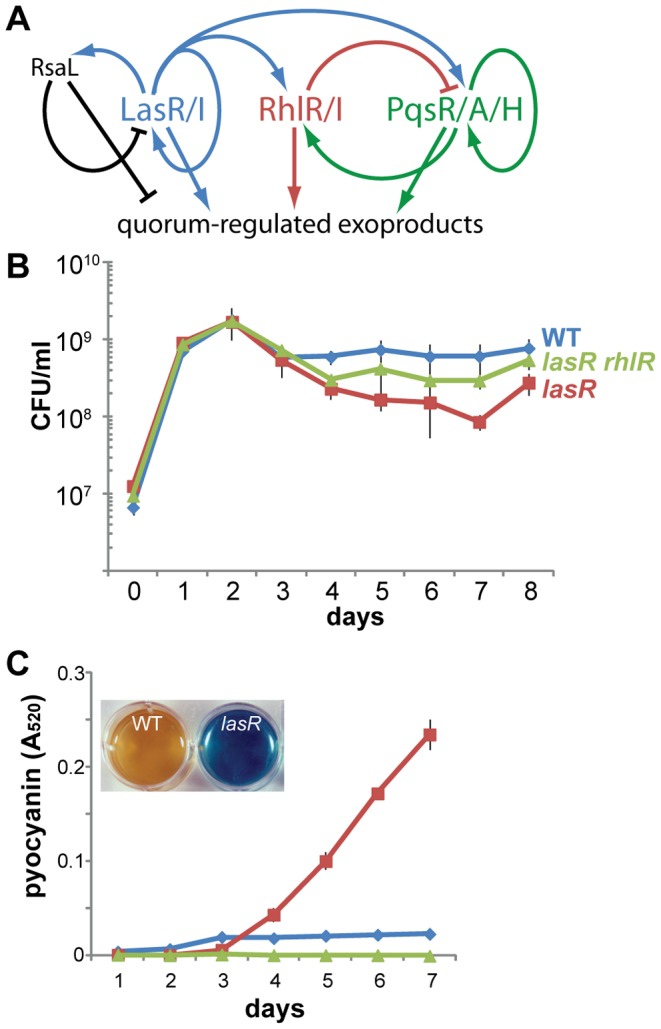
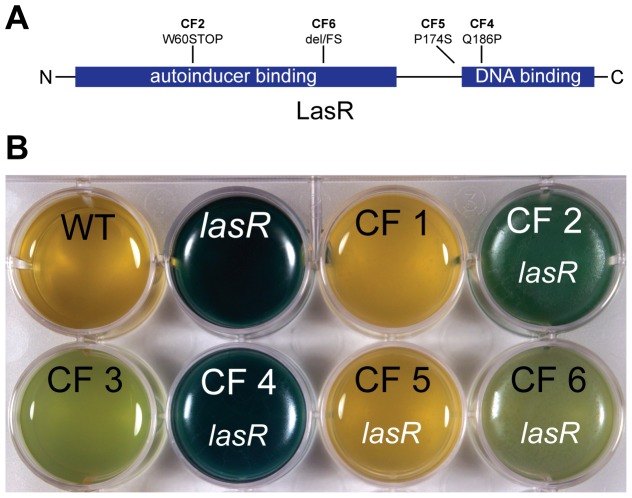
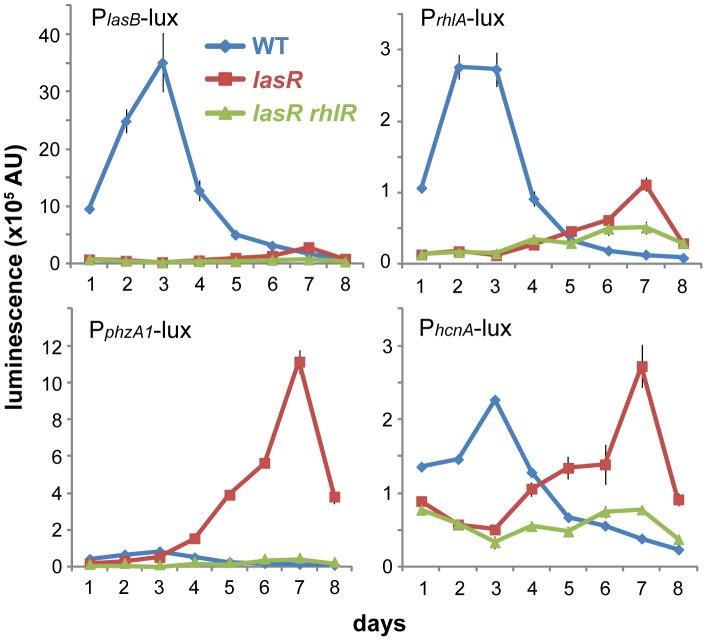
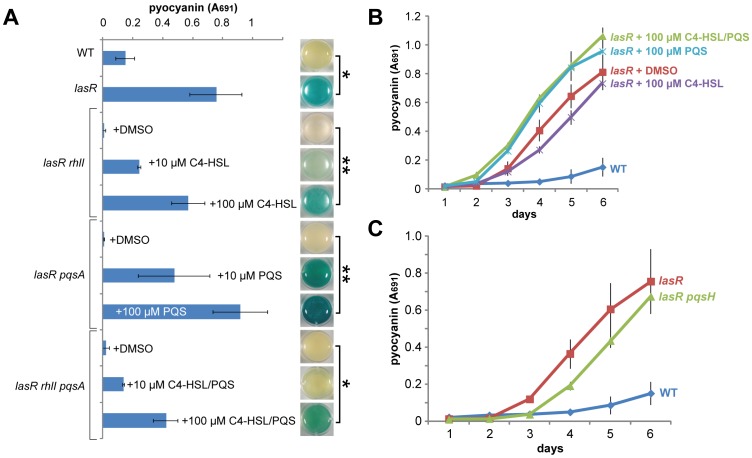
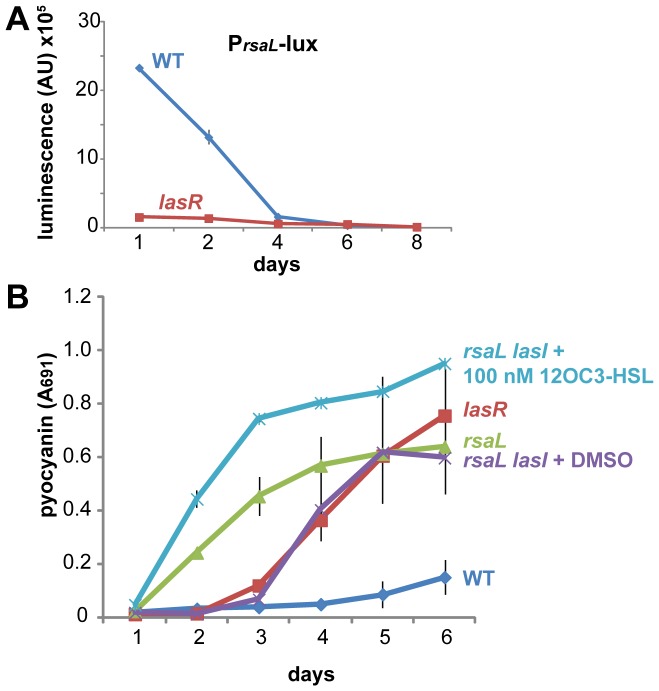
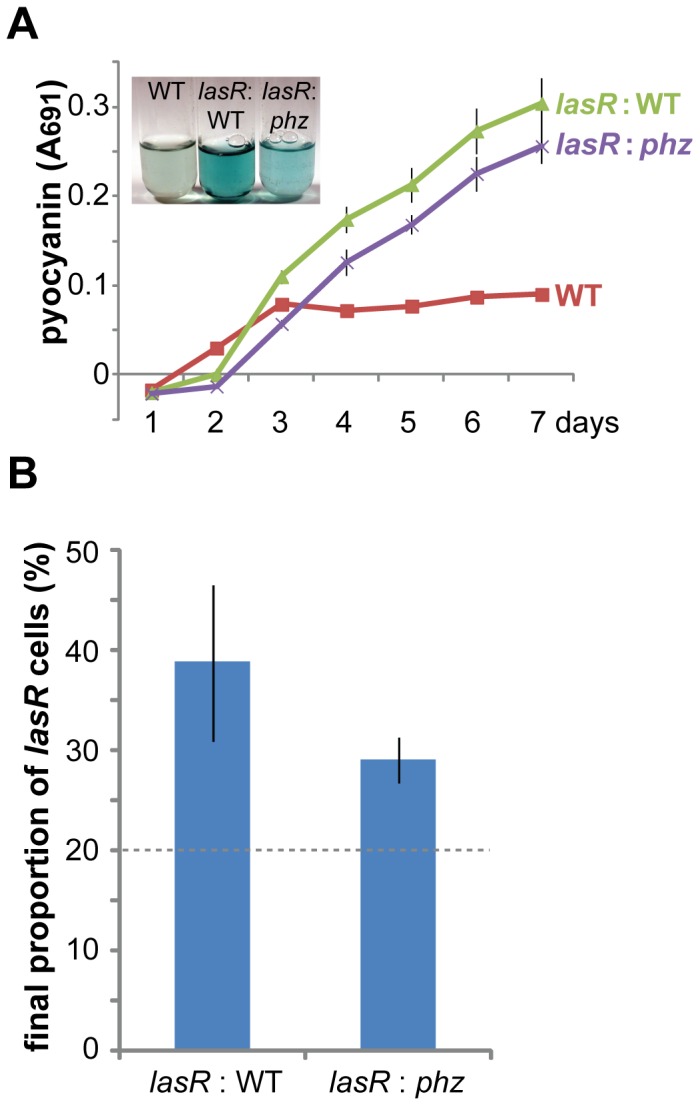
Secreted virulence factors of the human pathogen Pseudomonas aeruginosa are often under quorum sensing control. Cells lacking the quorum-sensing regulator LasR show reduced virulence factor production under typical laboratory conditions and are hypo-virulent in short-term animal infection models, yet lasR mutants are frequently associated with long-term infection in cystic fibrosis patients. Here, I show that in stationary-phase or slow-growth conditions, lasR cells continuously and strongly produce the important virulence factor pyocyanin while wild-type cells do not. Pyocyanin overproduction by lasR cells is permitted by loss of repression by RsaL, a LasR-dependent negative regulator. lasR cells also contribute pyocyanin in mixed cultures, even under "cheating" conditions where they depend on their wild-type neighbors for nutrients. Finally, some clinical P. aeruginosa isolates with lasR mutations can overproduce pyocyanin in the laboratory. These results imply that slow-growing clinical populations of lasR cells in chronic infections may contribute to virulence by producing pyocyanin under conditions where lasR⁺ cells do not.
人类病原体铜绿假单胞菌分泌的毒力因子通常受群体感应控制。在典型的实验室条件下,缺乏群体感应调节因子LasR的细胞显示出毒力因子产生减少,并且在短期动物感染模型中致病性较低,然而lasR突变体在囊性纤维化患者中经常与长期感染相关。在这里,我表明在稳定期或生长缓慢的条件下,lasR细胞持续且强烈地产生重要的毒力因子绿脓菌素,而野生型细胞则不产生。RsaL(一种LasR依赖性负调节因子)的抑制作用丧失使得lasR细胞能够过量产生绿脓菌素。lasR细胞在混合培养物中也会产生绿脓菌素,即使在它们依赖野生型邻居获取营养的“欺骗”条件下也是如此。最后,一些具有lasR突变的临床铜绿假单胞菌分离株在实验室中能够过量产生绿脓菌素。这些结果表明,在慢性感染中生长缓慢的lasR细胞临床群体可能通过在lasR⁺细胞不产生绿脓菌素的条件下产生绿脓菌素而促进致病性。