Molecular Biology and Immunology Department, Fundación Instituto de Inmunología de Colombia (FIDIC), Carrera 50 No, 26-20, Bogotá, DC, Colombia.
Malar J. 2014 Feb 18;13:58. doi: 10.1186/1475-2875-13-58.
Plasmodium vivax is one of the five species causing malaria in human beings, affecting around 391 million people annually. The development of an anti-malarial vaccine has been proposed as an alternative for controlling this disease. However, its development has been hampered by allele-specific responses produced by the high genetic diversity shown by some parasite antigens. Evaluating these antigens' genetic diversity is thus essential when designing a completely effective vaccine.
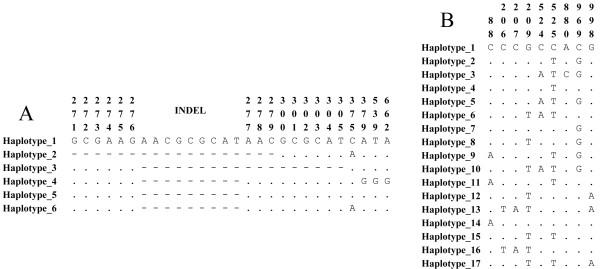
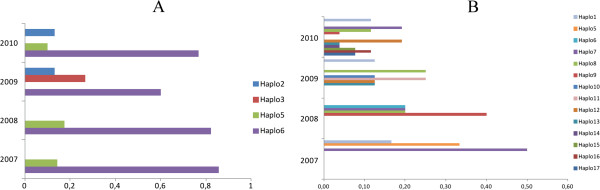
The gene sequences of Plasmodium vivax p12 (pv12) and p38 (pv38), obtained from field isolates in Colombia, were used for evaluating haplotype polymorphism and distribution by population genetics analysis. The evolutionary forces generating the variation pattern so observed were also determined.
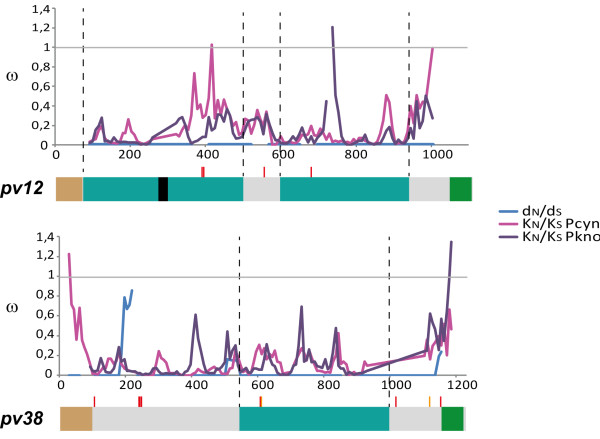
Both pv12 and pv38 were shown to have low genetic diversity. The neutral model for pv12 could not be discarded, whilst polymorphism in pv38 was maintained by balanced selection restricted to the gene's 5' region. Both encoded proteins seemed to have functional/structural constraints due to the presence of s48/45 domains, which were seen to be highly conserved.
Due to the role that malaria parasite P12 and P38 proteins seem to play during invasion in Plasmodium species, added to the Pv12 and Pv38 antigenic characteristics and the low genetic diversity observed, these proteins might be good candidates to be evaluated in the design of a multistage/multi-antigen vaccine.
间日疟原虫是导致人类疟疾的五种疟原虫之一,每年影响约 3.91 亿人。已经提出开发抗疟疫苗作为控制这种疾病的替代方法。然而,由于一些寄生虫抗原表现出的高度遗传多样性引起的等位基因特异性反应,其开发受到了阻碍。因此,在设计完全有效的疫苗时,评估这些抗原的遗传多样性至关重要。
使用从哥伦比亚现场分离株获得的间日疟原虫 p12(pv12)和 p38(pv38)基因序列,通过群体遗传学分析评估单倍型多态性和分布。还确定了产生所观察到的变异模式的进化力量。
pv12 和 pv38 均显示出低遗传多样性。不能排除 pv12 的中性模型,而 pv38 的多态性则通过对基因 5'区域的平衡选择受到限制得以维持。由于存在 s48/45 结构域,两种编码蛋白似乎都受到功能/结构限制,这些结构域高度保守。
由于疟原虫 P12 和 P38 蛋白在入侵间日疟原虫物种中似乎发挥的作用,以及 pv12 和 pv38 抗原的特性和观察到的低遗传多样性,这些蛋白可能是在多阶段/多抗原疫苗设计中进行评估的良好候选物。