Program in Molecular Pharmacology and Chemistry and Department of Medicine, Memorial Sloan-Kettering Cancer Center , New York, New York 10021, United States.
J Med Chem. 2014 Feb 27;57(4):1188-207. doi: 10.1021/jm401551n. Epub 2014 Feb 18.
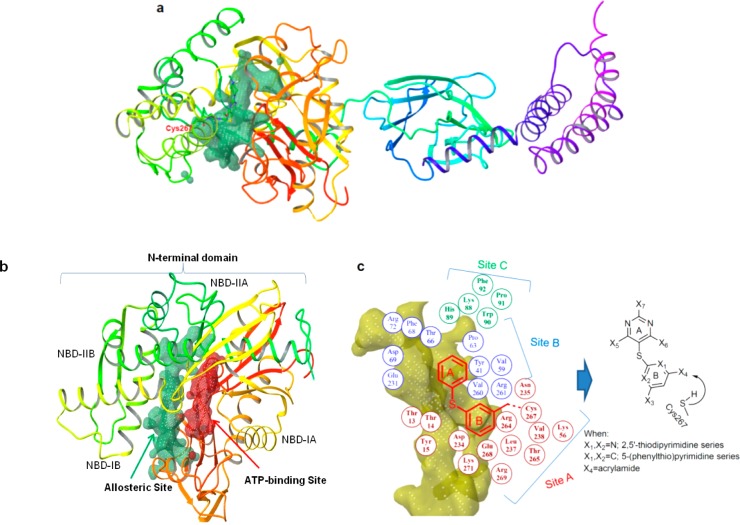
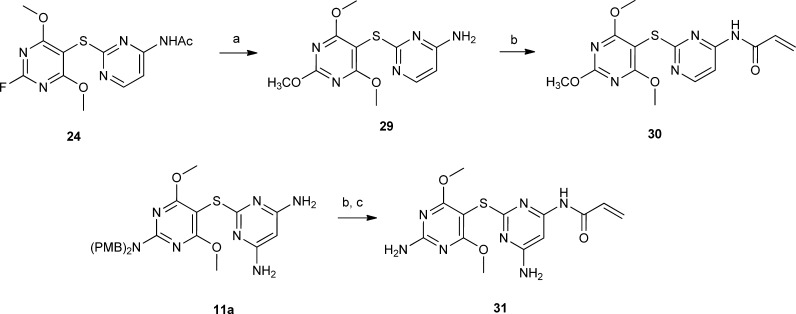
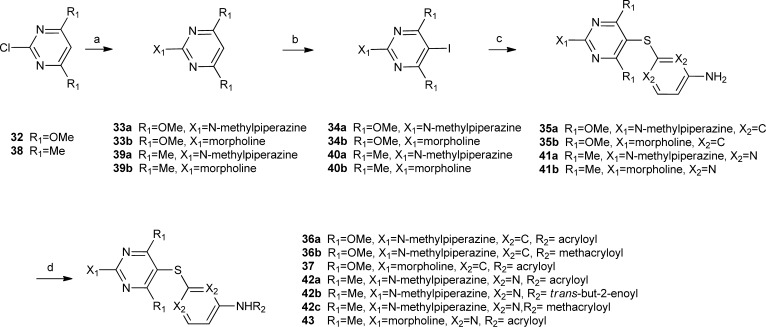
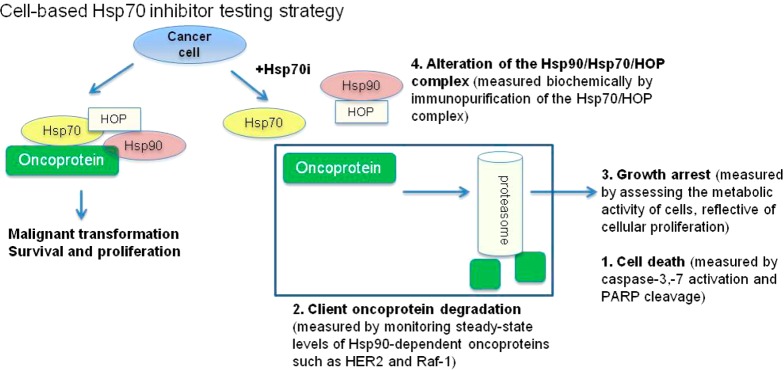
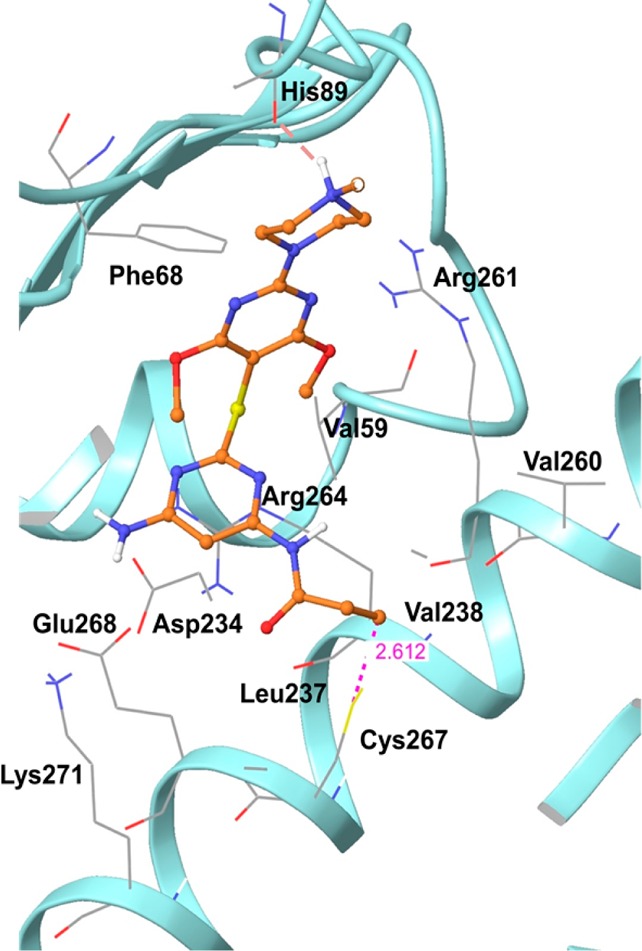
Heat shock protein 70 (Hsp70) is an important emerging cancer target whose inhibition may affect multiple cancer-associated signaling pathways and, moreover, result in significant cancer cell apoptosis. Despite considerable interest from both academia and pharmaceutical companies in the discovery and development of druglike Hsp70 inhibitors, little success has been reported so far. Here we describe structure-activity relationship studies in the first rationally designed Hsp70 inhibitor class that binds to a novel allosteric pocket located in the N-terminal domain of the protein. These 2,5'-thiodipyrimidine and 5-(phenylthio)pyrimidine acrylamides take advantage of an active cysteine embedded in the allosteric pocket to act as covalent protein modifiers upon binding. The study identifies derivatives 17a and 20a, which selectively bind to Hsp70 in cancer cells. Addition of high nanomolar to low micromolar concentrations of these inhibitors to cancer cells leads to a reduction in the steady-state levels of Hsp70-sheltered oncoproteins, an effect associated with inhibition of cancer cell growth and apoptosis. In summary, the described scaffolds represent a viable starting point for the development of druglike Hsp70 inhibitors as novel anticancer therapeutics.
热休克蛋白 70(Hsp70)是一个重要的新兴癌症靶点,其抑制作用可能会影响多种与癌症相关的信号通路,而且会导致显著的癌细胞凋亡。尽管学术界和制药公司都对发现和开发类似药物的 Hsp70 抑制剂非常感兴趣,但迄今为止报道的成功案例很少。在这里,我们描述了首次在合理设计的 Hsp70 抑制剂类别中进行的构效关系研究,这些抑制剂与位于蛋白质 N 端结构域的新型别构口袋结合。这些 2,5'- 硫代二嘧啶和 5-(苯硫基)嘧啶丙烯酰胺利用别构口袋中嵌入的活性半胱氨酸,在结合时充当共价蛋白质修饰剂。该研究鉴定出衍生物 17a 和 20a,它们可选择性地与癌细胞中的 Hsp70 结合。将这些抑制剂的高纳摩尔至低微摩尔浓度添加到癌细胞中,会降低 Hsp70 庇护的癌蛋白的稳定态水平,这种效应与抑制癌细胞生长和凋亡有关。总之,所描述的支架代表了开发类似药物的 Hsp70 抑制剂作为新型抗癌治疗药物的可行起点。