Farg Manal A, Sundaramoorthy Vinod, Sultana Jessica M, Yang Shu, Atkinson Rachel A K, Levina Vita, Halloran Mark A, Gleeson Paul A, Blair Ian P, Soo Kai Y, King Anna E, Atkin Julie D
Department of Biochemistry.
Australian School of Advanced Medicine, Macquarie University, Sydney, NSW, Australia.
Hum Mol Genet. 2014 Jul 1;23(13):3579-95. doi: 10.1093/hmg/ddu068. Epub 2014 Feb 18.
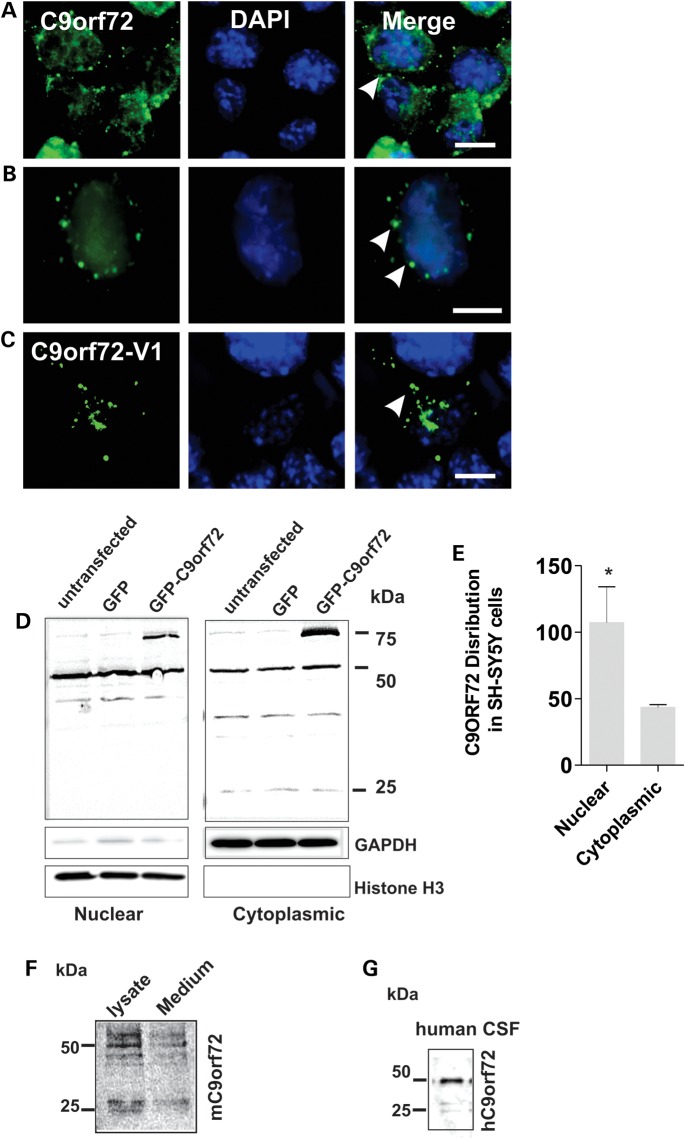
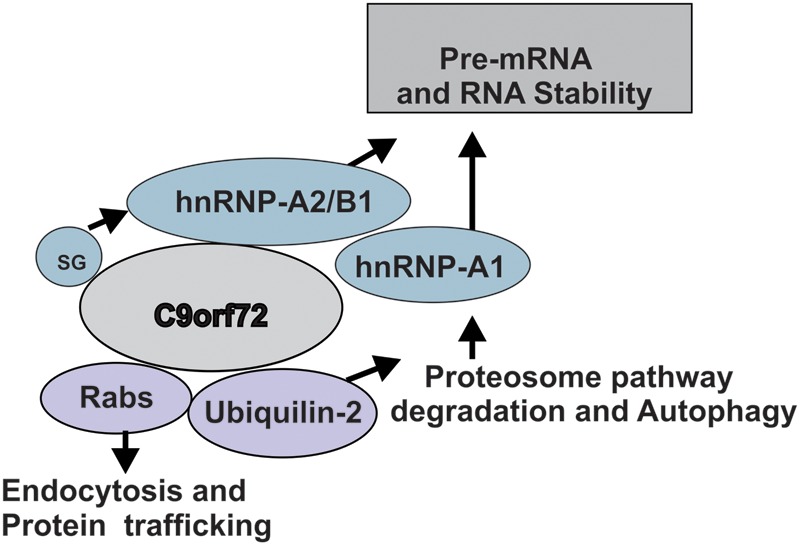
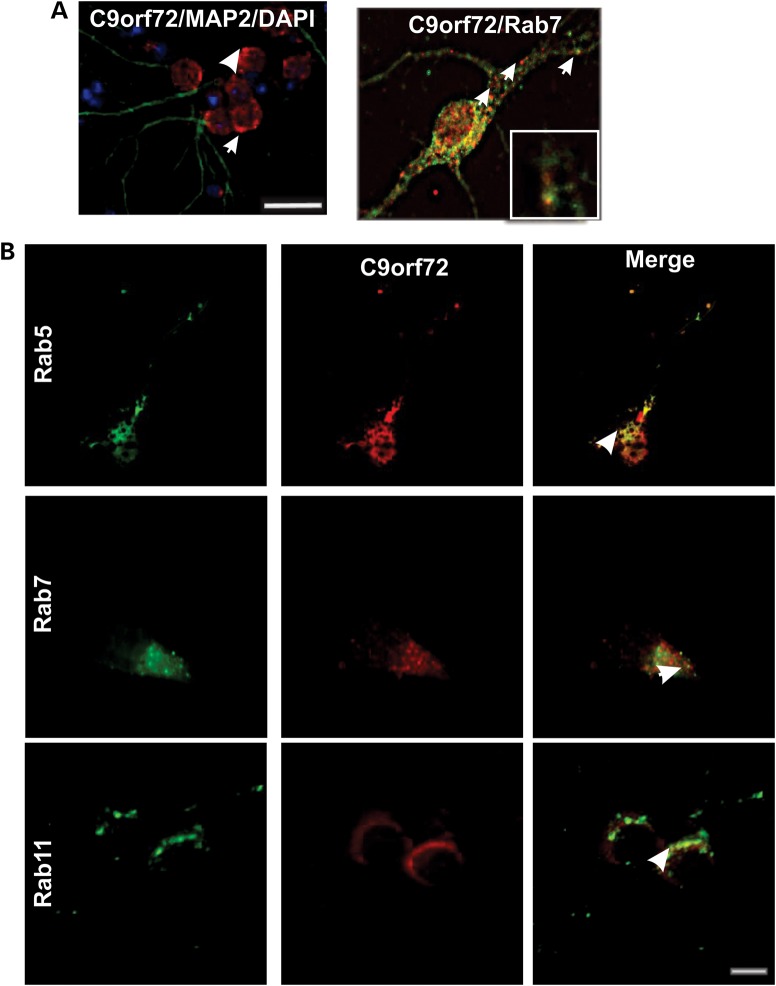
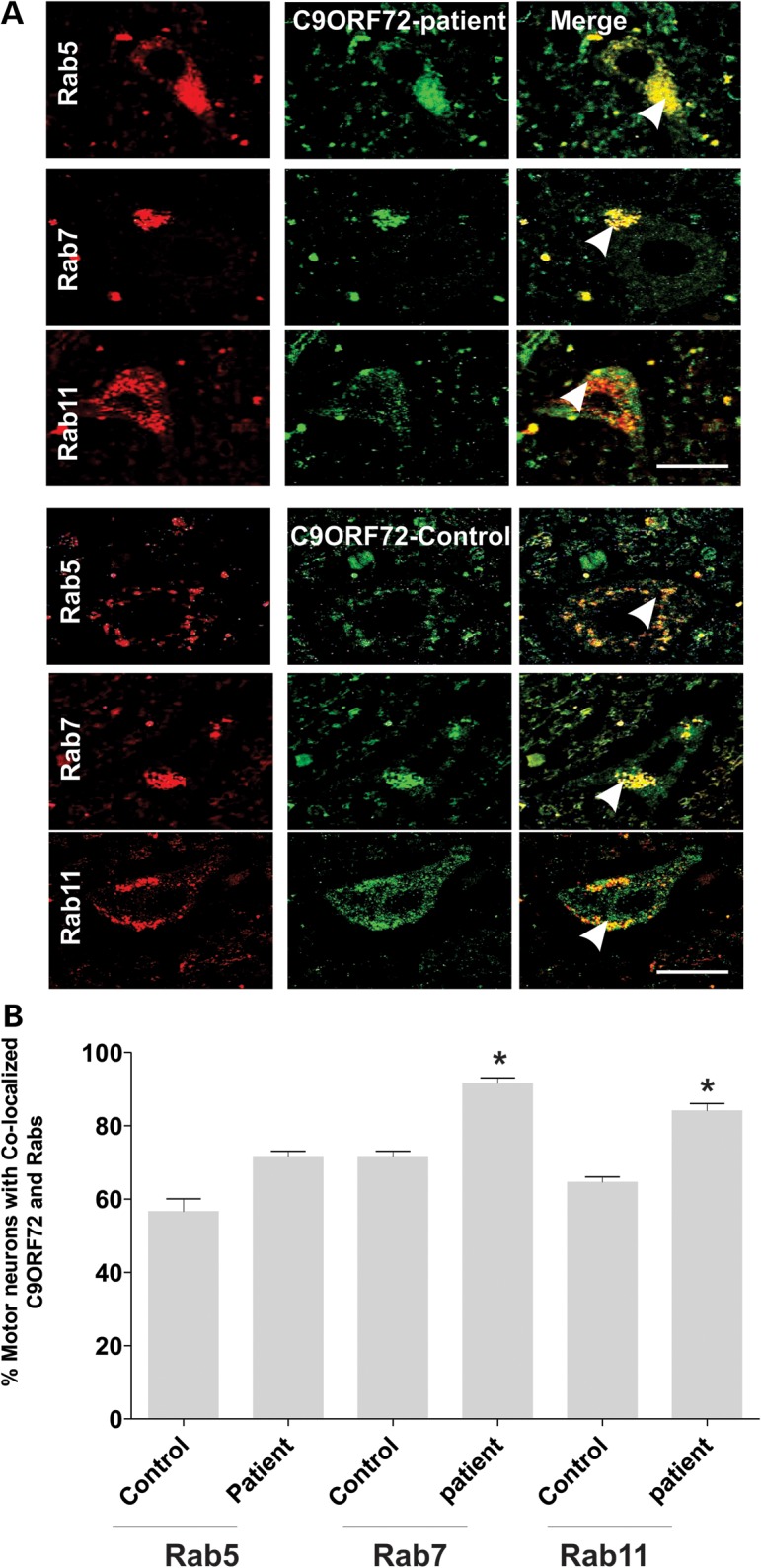
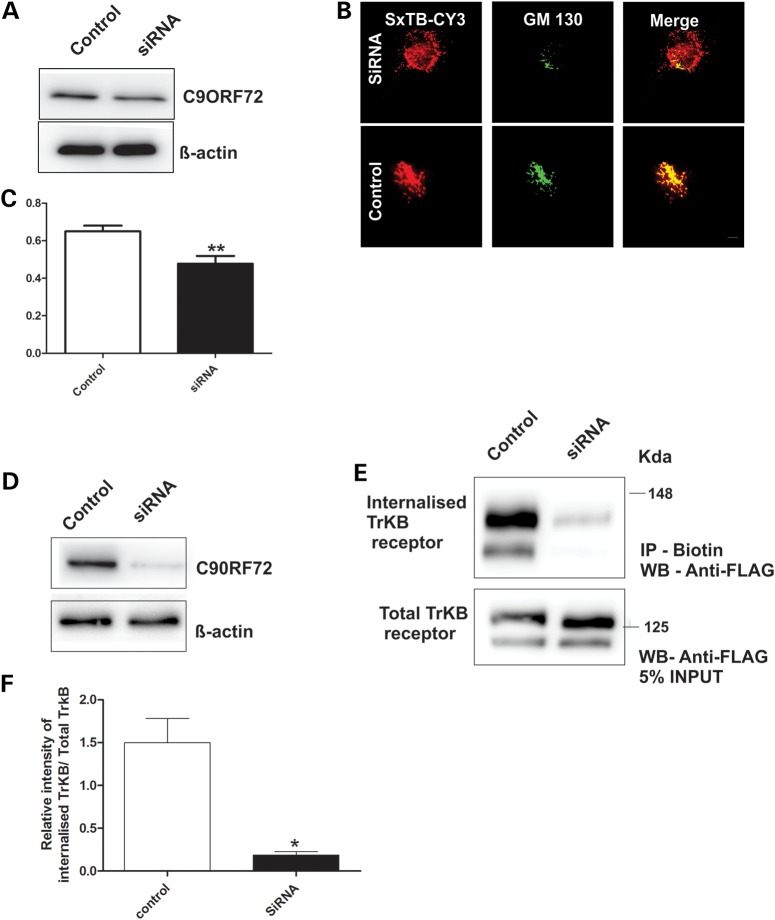
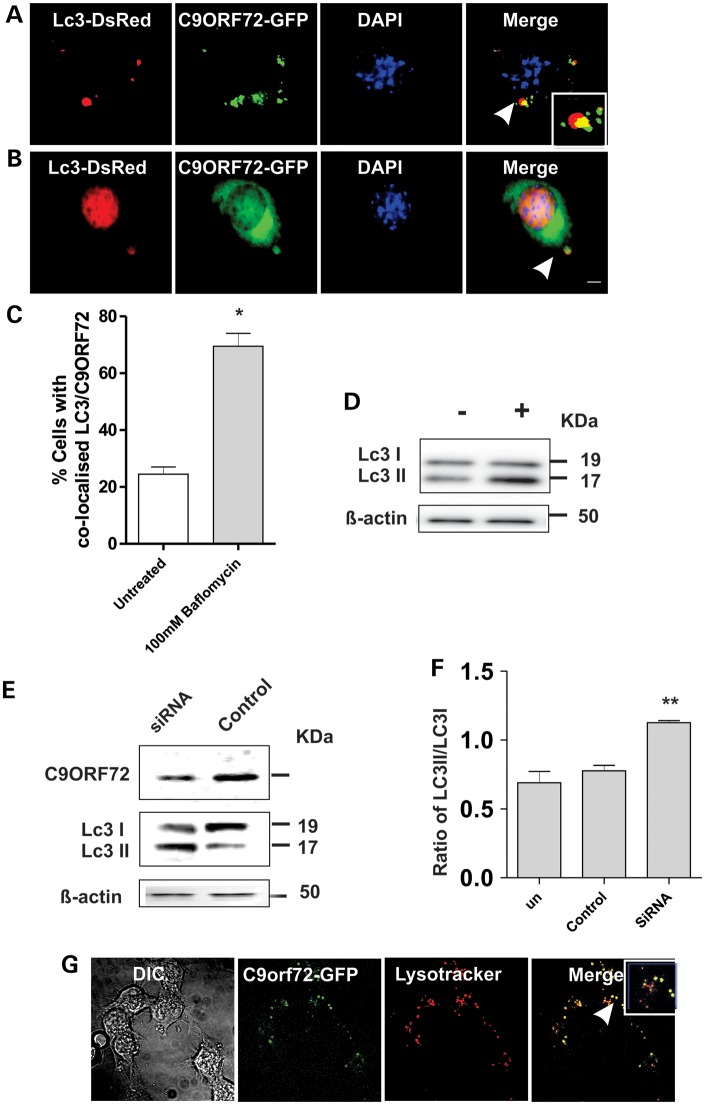
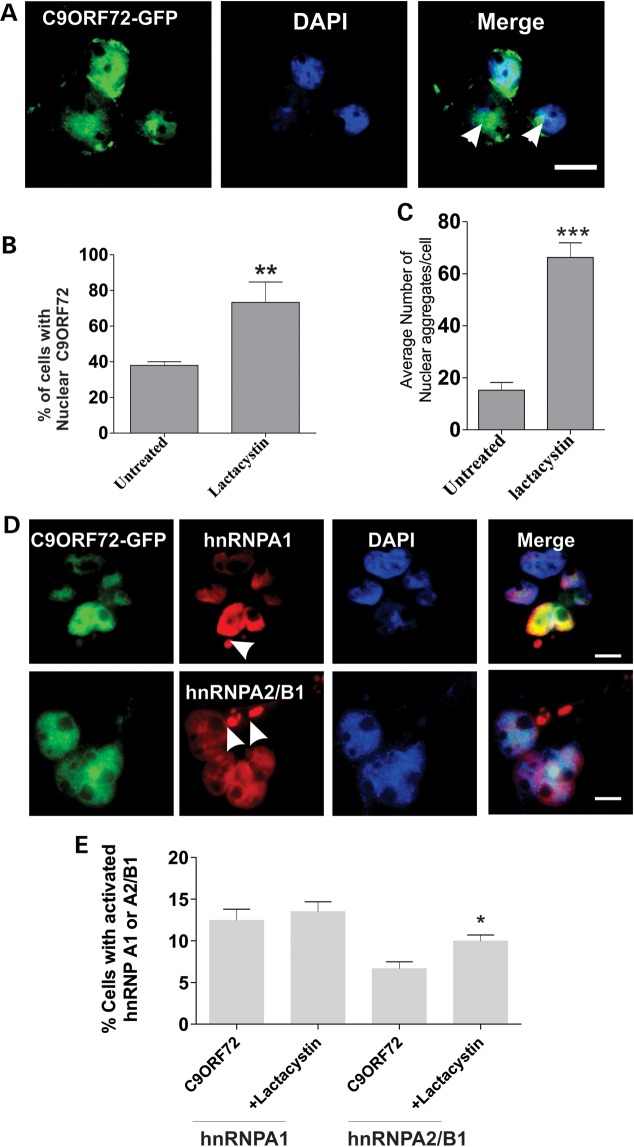
Intronic expansion of a hexanucleotide GGGGCC repeat in the chromosome 9 open reading frame 72 (C9ORF72) gene is the major cause of familial amyotrophic lateral sclerosis (ALS) and frontotemporal dementia. However, the cellular function of the C9ORF72 protein remains unknown. Here, we demonstrate that C9ORF72 regulates endosomal trafficking. C9ORF72 colocalized with Rab proteins implicated in autophagy and endocytic transport: Rab1, Rab5, Rab7 and Rab11 in neuronal cell lines, primary cortical neurons and human spinal cord motor neurons, consistent with previous predictions that C9ORF72 bears Rab guanine exchange factor activity. Consistent with this notion, C9ORF72 was present in the extracellular space and as cytoplasmic vesicles. Depletion of C9ORF72 using siRNA inhibited transport of Shiga toxin from the plasma membrane to Golgi apparatus, internalization of TrkB receptor and altered the ratio of autophagosome marker light chain 3 (LC3) II:LC3I, indicating that C9ORF72 regulates endocytosis and autophagy. C9ORF72 also colocalized with ubiquilin-2 and LC3-positive vesicles, and co-migrated with lysosome-stained vesicles in neuronal cell lines, providing further evidence that C9ORF72 regulates autophagy. Investigation of proteins interacting with C9ORF72 using mass spectrometry identified other proteins implicated in ALS; ubiquilin-2 and heterogeneous nuclear ribonucleoproteins, hnRNPA2/B1 and hnRNPA1, and actin. Treatment of cells overexpressing C9ORF72 with proteasome inhibitors induced the formation of stress granules positive for hnRNPA1 and hnRNPA2/B1. Immunohistochemistry of C9ORF72 ALS patient motor neurons revealed increased colocalization between C9ORF72 and Rab7 and Rab11 compared with controls, suggesting possible dysregulation of trafficking in patients bearing the C9ORF72 repeat expansion. Hence, this study identifies a role for C9ORF72 in Rab-mediated cellular trafficking.
位于9号染色体开放阅读框72(C9ORF72)基因中的六核苷酸GGGGCC重复序列的内含子扩增是家族性肌萎缩侧索硬化症(ALS)和额颞叶痴呆的主要病因。然而,C9ORF72蛋白的细胞功能仍不清楚。在此,我们证明C9ORF72调节内体运输。在神经元细胞系、原代皮质神经元和人类脊髓运动神经元中,C9ORF72与参与自噬和内吞运输的Rab蛋白共定位:Rab1、Rab5、Rab7和Rab11,这与之前关于C9ORF72具有Rab鸟嘌呤交换因子活性的预测一致。与此观点一致的是,C9ORF72存在于细胞外空间并以细胞质囊泡的形式存在。使用小干扰RNA(siRNA)耗尽C9ORF72会抑制志贺毒素从质膜向高尔基体的运输、TrkB受体的内化,并改变自噬体标记物轻链3(LC3)II:LC3I的比例,表明C9ORF72调节内吞作用和自噬。C9ORF72还与泛素连接蛋白2和LC3阳性囊泡共定位,并在神经元细胞系中与溶酶体染色的囊泡共同迁移,这进一步证明C9ORF72调节自噬。使用质谱法研究与C9ORF72相互作用的蛋白质,鉴定出了其他与ALS相关的蛋白质;泛素连接蛋白2和异质性核糖核蛋白hnRNPA2/B1、hnRNPA1以及肌动蛋白。用蛋白酶体抑制剂处理过表达C9ORF72的细胞会诱导形成对hnRNPA1和hnRNPA2/B1呈阳性的应激颗粒。对携带C9ORF72重复扩增的ALS患者运动神经元进行免疫组织化学分析显示,与对照组相比,C9ORF72与Rab7和Rab11之间的共定位增加,这表明携带C9ORF72重复扩增的患者可能存在运输失调。因此,本研究确定了C9ORF72在Rab介导的细胞运输中的作用。