Wojdasiewicz Piotr, Poniatowski Lukasz A, Kotela Andrzej, Deszczyński Jarosław, Kotela Ireneusz, Szukiewicz Dariusz
Department of General and Experimental Pathology, Second Faculty of Medicine, Medical University of Warsaw, Pawinskiego 3c, 02-106, Warsaw, Poland,
Arch Immunol Ther Exp (Warsz). 2014 Oct;62(5):395-403. doi: 10.1007/s00005-014-0275-0. Epub 2014 Feb 21.
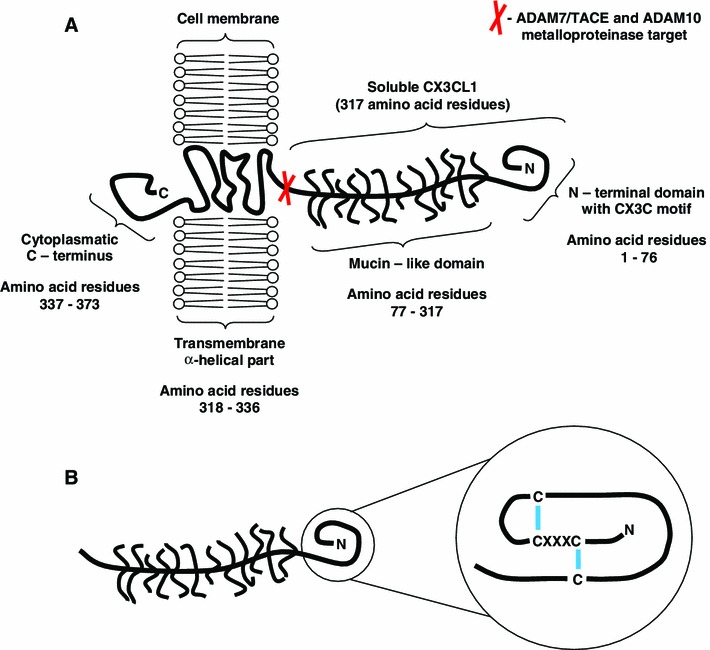
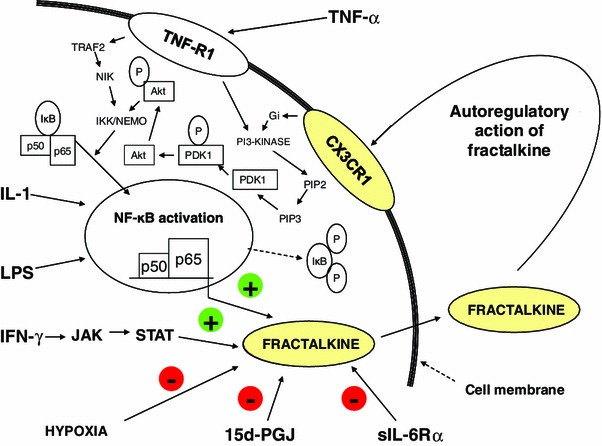
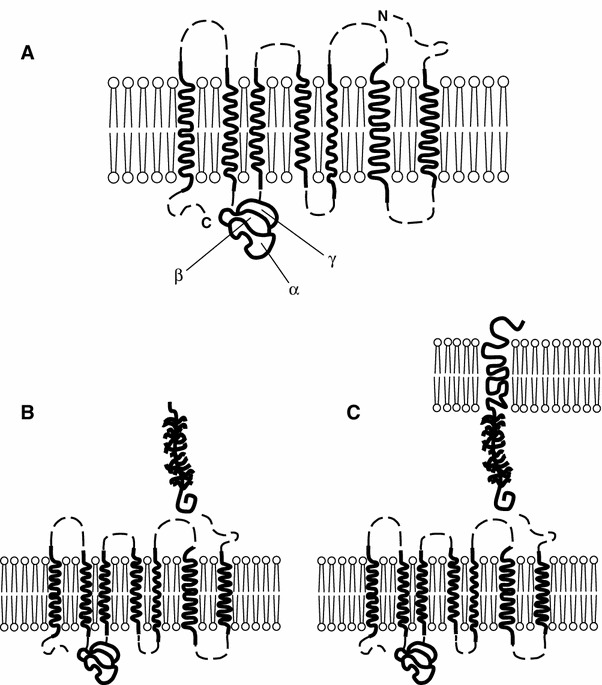
Chemokines are molecules able to induce chemotaxis of monocytes, neutrophils, eosinophils, lymphocytes and fibroblasts. The complex chemokine acts in many physiological and pathological phenomena, including those occurring in the articular cartilage. To date, chemokine CX3CL1 (fractalkine) is the only member of the CX3C class of chemokines with well-documented roles in endothelial cells. CX3CL1 is a unique chemokine that combines properties of chemoattractant and adhesion molecule. The main roles of CX3CL1 include promotion of leukocyte binding and adhesion as well as activation of the target cells. The soluble chemokine domain of CX3CL1 is chemotactic for T cells and monocytes. CX3CL1 acts via its receptor, CX3CR1, which belongs to a family of G protein-coupled receptors. Stimulation of CX3CR1 activates both CX3CL1-dependent and integrin-dependent migrations of cells with synergistically augmented adhesion. Genetic polymorphisms of CX3CR1 may significantly modify the biological roles of CX3CL1, especially in pathologic conditions. Osteoarthritis (OA) is the most common joint disease, affecting approximately 7-8 % of the general population. Development of OA is largely driven by low-grade local background inflammation involving chemokines. The importance of CX3CL1/CX3CR1 signalling in the pathophysiology of OA is still under investigation. This paper, based on a review of the literature, updates and summarises the current knowledge about CX3CL1/CX3CR1 in OA and indicates possible interactions with a potential for therapeutic targeting.
趋化因子是一类能够诱导单核细胞、中性粒细胞、嗜酸性粒细胞、淋巴细胞和成纤维细胞发生趋化作用的分子。复杂的趋化因子参与多种生理和病理过程,包括发生在关节软骨中的过程。迄今为止,趋化因子CX3CL1(fractalkine)是CX3C类趋化因子中唯一在内皮细胞中具有充分记录作用的成员。CX3CL1是一种独特的趋化因子,兼具趋化剂和黏附分子的特性。CX3CL1的主要作用包括促进白细胞结合与黏附以及激活靶细胞。CX3CL1的可溶性趋化因子结构域对T细胞和单核细胞具有趋化作用。CX3CL1通过其受体CX3CR1发挥作用,CX3CR1属于G蛋白偶联受体家族。刺激CX3CR1可激活细胞依赖CX3CL1和整合素的迁移,并协同增强黏附。CX3CR1的基因多态性可能会显著改变CX3CL1的生物学作用,尤其是在病理状态下。骨关节炎(OA)是最常见的关节疾病,影响着约7% - 8%的普通人群。OA的发生很大程度上由涉及趋化因子的低度局部背景炎症驱动。CX3CL1/CX3CR1信号在OA病理生理学中的重要性仍在研究中。本文基于文献综述,更新并总结了目前关于OA中CX3CL1/CX3CR1的知识,并指出了可能的相互作用以及潜在的治疗靶点。