White Gemma E, McNeill Eileen, Channon Keith M, Greaves David R
From the Sir William Dunn School of Pathology (G.E.W., D.R.G.), Division of Cardiovascular Medicine, British Heart Foundation Centre of Research Excellence, John Radcliffe Hospital (E.M., K.M.C.), and Wellcome Trust Centre for Human Genetics (E.M., K.M.C.), University of Oxford, Oxford, United Kingdom.
Arterioscler Thromb Vasc Biol. 2014 Dec;34(12):2554-62. doi: 10.1161/ATVBAHA.114.304717. Epub 2014 Oct 30.
The CX3C chemokine fractalkine (CX3CL1) has a critical role in the development of atherogenesis because apolipoprotein-E-deficient mice lacking CX3CL1 or its receptor CX3CR1 develop smaller plaques and polymorphisms in CX3CR1 are associated with altered risk of cardiovascular disease. CX3CR1 is found on numerous cell types involved in atherogenesis but seems to have a key role in monocyte function. We aimed to elucidate the role of CX3CL1 in human monocyte survival and determine the mechanism by which CX3CL1 spares monocytes from apoptosis.
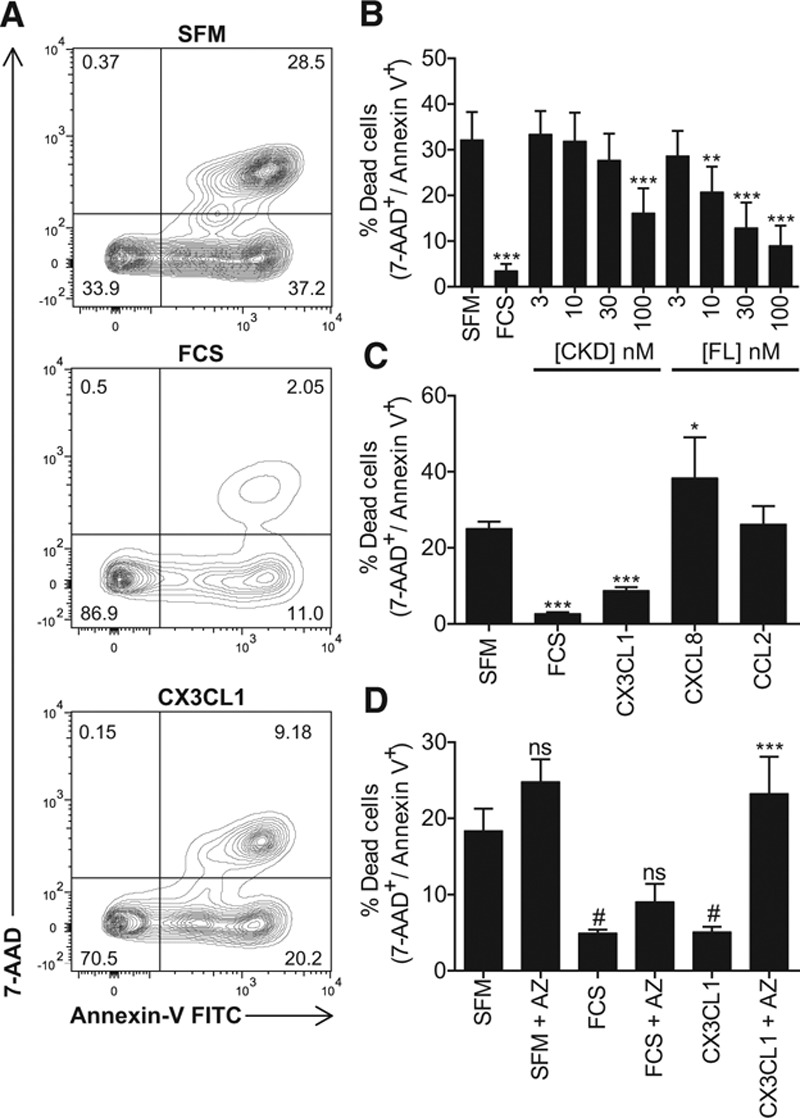
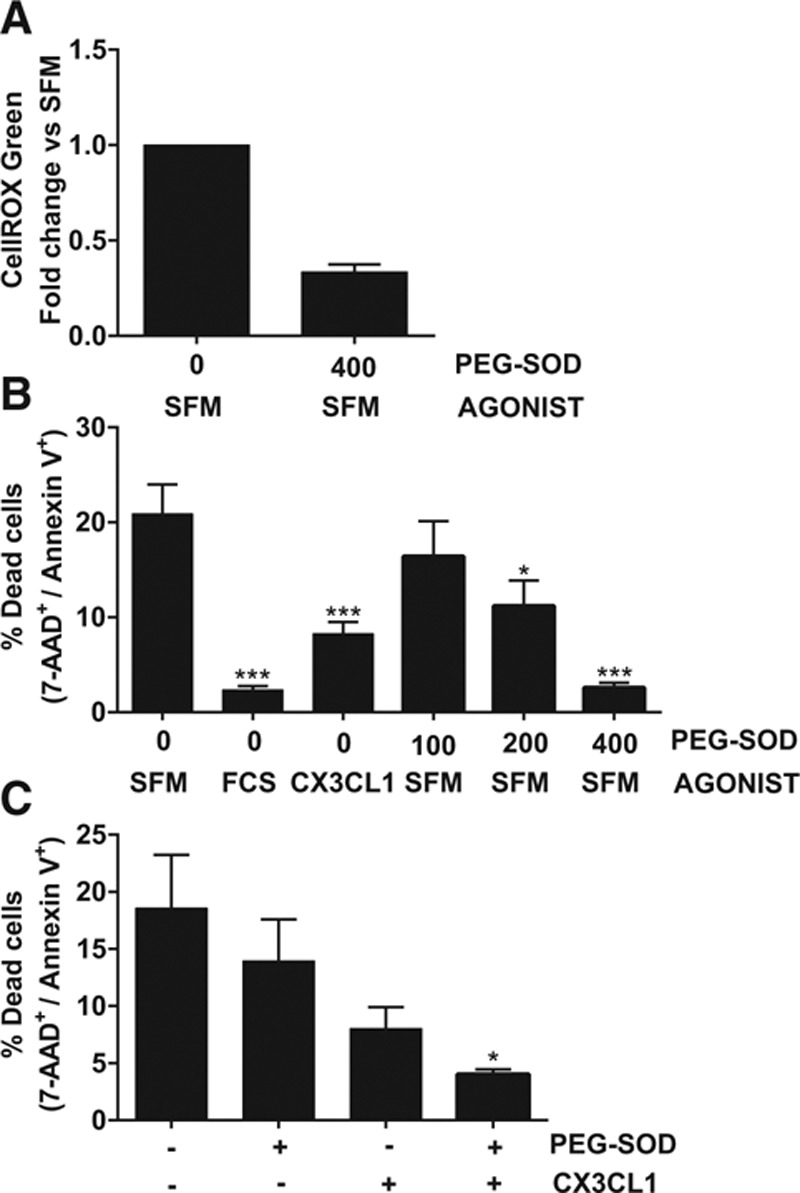
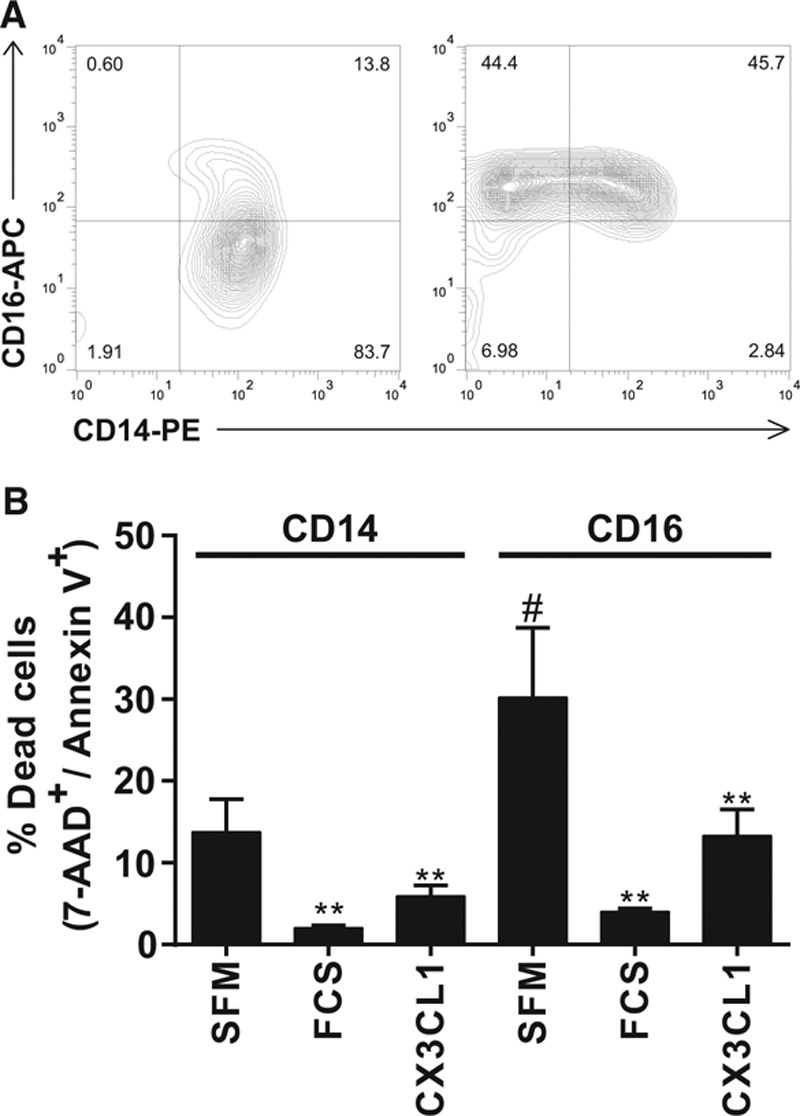
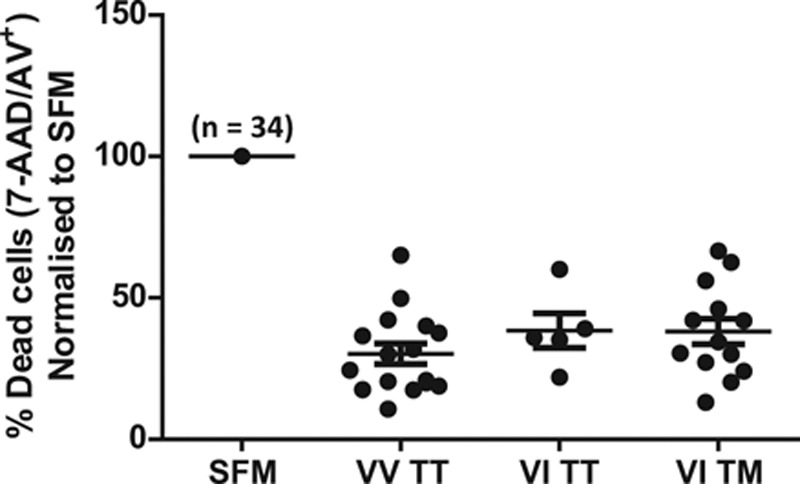
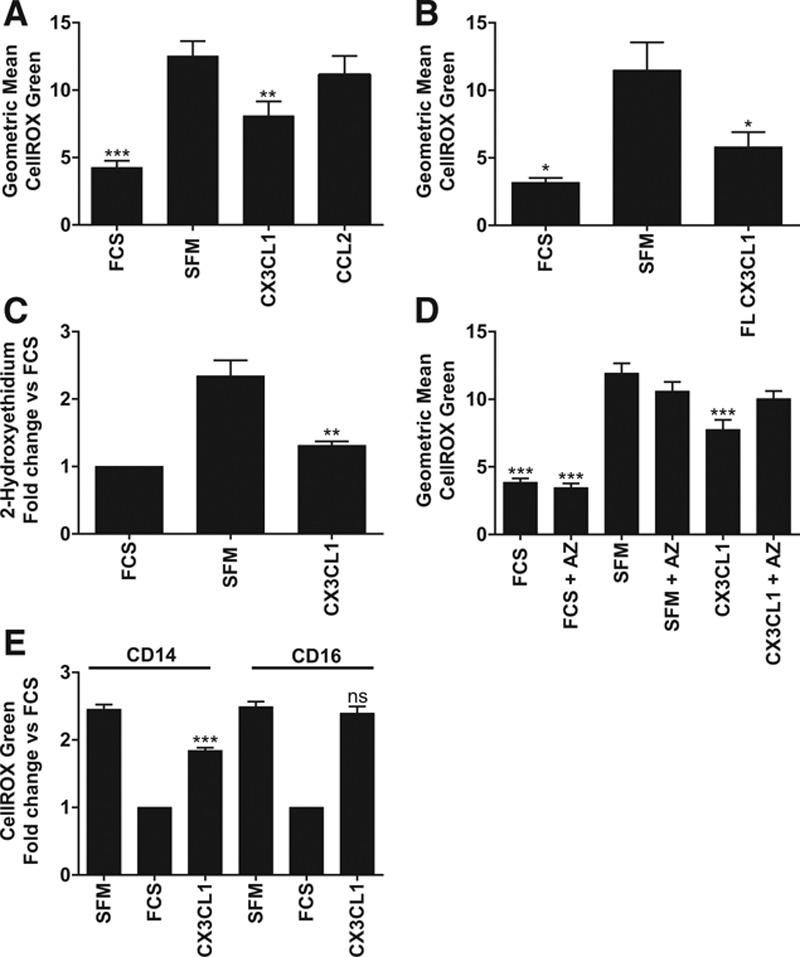
Primary human monocytes were prepared from healthy donors and subjected to serum-starvation to induce spontaneous apoptosis. The addition of CX3CL1, but not other chemokines tested, promoted monocyte survival in a dose-dependent manner with full-length CX3CL1 (including the mucin stalk) having a more potent antiapoptotic effect than chemokine-domain CX3CL1. The prosurvival effect of CX3CL1 was evident in both monocyte subsets although nonclassical monocytes were more prone to spontaneous apoptosis. In addition, we found that the effect of CX3CL1 was independent of CX3CR1 genotype. Serum-starvation increased the level of intracellular reactive oxygen species, and this was reduced by the addition of CX3CL1. Inhibition of oxidative stress with an antioxidant prevented monocyte apoptosis, indicating that this is the dominant mechanism of cell death targeted by CX3CL1.
CX3CL1 has a substantial and highly reproducible antiapoptotic effect on human monocytes, via a mechanism involving a reduction in oxidative stress. This suggests that CX3CL1 is likely to play a key role in human atherogenesis and may provide a novel therapeutic target in cardiovascular disease.
CX3C趋化因子fractalkine(CX3CL1)在动脉粥样硬化的发展过程中起关键作用,因为缺乏CX3CL1或其受体CX3CR1的载脂蛋白E缺陷小鼠形成的斑块较小,且CX3CR1中的多态性与心血管疾病风险的改变有关。CX3CR1存在于许多参与动脉粥样硬化形成的细胞类型上,但似乎在单核细胞功能中起关键作用。我们旨在阐明CX3CL1在人单核细胞存活中的作用,并确定CX3CL1使单核细胞免于凋亡的机制。
从健康供体中制备原代人单核细胞,并使其血清饥饿以诱导自发凋亡。添加CX3CL1而非其他测试的趋化因子能以剂量依赖的方式促进单核细胞存活,全长CX3CL1(包括粘蛋白柄)比趋化因子结构域CX3CL1具有更强的抗凋亡作用。尽管非经典单核细胞更容易发生自发凋亡,但CX3CL1的促存活作用在两个单核细胞亚群中均很明显。此外,我们发现CX3CL1的作用与CX3CR1基因型无关。血清饥饿会增加细胞内活性氧的水平,而添加CX3CL1可使其降低。用抗氧化剂抑制氧化应激可防止单核细胞凋亡,这表明这是CX3CL1靶向的细胞死亡的主要机制。
CX3CL1通过一种涉及降低氧化应激的机制,对人单核细胞具有显著且高度可重复的抗凋亡作用。这表明CX3CL1可能在人类动脉粥样硬化形成中起关键作用,并可能为心血管疾病提供新的治疗靶点。