Rodehacke Sarah, Mennigen Eva, Müller Kathrin U, Ripke Stephan, Jacob Mark J, Hübner Thomas, Schmidt Dirk H K, Goschke Thomas, Smolka Michael N
Neuroimaging Center, Technische Universität Dresden, Dresden, Germany ; Department of Psychiatry and Psychotherapy, Technische Universität Dresden, Dresden, Germany.
Institute of General Psychology, Biopsychology and Methods of Psychology, Department of Psychology, Technische Universität Dresden, Dresden, Germany.
PLoS One. 2014 Feb 18;9(2):e88957. doi: 10.1371/journal.pone.0088957. eCollection 2014.
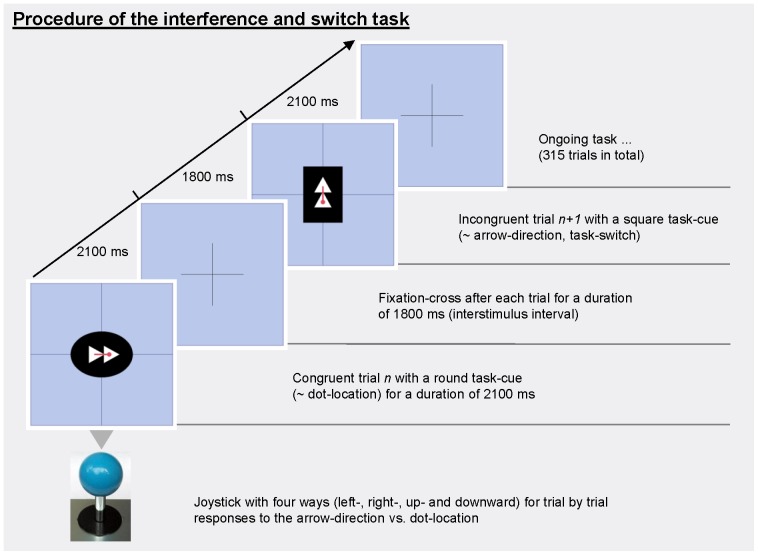
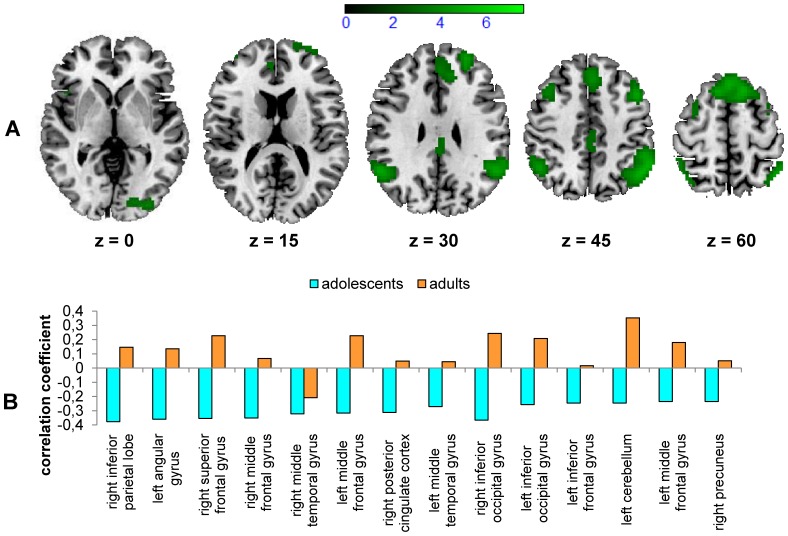
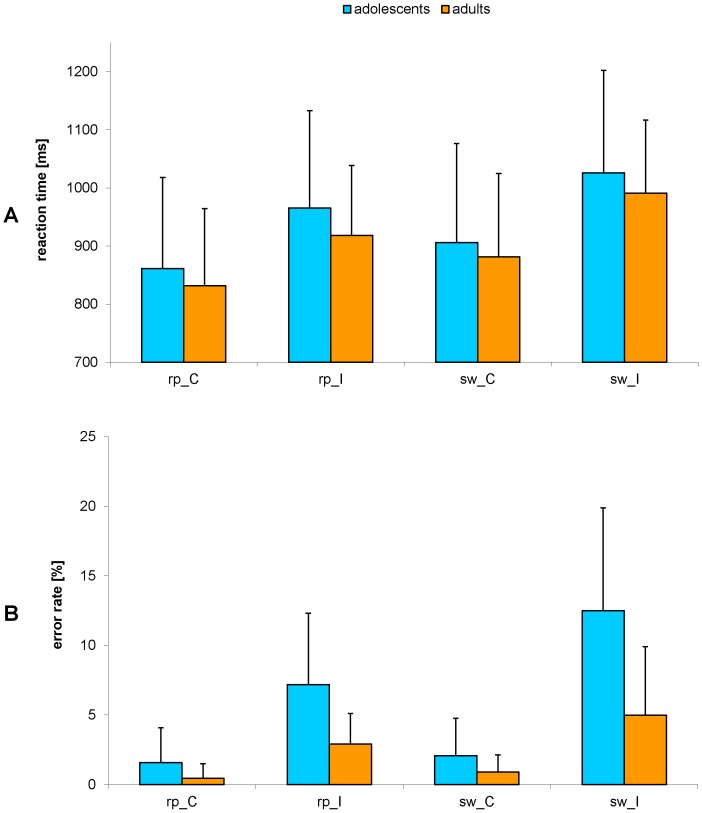
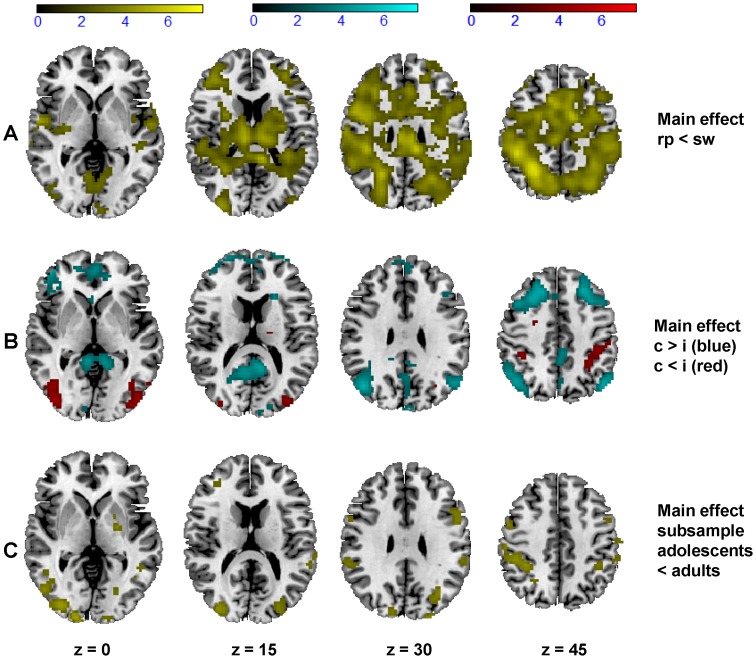
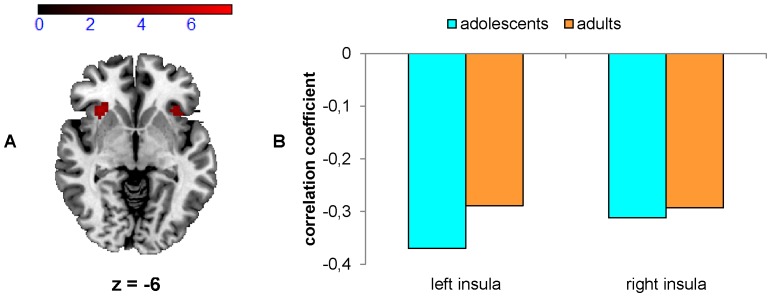
A number of studies have concluded that cognitive control is not fully established until late adolescence. The precise differences in brain function between adults and adolescents with respect to cognitive control, however, remain unclear. To address this issue, we conducted a study in which 185 adolescents (mean age (SD) 14.6 (0.3) years) and 28 adults (mean age (SD) 25.2 (6.3) years) performed a single task that included both a stimulus-response (S-R) interference component and a task-switching component. Behavioural responses (i.e. reaction time, RT; error rate, ER) and brain activity during correct, error and post-error trials, detected by functional magnetic resonance imaging (fMRI), were measured. Behaviourally, RT and ER were significantly higher in incongruent than in congruent trials and in switch than in repeat trials. The two groups did not differ in RT during correct trials, but adolescents had a significantly higher ER than adults. In line with similar RTs, brain responses during correct trials did not differ between groups, indicating that adolescents and adults engage the same cognitive control network to successfully overcome S-R interference or task switches. Interestingly, adolescents with stronger brain activation in the bilateral insulae during error trials and in fronto-parietal regions of the cognitive control network during post-error trials did have lower ERs. This indicates that those mid-adolescents who commit fewer errors are better at monitoring their performance, and after detecting errors are more capable of flexibly allocating further cognitive control resources. Although we did not detect a convincing neural correlate of the observed behavioural differences between adolescents and adults, the revealed interindividual differences in adolescents might at least in part be due to brain development.
多项研究得出结论,认知控制直到青春期后期才完全确立。然而,成年人和青少年在认知控制方面大脑功能的确切差异仍不清楚。为了解决这个问题,我们进行了一项研究,让185名青少年(平均年龄(标准差)14.6(0.3)岁)和28名成年人(平均年龄(标准差)25.2(6.3)岁)执行一项单一任务,该任务包括刺激反应(S-R)干扰成分和任务切换成分。测量了功能磁共振成像(fMRI)检测到的正确、错误和错误后试验期间的行为反应(即反应时间,RT;错误率,ER)和大脑活动。行为上,不一致试验中的RT和ER显著高于一致试验,切换试验中的RT和ER显著高于重复试验。两组在正确试验期间的RT没有差异,但青少年的ER显著高于成年人。与相似的RT一致,两组在正确试验期间的大脑反应没有差异,这表明青少年和成年人使用相同的认知控制网络来成功克服S-R干扰或任务切换。有趣的是,在错误试验期间双侧脑岛以及错误后试验期间认知控制网络的额顶叶区域大脑激活更强的青少年,其ER更低。这表明那些犯错较少的青少年中期个体在监控自己的表现方面表现更好,并且在检测到错误后更有能力灵活分配更多的认知控制资源。尽管我们没有发现青少年和成年人之间观察到的行为差异有令人信服的神经关联,但青少年中揭示的个体差异可能至少部分归因于大脑发育。