Department of Biology & Center for Tissue Regeneration and Engineering (TREND), University of Dayton, 300 College Park, Dayton, OH 45469-2320, USA.
Hum Genomics. 2014 Feb 25;8(1):4. doi: 10.1186/1479-7364-8-4.
Many neuropsychiatric disorders, including stress-related mood disorders, are complex multi-parametric syndromes. Susceptibility to stress and depression is individually different. The best animal model of individual differences that can be used to study the neurobiology of affect regards spontaneous reactions to novelty. Experimentally, when naive rats are exposed to the stress of a novel environment, they display a highly variable exploratory activity and are classified as high or low responders (HR or LR, respectively). Importantly, HR and LR rats do not seem to exhibit a substantial differentiation in relation to their 'depressive-like' status in the forced swim test (FST), a widely used animal model of 'behavioral despair'. In the present study, we investigated whether FST exposure would be accompanied by phenotype-dependent differences in hippocampal gene expression in HR and LR rats.
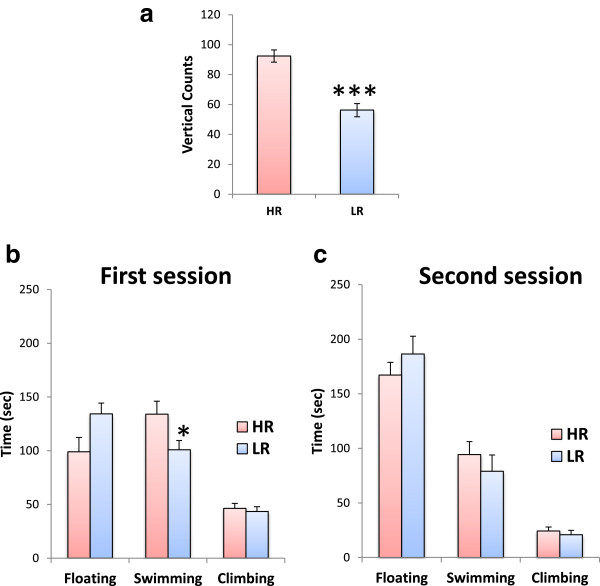
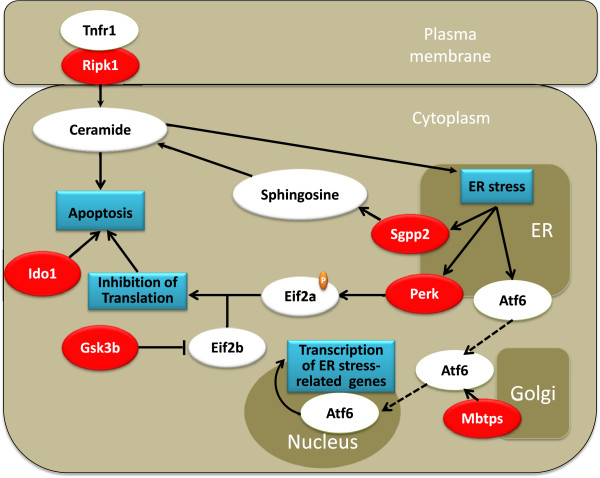
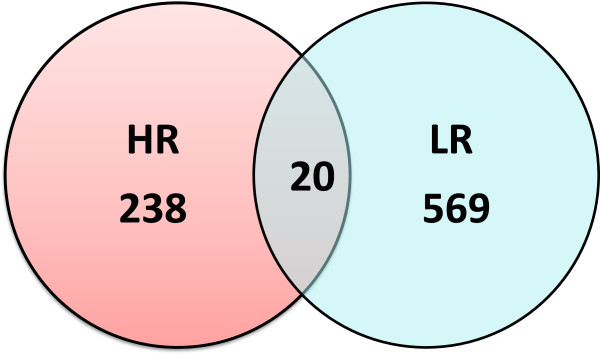
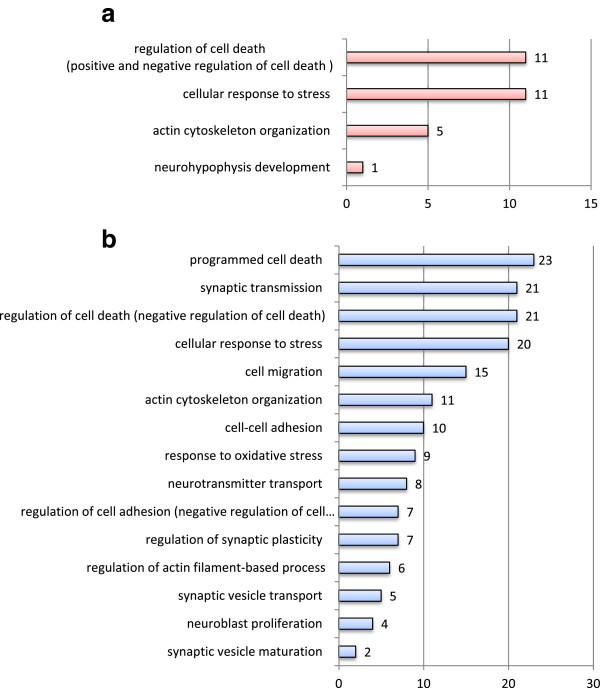
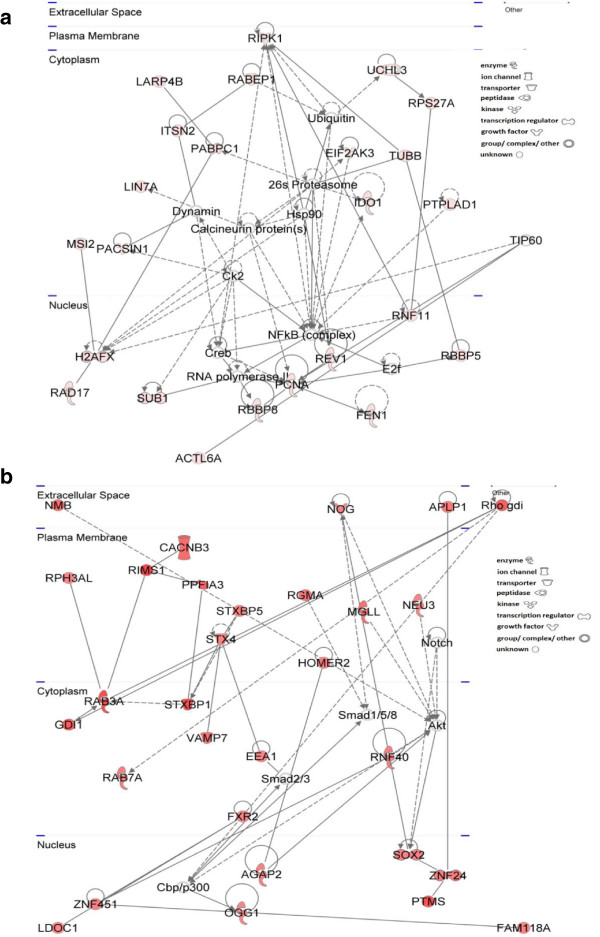
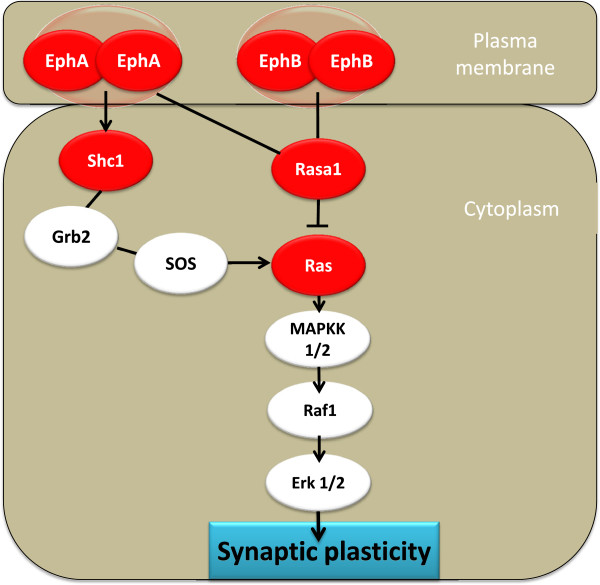
HR and LR rats present a distinct behavioral pattern in the pre-test session but develop comparable depressive-like status in the second FST session. At 24 h following the second FST session, HR and LR rats (stressed and unstressed controls) were sacrificed and hippocampal samples were independently analyzed on whole rat genome Illumina arrays. Functional analysis into pathways and networks was performed using Ingenuity Pathway Analysis (IPA) software. Notably, hippocampal gene expression signatures between HR and LR rats were markedly divergent, despite their comparable depressive-like status in the FST. These molecular differences are reflected in both the extent of transcriptional remodeling (number of significantly changed genes) and the types of molecular pathways affected following FST exposure. A markedly higher number of genes (i.e., 2.28-fold) were statistically significantly changed following FST in LR rats, as compared to their HR counterparts. Notably, genes associated with neurogenesis and synaptic plasticity were induced in the hippocampus of LR rats in response to FST, whereas in HR rats, FST induced pathways directly or indirectly associated with induction of apoptotic mechanisms.
The markedly divergent gene expression signatures exposed herein support the notion that the hippocampus of HR and LR rats undergoes distinct transcriptional remodeling in response to the same stress regimen, thus yielding a different FST-related 'endophenotype', despite the seemingly similar depressive-like phenotype.
许多神经精神疾病,包括与应激相关的情绪障碍,都是复杂的多参数综合征。对压力和抑郁的易感性因人而异。可以用于研究情感神经生物学的个体差异的最佳动物模型是对新奇事物的自发反应。实验中,当新生大鼠暴露于新环境的应激下时,它们表现出高度可变的探索性活动,并被分类为高或低反应者(HR 或 LR)。重要的是,HR 和 LR 大鼠在强迫游泳试验(FST)中似乎没有表现出与“抑郁样”状态的实质性分化,FST 是一种广泛使用的“行为绝望”动物模型。在本研究中,我们研究了 FST 暴露是否会伴随 HR 和 LR 大鼠海马基因表达的表型依赖性差异。
HR 和 LR 大鼠在预测试阶段表现出明显不同的行为模式,但在第二次 FST 阶段发展出类似的抑郁样状态。在第二次 FST 后 24 小时,HR 和 LR 大鼠(应激和未应激对照)被处死,海马样本分别在整个大鼠基因组 Illumina 阵列上进行分析。使用 IPA 软件对途径和网络进行功能分析。值得注意的是,尽管 HR 和 LR 大鼠在 FST 中的抑郁样状态相似,但它们之间的海马基因表达特征明显不同。这些分子差异反映在转录重编程的程度(显著变化基因的数量)和 FST 暴露后受影响的分子途径的类型上。与 HR 大鼠相比,LR 大鼠在 FST 后显著变化的基因数量明显更多(即 2.28 倍)。值得注意的是,与神经发生和突触可塑性相关的基因在 FST 后被诱导在 LR 大鼠的海马中,而在 HR 大鼠中,FST 诱导的途径直接或间接与诱导凋亡机制有关。
本文揭示的明显不同的基因表达特征支持这样一种观点,即 HR 和 LR 大鼠的海马在对相同应激方案的反应中经历了不同的转录重编程,从而产生了不同的与 FST 相关的“内表型”,尽管它们的抑郁样表型似乎相似。