Geography and Economic History, Umeå University, 901 87, Umeå, Sweden,
Ambio. 2014 Oct;43(6):745-58. doi: 10.1007/s13280-014-0492-0. Epub 2014 Feb 26.
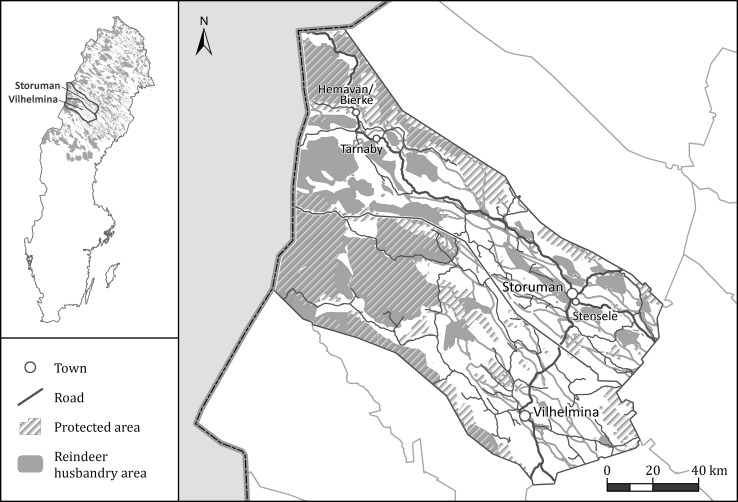
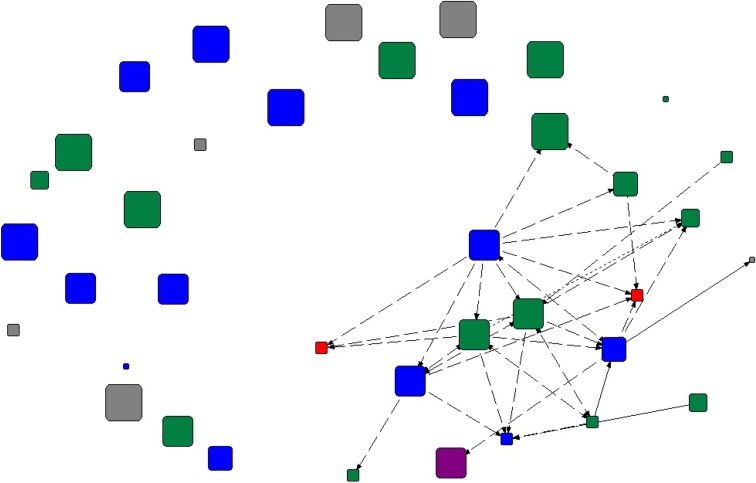
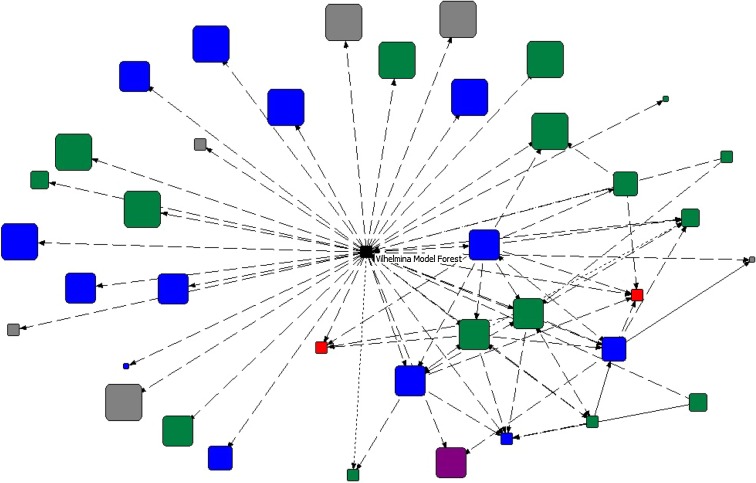
Forest use in Northern Sweden is being influenced both by global trends and local situations. This results in interactions between numerous groups that may impact local forest governance. Social network analysis can here provide insight into the total pattern of positive, negative, and cross-level interactions within user group community structure (within and among groups). This study analyses interactions within selected renewable resource sectors in two northern Swedish municipalities, both with regard to whether they are positive, neutral, or negative, as well as with regard to how local actors relate to actors across levels, e.g., with regional, national, and international actors. The study illustrates that many interactions both within and outside a given sector are seen as neutral or positive, and that considerable interaction and impact are defined as national and in some cases even international. It also indicates that the impact of Sweden's only existing Model Forest may to some extent constitute a bridge between different sectors and levels, in comparison with the interactions between sectors in a municipality where such a cooperation mechanism does not exist.
瑞典北部的森林利用受到全球趋势和当地情况的影响。这导致了众多群体之间的相互作用,可能会影响当地的森林治理。社会网络分析可以深入了解用户群体社区结构(群体内部和群体之间)中积极、消极和跨层次相互作用的总体模式。本研究分析了瑞典两个北部城市选定可再生资源部门内部的相互作用,包括它们是积极的、中性的还是消极的,以及地方行为者与不同层次的行为者(如区域、国家和国际行为者)的关系。研究表明,给定部门内外的许多相互作用被视为中性或积极的,并且相当多的相互作用和影响被定义为国家的,在某些情况下甚至是国际的。它还表明,与没有这种合作机制的城市中部门之间的相互作用相比,瑞典唯一现有的示范森林的影响在某种程度上可能构成不同部门和层次之间的桥梁。