Cong Huan, Fu Gregory C
Division of Chemistry and Chemical Engineering, California Institute of Technology , Pasadena, California 91125, United States.
J Am Chem Soc. 2014 Mar 12;136(10):3788-91. doi: 10.1021/ja500706v. Epub 2014 Feb 27.
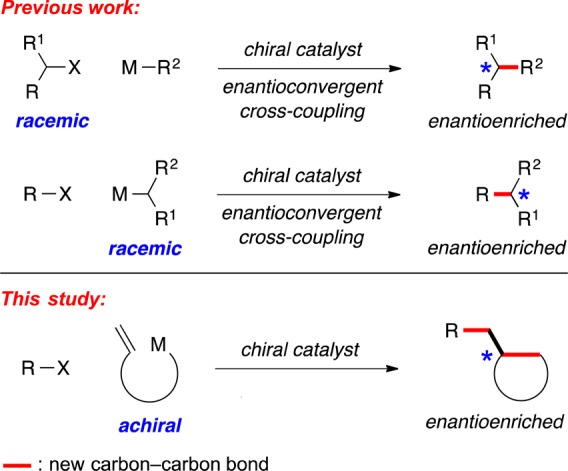
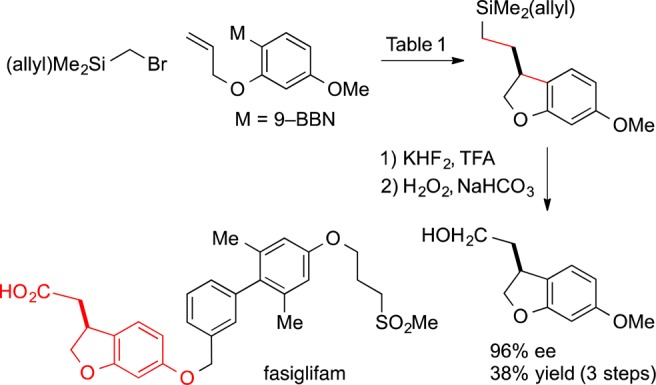
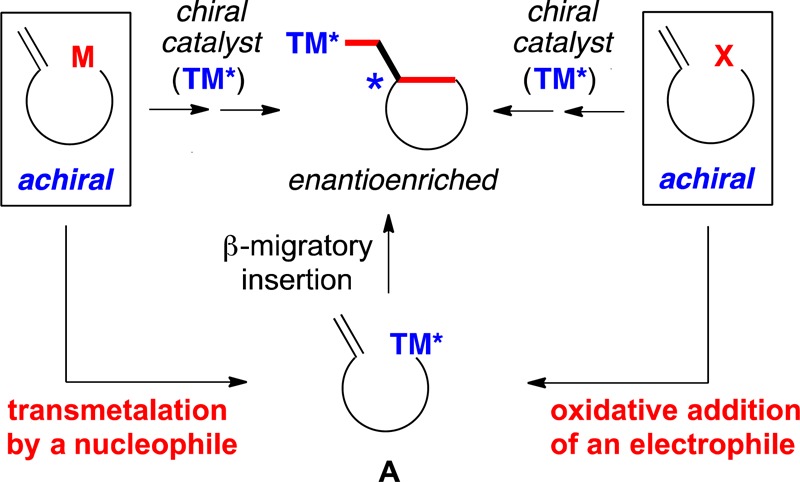
As part of our ongoing effort to expand the scope of cross-coupling reactions of alkyl electrophiles, we have pursued a strategy wherein the nucleophilic coupling partner includes a pendant olefin; after transmetalation by such a substrate, if β-migratory insertion proceeds faster than direct cross-coupling, an additional carbon-carbon bond and stereocenter can be formed. With the aid of a nickel/diamine catalyst (both components are commercially available), we have established the viability of this approach for the catalytic asymmetric synthesis of 2,3-dihydrobenzofurans and indanes. Furthermore, we have applied this new method to the construction of the dihydrobenzofuran core of fasiglifam, as well as to a cross-coupling with a racemic alkyl electrophile; in the latter process, the chiral catalyst controls two stereocenters, one that is newly generated in a β-migratory insertion and one that begins as a mixture of enantiomers.
作为我们不断拓展烷基亲电试剂交叉偶联反应范围的一部分工作,我们采用了一种策略,其中亲核偶联伙伴包含一个侧链烯烃;经此类底物进行金属转移后,如果β-迁移插入比直接交叉偶联进行得更快,则可形成额外的碳-碳键和立体中心。借助镍/二胺催化剂(两种组分均有市售),我们已证实该方法用于催化不对称合成2,3-二氢苯并呋喃和茚满的可行性。此外,我们已将这种新方法应用于法格列净二氢苯并呋喃核心结构的构建,以及与外消旋烷基亲电试剂的交叉偶联;在后一过程中,手性催化剂控制两个立体中心,一个是在β-迁移插入中新生成的,另一个最初是对映体混合物。