Gasparyan Armen Yuri, Ayvazyan Lilit, Akazhanov Nurbek A, Kitas George D
Armen Yuri Gasparyan, Departments of Rheumatology and Research and Development, Dudley Group NHS Foundation Trust, Russells Hall Hospital, North Block, Clinical Research Unit, Dudley, West Midlands, DY1 2HQ, United Kingdom,
Croat Med J. 2014 Feb;55(1):61-72. doi: 10.3325/cmj.2014.55.61.
To analyze mistakes and misconduct in multidisciplinary and specialized biomedical journals.
We conducted searches through PubMed to retrieve errata, duplicate, and retracted publications (as of January 30, 2014). To analyze publication activity and citation profiles of countries, multidisciplinary, and specialized biomedical journals, we referred to the latest data from the SCImago Journal and Country Rank database. Total number of indexed articles and values of the h-index of the fifty most productive countries and multidisciplinary journals were recorded and linked to the number of duplicate and retracted publications in PubMed.
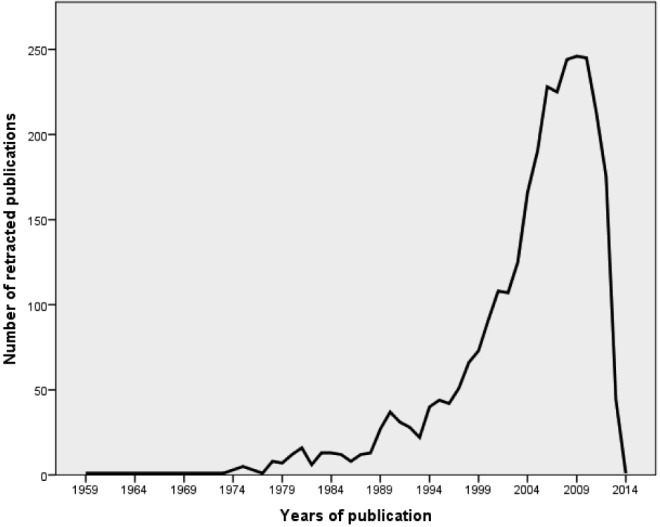
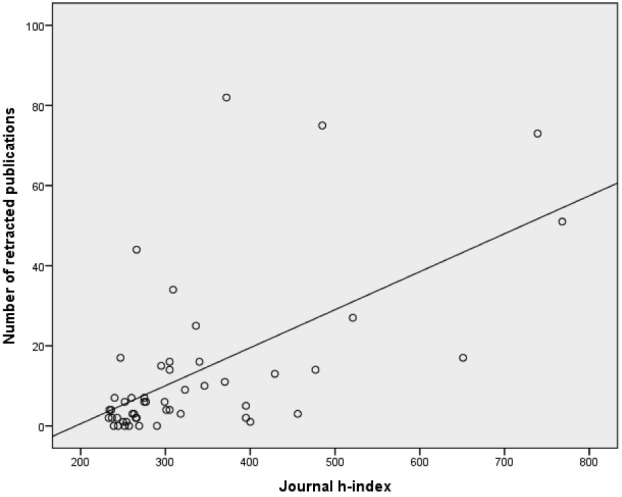
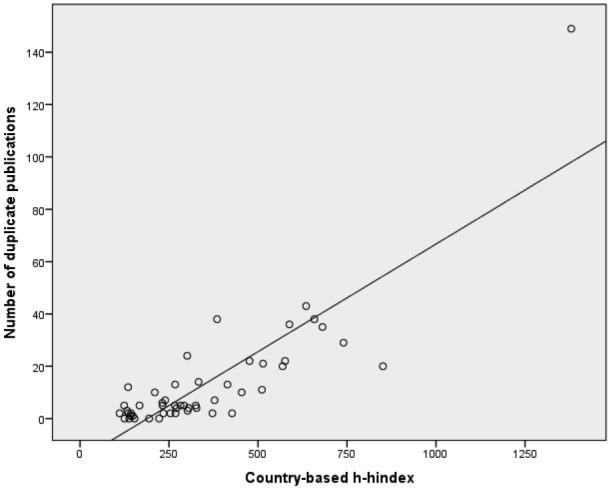
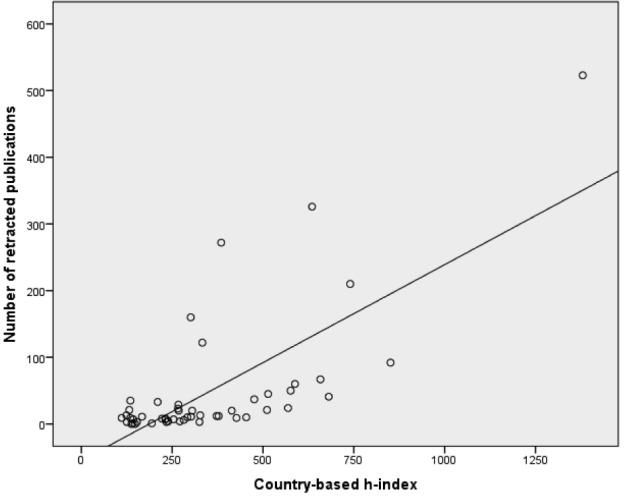
Our analysis found 2597 correction items. A striking increase in the number of corrections appeared in 2013, which is mainly due to 871 (85.3%) corrections from PLOS One. The number of duplicate publications was 1086. Articles frequently published in duplicate were reviews (15.6%), original studies (12.6%), and case reports (7.6%), whereas top three retracted articles were original studies (10.1%), randomized trials (8.8%), and reviews (7%). A strong association existed between the total number of publications across countries and duplicate (rs=0.86, P<0.0001) and retracted items (rs=0.812, P<0.0001). A similar trend was found between country-based h-index values and duplicate and retracted publications.
The study suggests that the intensified self-correction in biomedicine is due to the attention of readers and authors, who spot errors in their hub of evidence-based information. Digitization and open access confound the staggering increase in correction notices and retractions.
分析多学科及专业生物医学期刊中的错误与不当行为。
我们通过PubMed进行检索,以获取勘误、重复发表及撤回的出版物(截至2014年1月30日)。为分析各国、多学科及专业生物医学期刊的发表活动及被引概况,我们参考了SCImago期刊与国家排名数据库的最新数据。记录了五十个发文量最高的国家及多学科期刊的收录文章总数及h指数值,并将其与PubMed中重复发表及撤回出版物的数量相关联。
我们的分析发现了2597条勘误项。2013年勘误数量显著增加,这主要归因于《公共科学图书馆·综合》(PLOS One)的871条(85.3%)勘误。重复发表的文章有1086篇。经常被重复发表的文章类型有综述(15.6%)、原创研究(12.6%)及病例报告(7.6%),而被撤回文章排名前三的类型为原创研究(10.1%)、随机试验(8.8%)及综述(7%)。各国发表文章总数与重复发表文章(rs = 0.86,P < 0.0001)及撤回文章(rs = 0.812,P < 0.0001)之间存在强关联。基于国家的h指数值与重复发表及撤回出版物之间也发现了类似趋势。
该研究表明,生物医学领域自我纠错的加强归因于读者和作者的关注,他们在基于证据的信息中心发现了错误。数字化和开放获取导致勘误通知和撤稿数量惊人增加。