Texas A & M University AgriLife Research, Department of Entomology, 2475 TAMU, College Station, TX 77843, USA; Federal University of São Carlos, Graduate Program in Genetics and Evolution, Brazil.
Texas A & M University AgriLife Research, Department of Entomology, 2475 TAMU, College Station, TX 77843, USA.
Int J Parasitol. 2014 May;44(6):369-79. doi: 10.1016/j.ijpara.2014.01.010. Epub 2014 Feb 28.
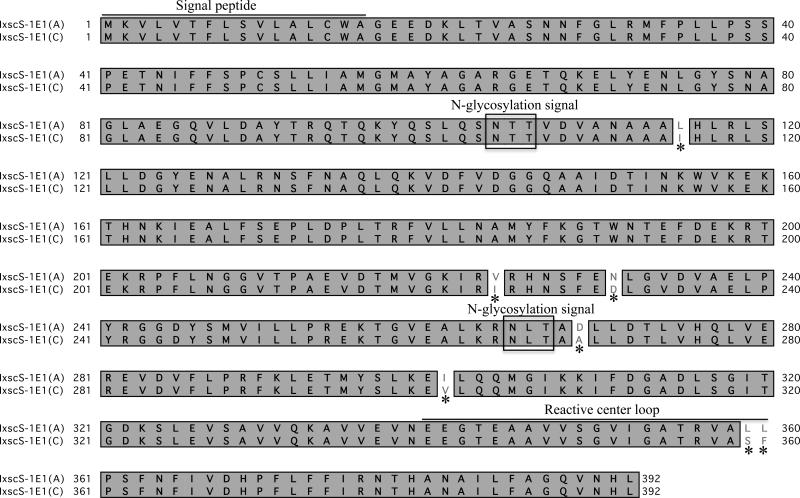
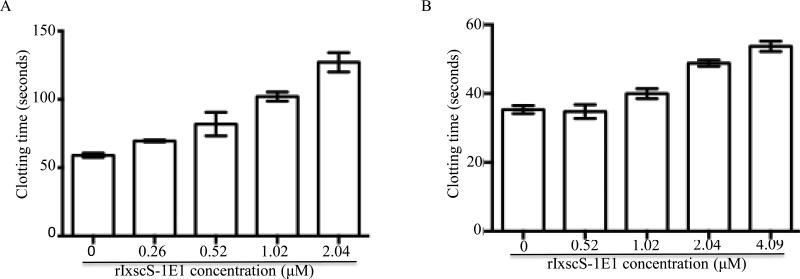
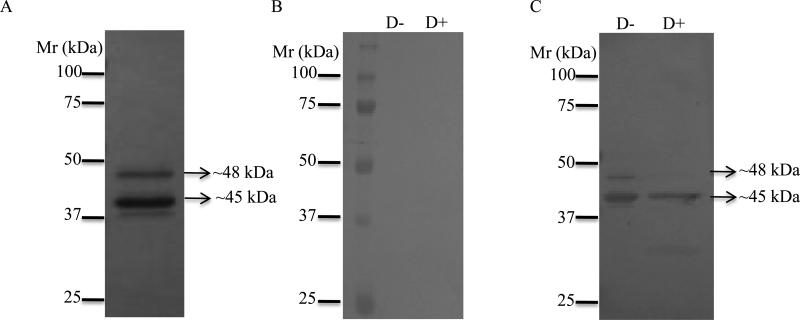
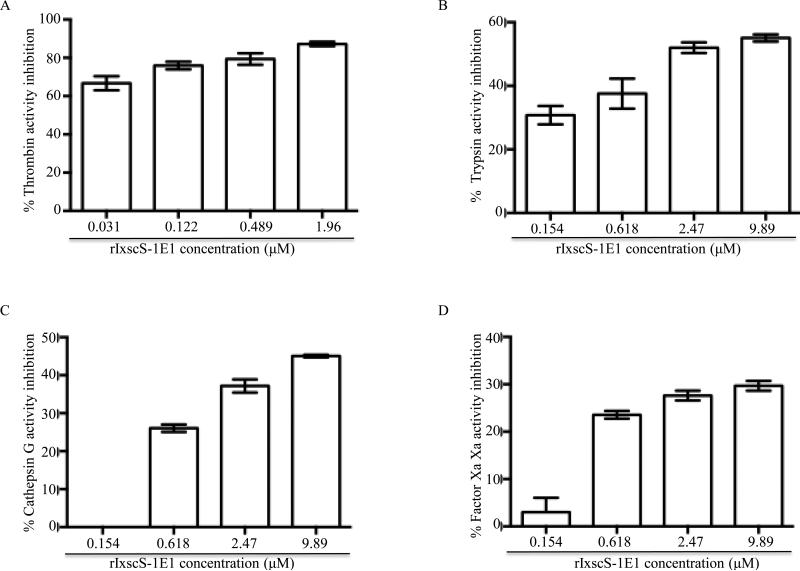
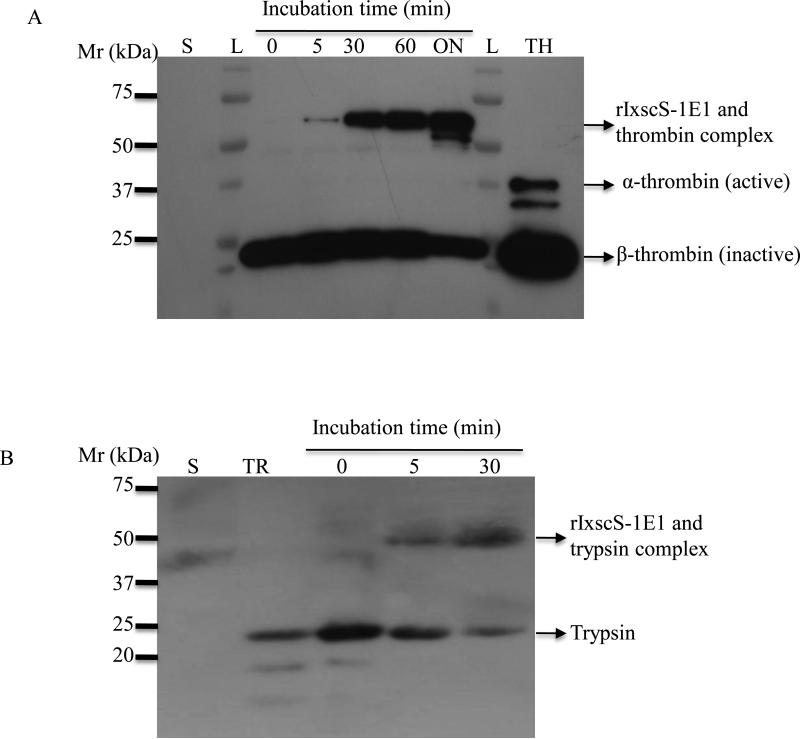
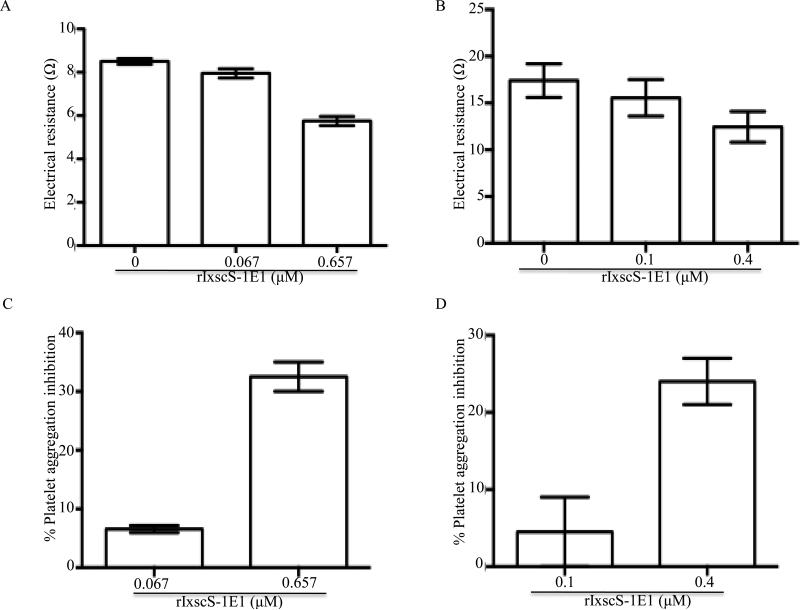
Ixodes scapularis is a medically important tick species that transmits causative agents of important human tick-borne diseases including borreliosis, anaplasmosis and babesiosis. An understanding of how this tick feeds is needed prior to the development of novel methods to protect the human population against tick-borne disease infections. This study characterizes a blood meal-induced I. scapularis (Ixsc) tick saliva serine protease inhibitor (serpin (S)), in-house referred to as IxscS-1E1. The hypothesis that ticks use serpins to evade the host's defense response to tick feeding is based on the assumption that tick serpins inhibit functions of protease mediators of the host's anti-tick defense response. Thus, it is significant that consistent with hallmark characteristics of inhibitory serpins, Pichia pastoris-expressed recombinant IxscS-1E1 (rIxscS-1E1) can trap thrombin and trypsin in SDS- and heat-stable complexes, and reduce the activity of the two proteases in a dose-responsive manner. Additionally, rIxscS-1E1 also inhibited, but did not apparently form detectable complexes with, cathepsin G and factor Xa. Our data also show that rIxscS-1E1 may not inhibit chymotrypsin, kallikrein, chymase, plasmin, elastase and papain even at a much higher rIxscS-1E1 concentration. Native IxscS-1E1 potentially plays a role(s) in facilitating I. scapularis tick evasion of the host's hemostatic defense as revealed by the ability of rIxscS-1E1 to inhibit adenosine diphosphate- and thrombin-activated platelet aggregation, and delay activated partial prothrombin time and thrombin time plasma clotting in a dose-responsive manner. We conclude that native IxscS-1E1 is part of the tick saliva protein complex that mediates its anti-hemostatic, and potentially inflammatory, functions by inhibiting the actions of thrombin, trypsin and other yet unknown trypsin-like proteases at the tick-host interface.
Ixodes scapularis 是一种医学上重要的蜱种,可传播包括莱姆病、无形体病和巴贝斯虫病在内的重要人类蜱传疾病的病原体。在开发新方法来保护人类免受蜱传疾病感染之前,需要了解这种蜱的吸血方式。本研究描述了一种由血餐诱导的 I. scapularis(Ixsc)蜱唾液丝氨酸蛋白酶抑制剂(丝氨酸蛋白酶抑制剂(S)),内部称为 IxscS-1E1。蜱使用丝氨酸蛋白酶抑制剂来逃避宿主对蜱叮咬的防御反应的假设是基于这样的假设,即蜱丝氨酸蛋白酶抑制剂抑制宿主抗蜱防御反应中蛋白酶介质的功能。因此,重要的是,与抑制性丝氨酸蛋白酶抑制剂的标志性特征一致,毕赤酵母表达的重组 IxscS-1E1(rIxscS-1E1)可以在 SDS 和热稳定的复合物中捕获凝血酶和胰蛋白酶,并以剂量反应的方式降低两种蛋白酶的活性。此外,rIxscS-1E1 还抑制了组织蛋白酶 G 和因子 Xa,但似乎没有形成可检测的复合物。我们的数据还表明,rIxscS-1E1 甚至在更高的 rIxscS-1E1 浓度下也可能不会抑制糜蛋白酶、激肽释放酶、糜酶、纤溶酶、弹性蛋白酶和木瓜蛋白酶。rIxscS-1E1 可以抑制 ADP 和凝血酶激活的血小板聚集,并且可以剂量依赖性地延迟激活的部分凝血活酶时间和凝血酶时间血浆凝固,这表明 rIxscS-1E1 能够抑制血小板的止血防御,从而揭示了天然 IxscS-1E1 在促进 I. scapularis 蜱逃避宿主止血防御中的作用。我们得出结论,天然 IxscS-1E1 是蜱唾液蛋白复合物的一部分,通过在蜱 - 宿主界面抑制凝血酶、胰蛋白酶和其他未知的胰蛋白酶样蛋白酶的作用,介导其抗凝血和潜在的炎症功能。