Department of Biology, Texas A&M University, College Station, Texas, United States of America.
PLoS One. 2013 Aug 7;8(8):e70795. doi: 10.1371/journal.pone.0070795. eCollection 2013.
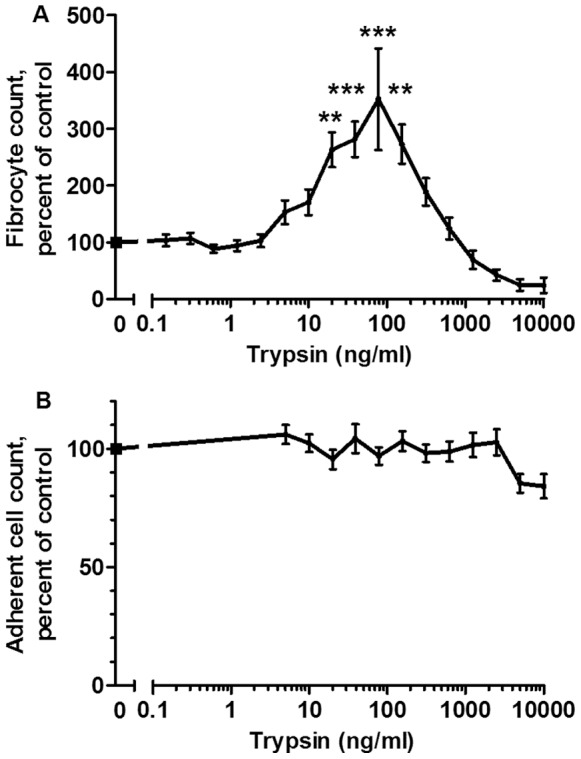
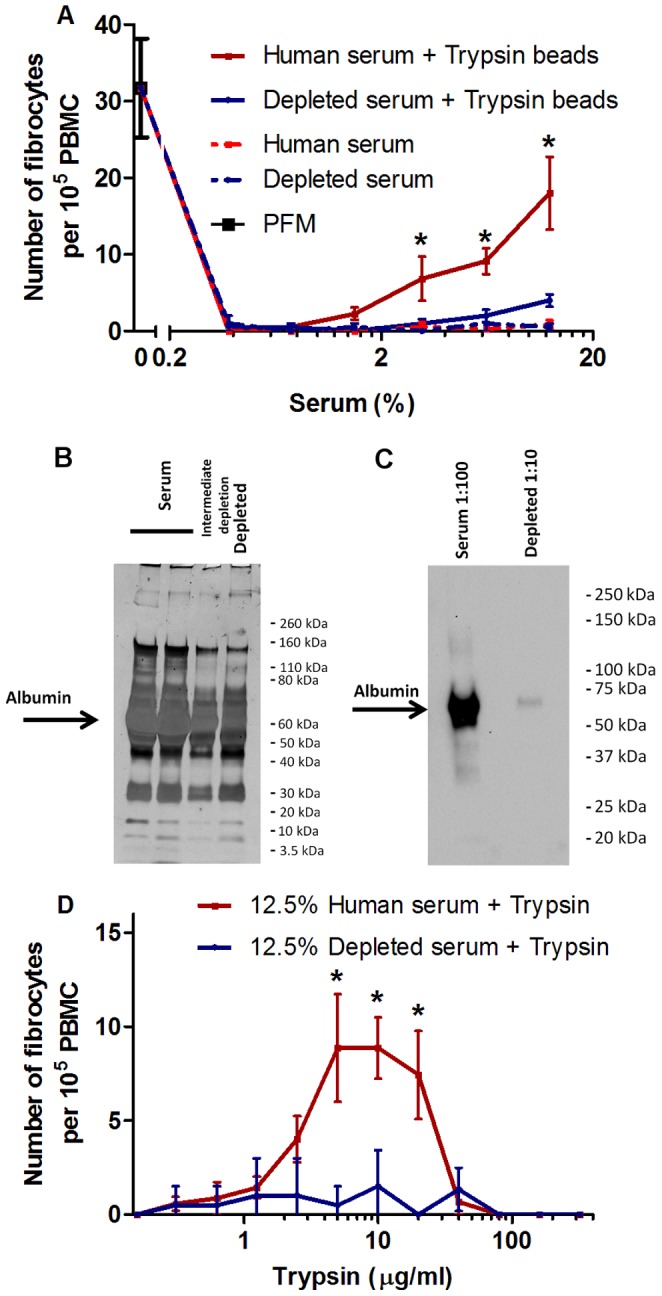
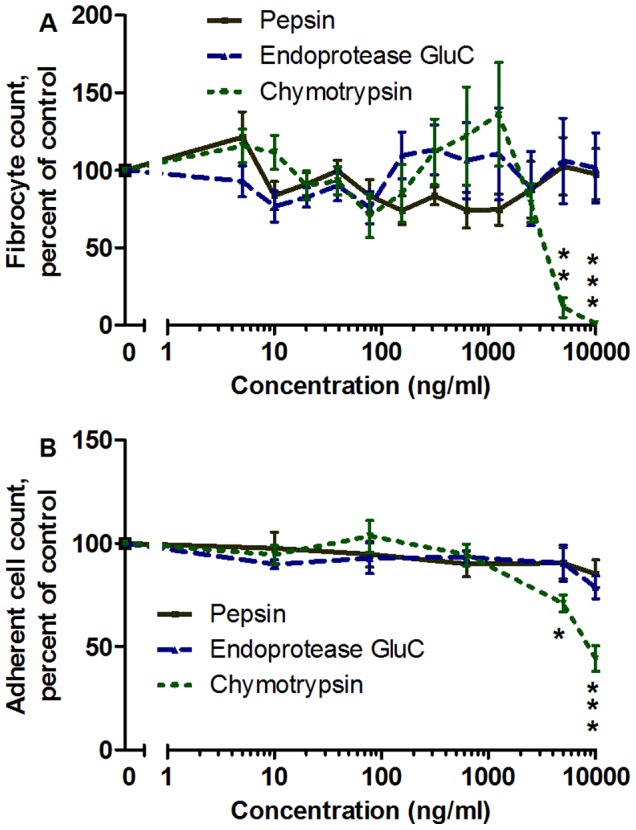
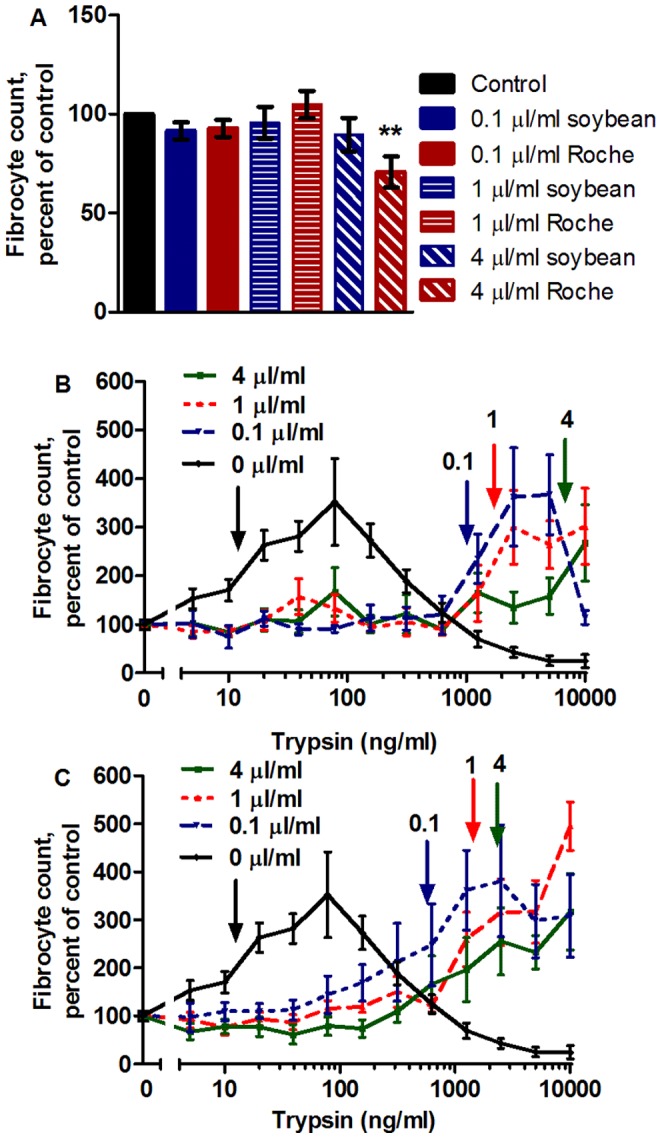
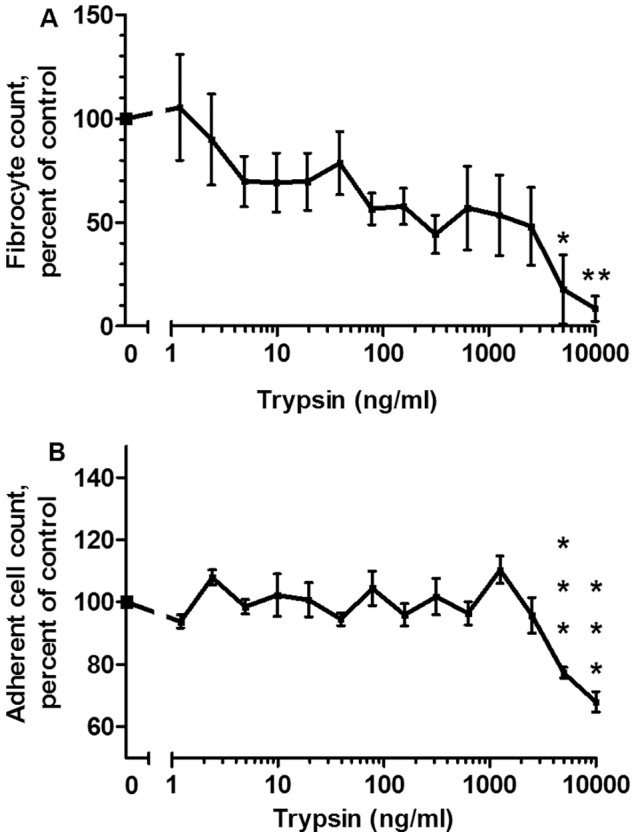
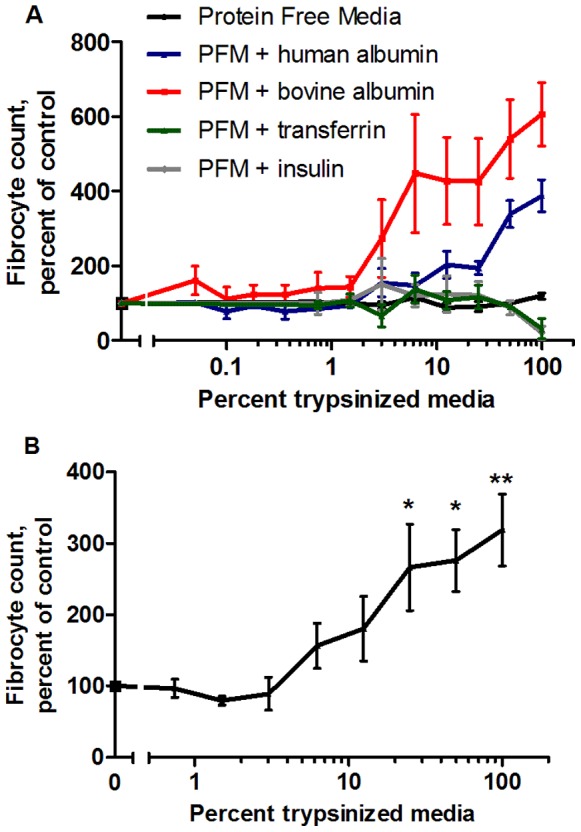
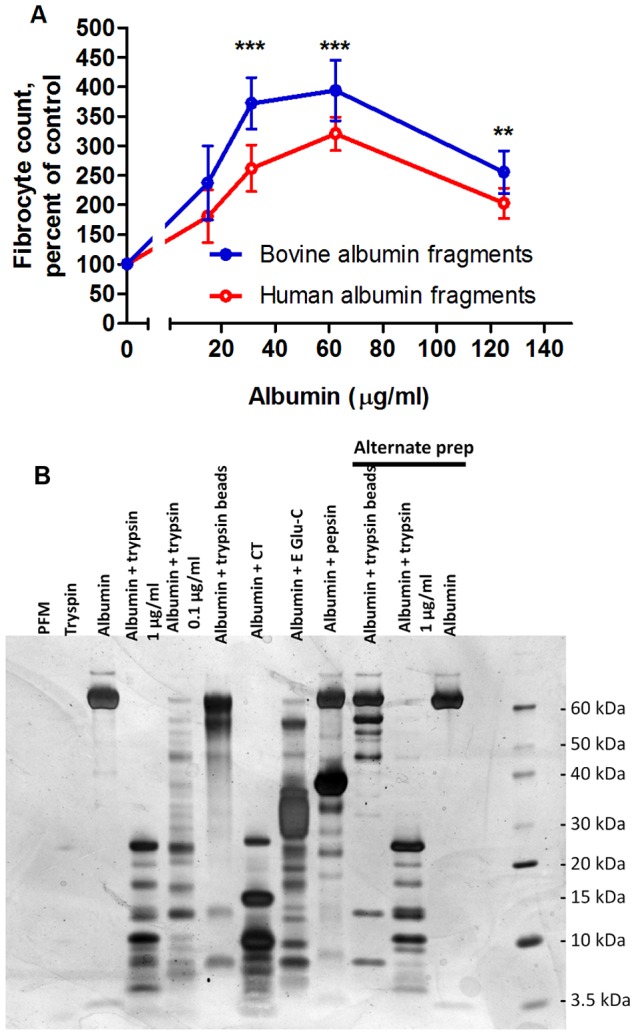
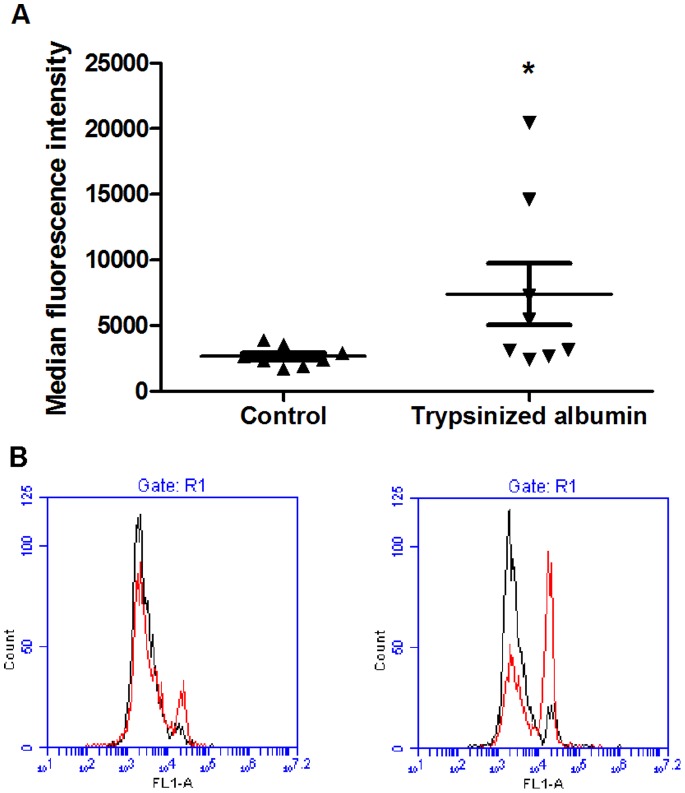
Trypsin-containing topical treatments can be used to speed wound healing, although the mechanism of action is unknown. To help form granulation tissue and heal wounds, monocytes leave the circulation, enter the wound tissue, and differentiate into fibroblast-like cells called fibrocytes. We find that 20 to 200 ng/ml trypsin (concentrations similar to those used in wound dressings) potentiates the differentiation of human monocytes to fibrocytes in cell culture. Adding trypsin inhibitors increases the amount of trypsin needed to potentiate fibrocyte differentiation, suggesting that the potentiating effect is dependent on trypsin proteolytic activity. Proteases with other site specificities such as pepsin, endoprotease GluC, and chymotrypsin do not potentiate fibrocyte differentiation. This potentiation requires the presence of albumin in the culture medium, and tryptic fragments of human or bovine albumin also potentiate fibrocyte differentiation. These results suggest that topical trypsin speeds wound healing by generating tryptic fragments of albumin, which in turn potentiate fibrocyte differentiation.
含胰蛋白酶的局部治疗可用于加速伤口愈合,尽管其作用机制尚不清楚。为了帮助形成肉芽组织和愈合伤口,单核细胞离开循环系统,进入伤口组织,并分化为成纤维细胞样细胞,称为纤维细胞。我们发现,20 至 200ng/ml 的胰蛋白酶(与伤口敷料中使用的浓度相似)可增强细胞培养中人类单核细胞向纤维细胞的分化。添加胰蛋白酶抑制剂会增加增强纤维细胞分化所需的胰蛋白酶量,表明这种增强作用依赖于胰蛋白酶的蛋白水解活性。具有其他特异性位点的蛋白酶,如胃蛋白酶、内切蛋白酶 GluC 和糜蛋白酶,不会增强纤维细胞分化。这种增强作用需要培养基中白蛋白的存在,人或牛白蛋白的胰蛋白酶片段也能增强纤维细胞分化。这些结果表明,局部应用胰蛋白酶通过产生白蛋白的胰蛋白酶片段加速伤口愈合,进而增强纤维细胞分化。