Bergmann Carsten
Center for Human Genetics, Bioscientia, Konrad-Adenauer-Str. 17, 55218, Ingelheim, Germany,
Pediatr Nephrol. 2015 Jan;30(1):15-30. doi: 10.1007/s00467-013-2706-2. Epub 2014 Mar 1.
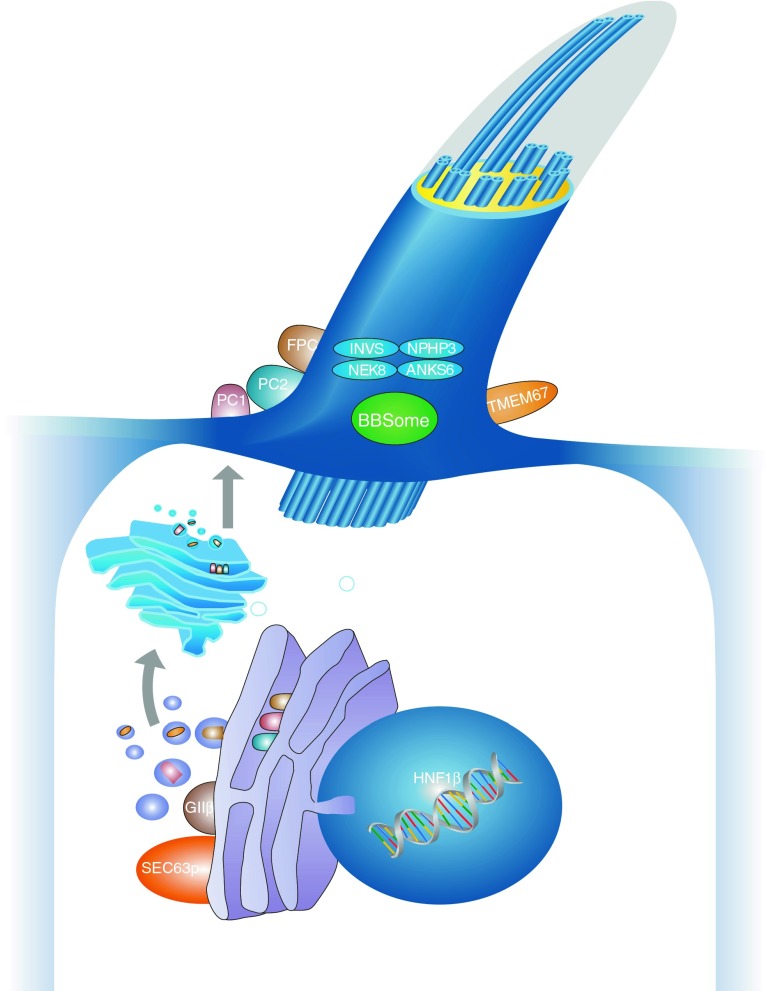
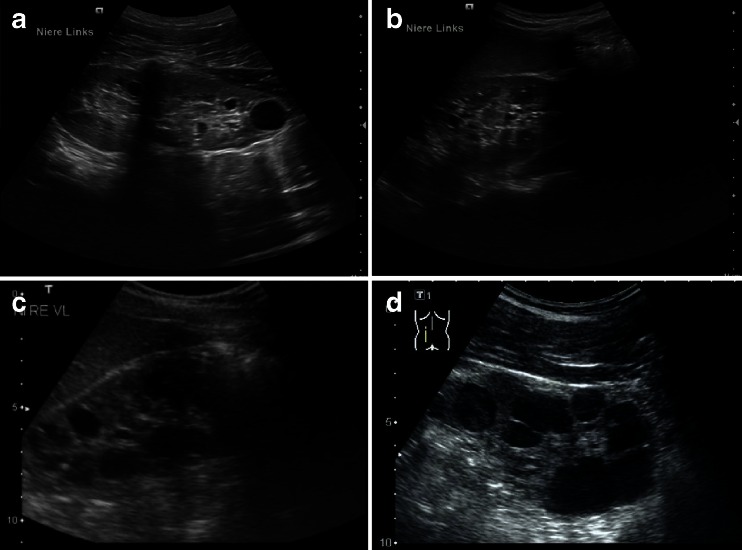
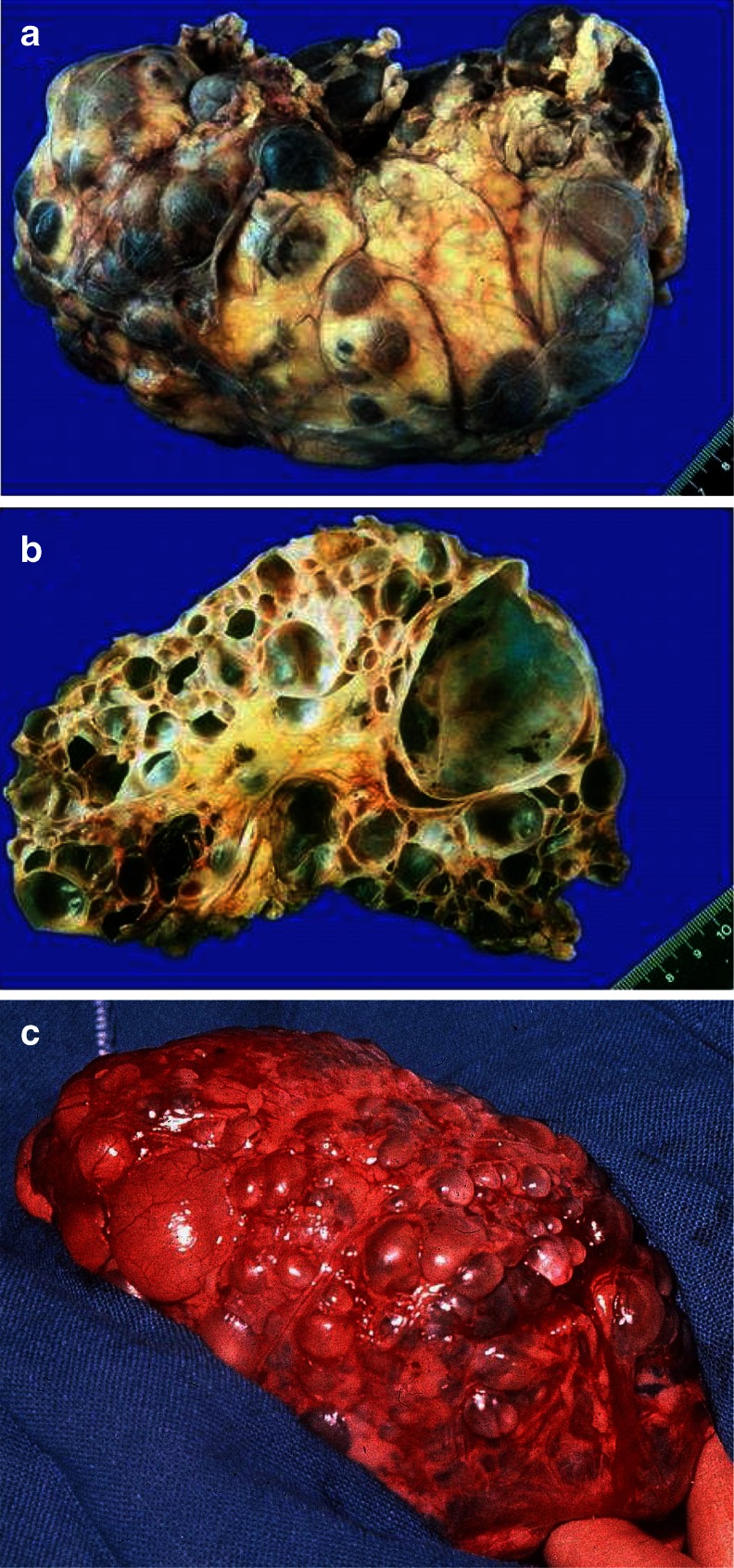
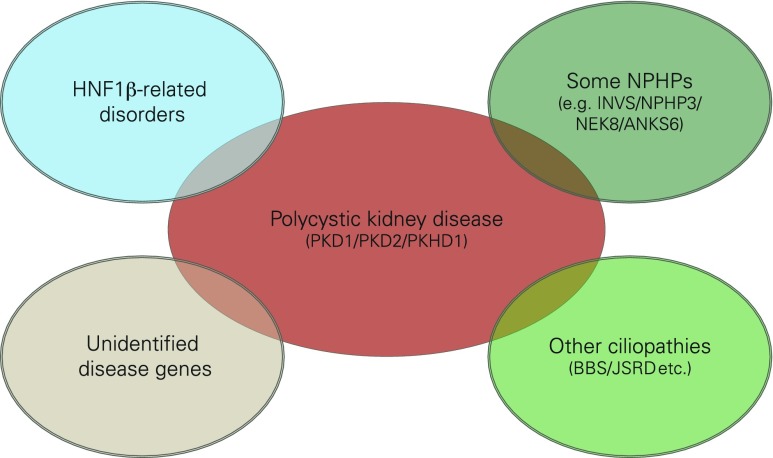
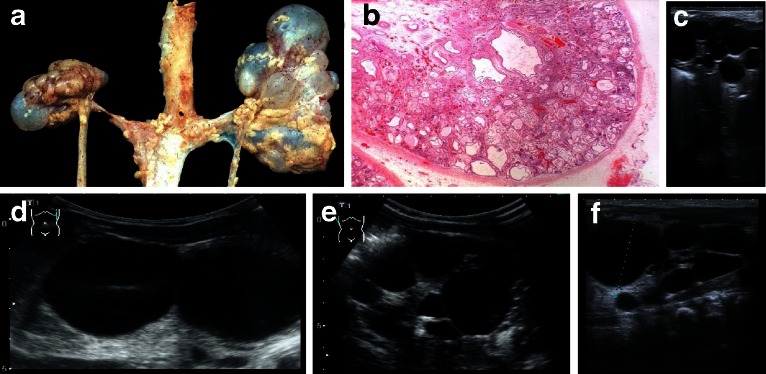
Renal cysts are clinically and genetically heterogeneous conditions. Polycystic kidney disease (PKD) is common and its characterization has paved the way for the identification of a growing number of cilia-related disorders (ciliopathies) of which most show cystic kidneys. While the recessive form of PKD (ARPKD) virtually always presents in childhood, early onset can, in some instances, also occur in the dominant form (ADPKD). Both ADPKD genes (PKD1 and PKD2) can also be inherited in a recessive way, making the story more complex with evidence for a dosage-sensitive network. Several phenocopies are known, and mutations in HNF1ß or genes that typically cause other ciliopathies, such as nephronophthisis, Bardet-Biedl, Joubert syndrome and related disorders, can mimic PKD. An accurate genetic diagnosis is crucial for genetic counseling, prenatal diagnostics, and the clinical management of patients and their families. The increasing number of genes that have to be considered in patients with cystic kidney disease is challenging to address by conventional techniques and largely benefits from next-generation sequencing-based approaches. The parallel analysis of targeted genes considerably increases the detection rate, allows for better interpretation of identified variants, and avoids genetic misdiagnoses.
肾囊肿在临床和遗传方面具有异质性。多囊肾病(PKD)很常见,其特征为越来越多的纤毛相关疾病(纤毛病)的鉴定铺平了道路,其中大多数表现为肾囊肿。虽然隐性形式的PKD(ARPKD)几乎总是在儿童期出现,但在某些情况下,显性形式(ADPKD)也可能早发。ADPKD的两个基因(PKD1和PKD2)也可以隐性方式遗传,这使得情况更加复杂,有证据表明存在剂量敏感网络。已知有几种表型模拟,HNF1β或通常导致其他纤毛病(如肾单位肾痨、巴德-比德尔综合征、乔伯特综合征及相关疾病)的基因突变可模拟PKD。准确的基因诊断对于遗传咨询、产前诊断以及患者及其家庭的临床管理至关重要。对于患有肾囊肿疾病的患者,需要考虑的基因数量不断增加,这对传统技术来说是一个挑战,而基于新一代测序的方法则在很大程度上受益于此。对靶向基因进行平行分析可显著提高检测率,有助于更好地解释已鉴定的变异,并避免基因误诊。