Department of Biology, Stanford University, Stanford, California, United States of America.
School of Biological Sciences, Illinois State University, Normal, Illinois, United States of America.
PLoS Pathog. 2014 Feb 20;10(2):e1003952. doi: 10.1371/journal.ppat.1003952. eCollection 2014 Feb.
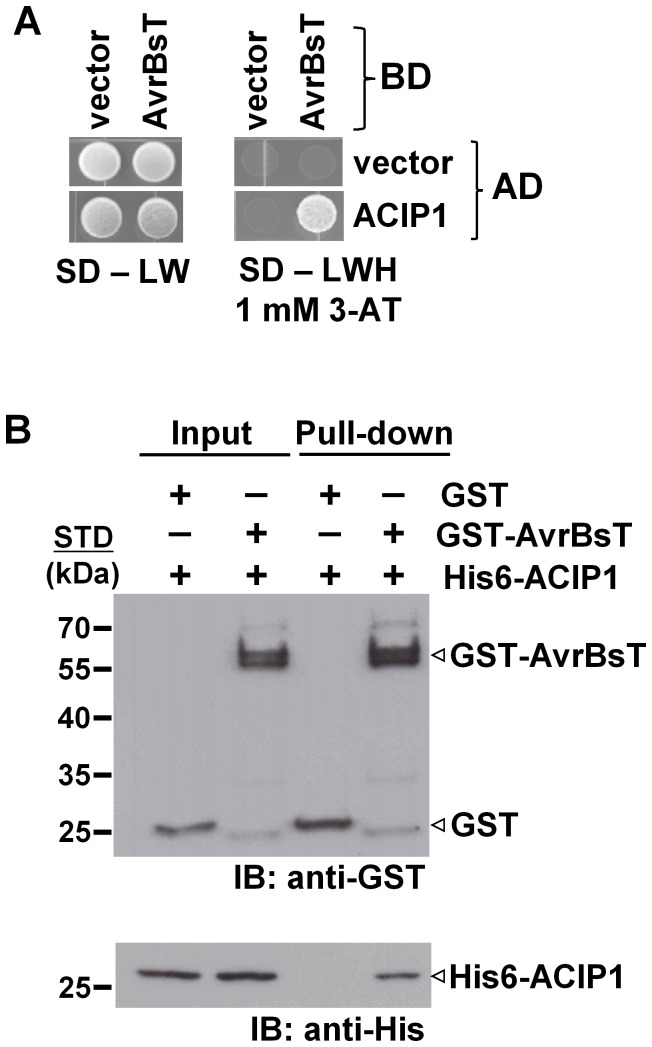
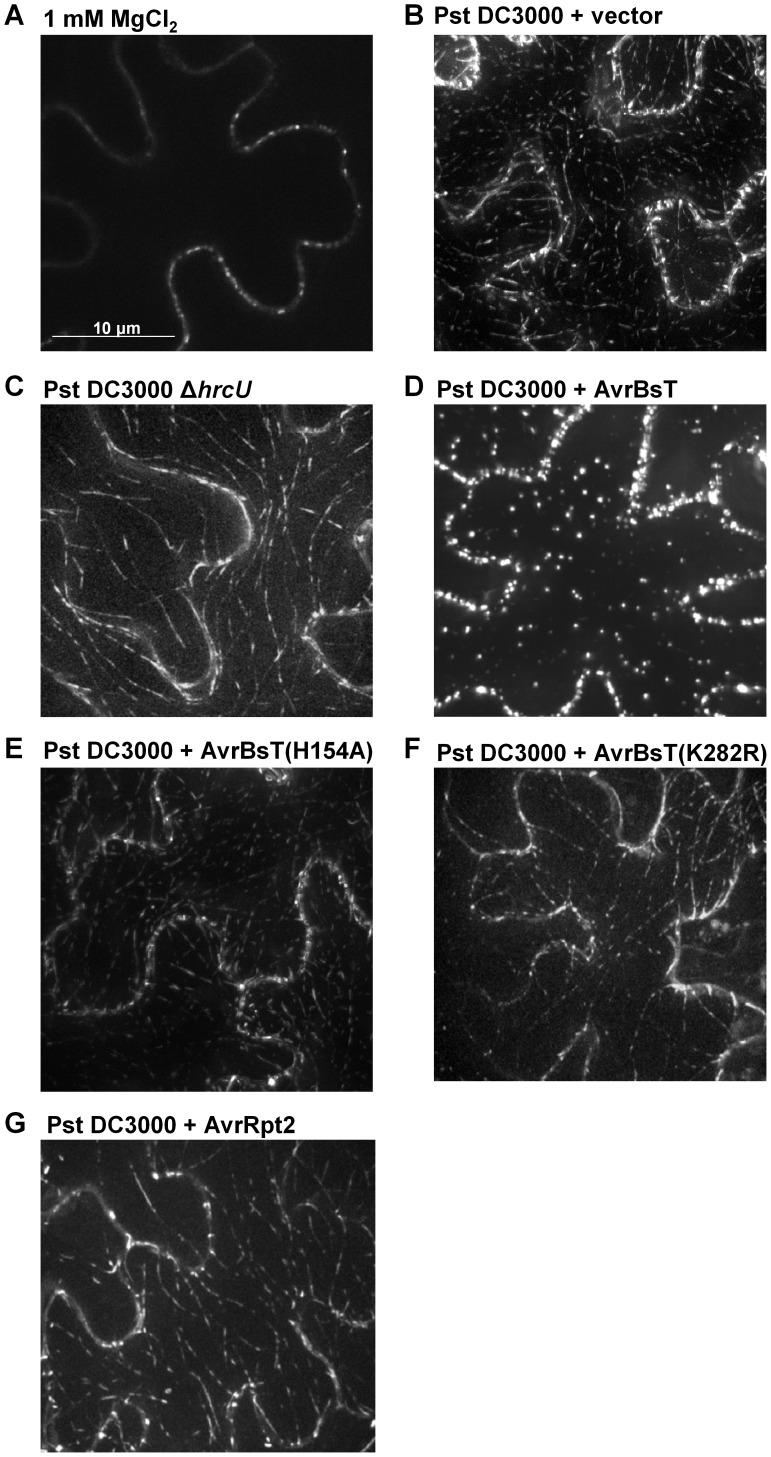
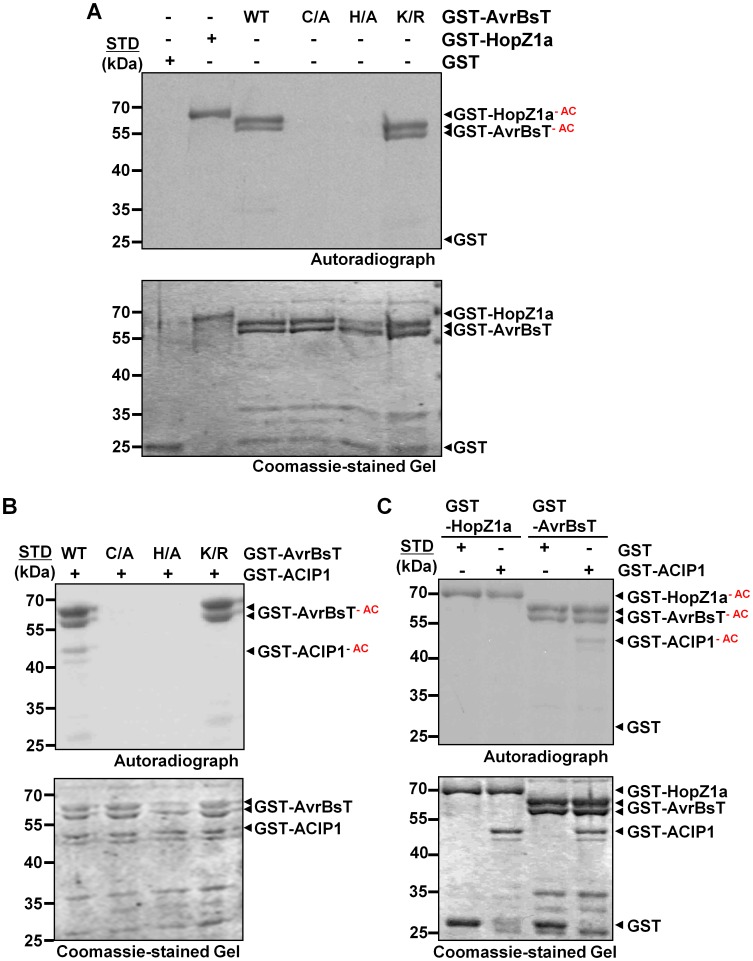
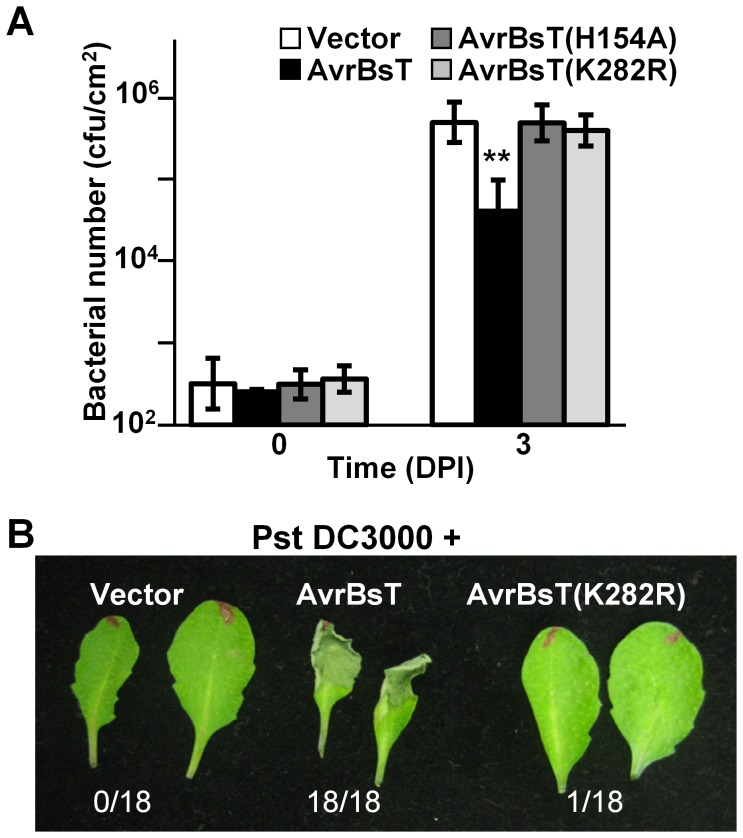
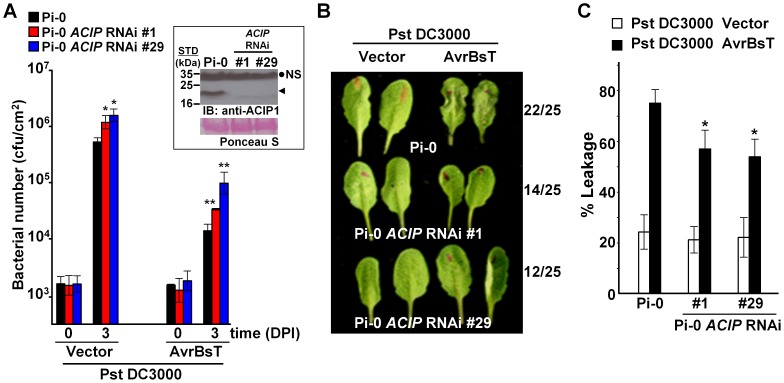
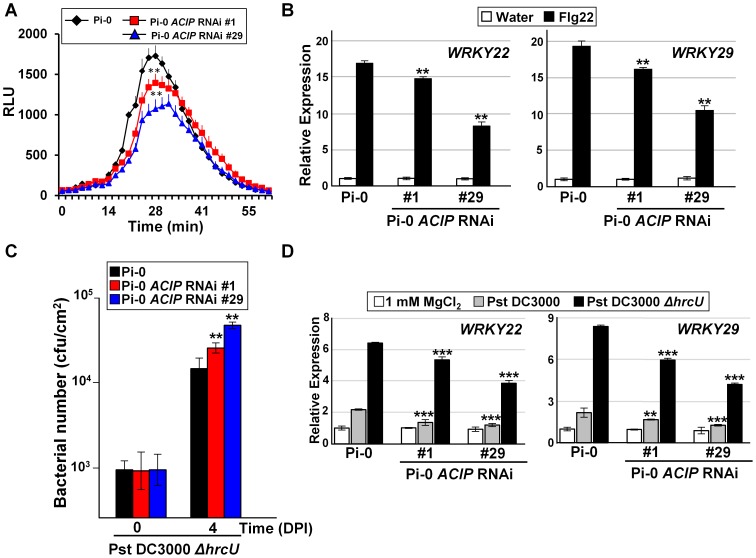
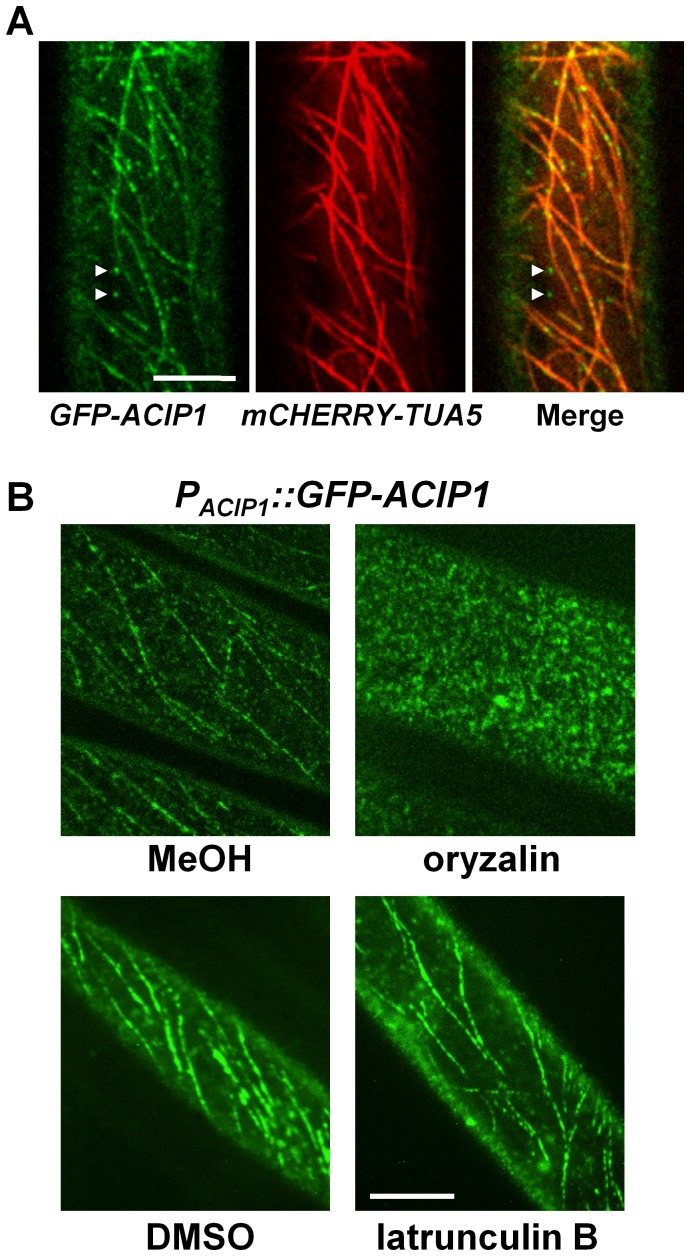
Bacterial pathogens of plant and animals share a homologous group of virulence factors, referred to as the YopJ effector family, which are translocated by the type III secretion (T3S) system into host cells during infection. Recent work indicates that some of these effectors encode acetyltransferases that suppress host immunity. The YopJ-like protein AvrBsT is known to activate effector-triggered immunity (ETI) in Arabidopsis thaliana Pi-0 plants; however, the nature of its enzymatic activity and host target(s) has remained elusive. Here we report that AvrBsT possesses acetyltransferase activity and acetylates ACIP1 (for ACETYLATED INTERACTING PROTEIN1), an unknown protein from Arabidopsis. Genetic studies revealed that Arabidopsis ACIP family members are required for both pathogen-associated molecular pattern (PAMP)-triggered immunity and AvrBsT-triggered ETI during Pseudomonas syringae pathovar tomato DC3000 (Pst DC3000) infection. Microscopy studies revealed that ACIP1 is associated with punctae on the cell cortex and some of these punctae co-localize with microtubules. These structures were dramatically altered during infection. Pst DC3000 or Pst DC3000 AvrRpt2 infection triggered the formation of numerous, small ACIP1 punctae and rods. By contrast, Pst DC3000 AvrBsT infection primarily triggered the formation of large GFP-ACIP1 aggregates, in an acetyltransferase-dependent manner. Our data reveal that members of the ACIP family are new components of the defense machinery required for anti-bacterial immunity. They also suggest that AvrBsT-dependent acetylation in planta alters ACIP1's defense function, which is linked to the activation of ETI.
动植物细菌病原体共享同源的一组毒力因子,称为 YopJ 效应子家族,这些效应子在感染过程中通过 III 型分泌(T3S)系统易位到宿主细胞中。最近的工作表明,其中一些效应子编码乙酰转移酶,抑制宿主免疫。已知 YopJ 样蛋白 AvrBsT 激活拟南芥 Pi-0 植物中的效应子触发的免疫(ETI);然而,其酶活性和宿主靶标仍然难以捉摸。在这里,我们报告 AvrBsT 具有乙酰转移酶活性,并乙酰化 ACIP1(乙酰化互作蛋白 1 的缩写),一种来自拟南芥的未知蛋白。遗传研究表明,拟南芥 ACIP 家族成员是假单胞菌属番茄亚种 DC3000(Pst DC3000)感染过程中病原体相关分子模式(PAMP)触发免疫和 AvrBsT 触发 ETI 所必需的。显微镜研究表明,ACIP1 与质膜上的点状结构相关,其中一些点状结构与微管共定位。这些结构在感染过程中发生了显著改变。Pst DC3000 或 Pst DC3000 AvrRpt2 感染触发了大量小 ACIP1 点状结构和棒状结构的形成。相比之下,Pst DC3000 AvrBsT 感染主要以乙酰转移酶依赖的方式触发大量 GFP-ACIP1 聚集体的形成。我们的数据表明,ACIP 家族成员是抗细菌免疫所需防御机制的新组成部分。它们还表明,AvrBsT 依赖的植物体内乙酰化改变了 ACIP1 的防御功能,这与 ETI 的激活有关。