Flegler Ayanna J, Cianci Gianguido C, Hope Thomas J
Department of Cell and Molecular Biology, Feinberg School of Medicine, Northwestern University, Chicago, Illinois, United States of America.
PLoS One. 2014 Feb 28;9(2):e89056. doi: 10.1371/journal.pone.0089056. eCollection 2014.
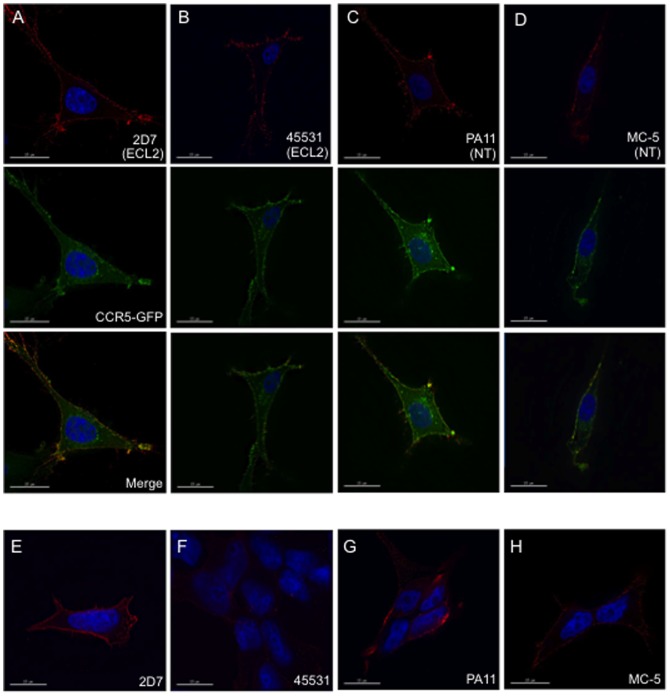
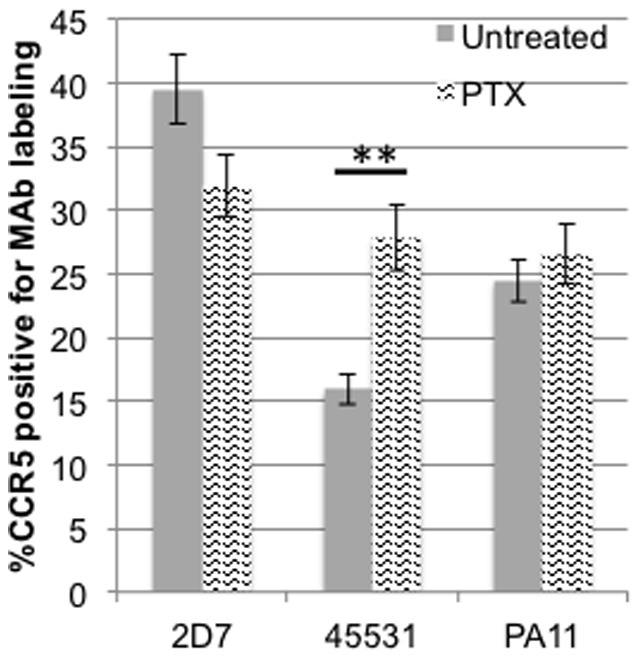
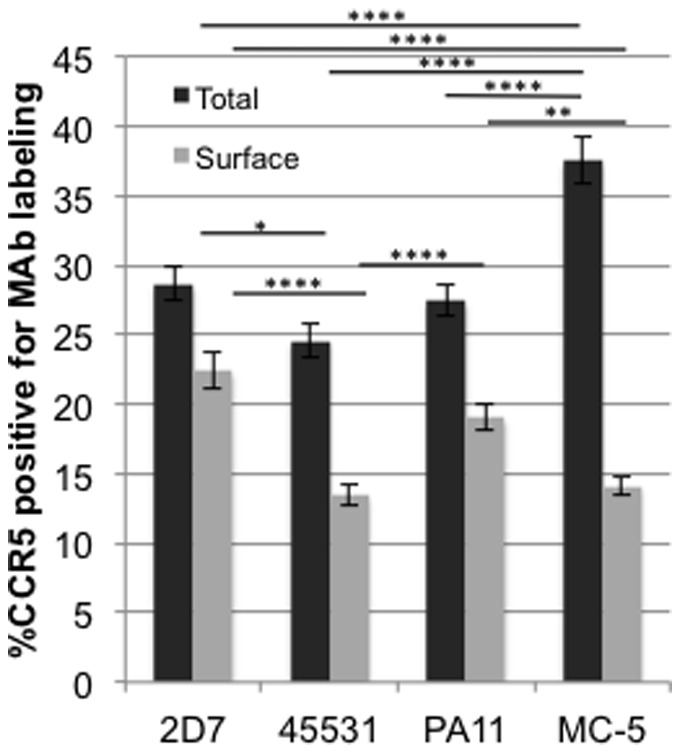
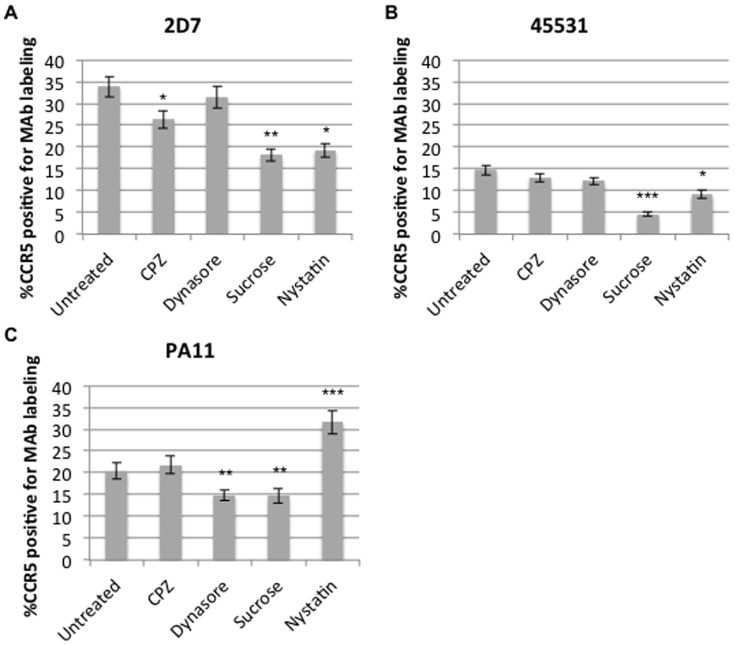
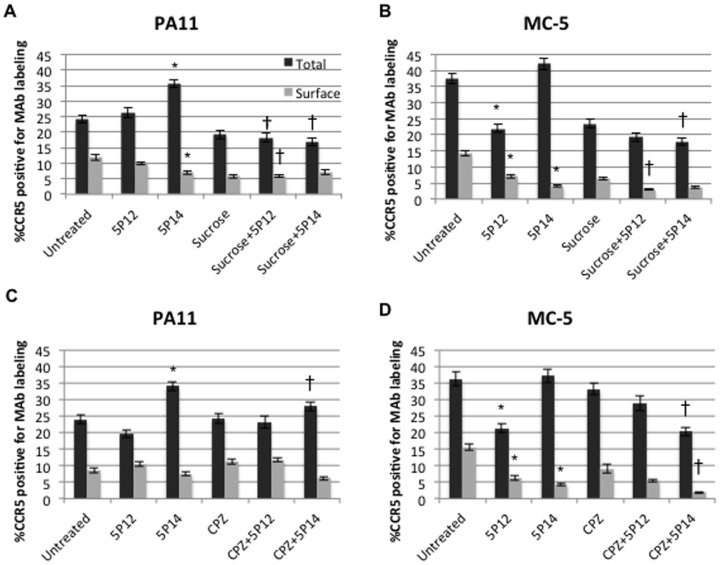
CCR5 acts as the principal coreceptor during HIV-1 transmission and early stages of infection. Efficient HIV-1 entry requires a series of processes, many dependent on the conformational state of both viral envelope protein and cellular receptor. Monoclonal antibodies (MAbs) are able to identify different CCR5 conformations, allowing for their use as probes to distinguish CCR5 populations. Not all CCR5 MAbs are able to reduce HIV-1 infection, suggesting the use of select CCR5 populations for entry. In the U87.CD4.CCR5-GFP cell line, we used such HIV-1-restricting MAbs to probe the relation between localization, trafficking and G protein association for individual CCR5 conformations. We find that CCR5 conformations not only exhibit different localization and abundance patterns throughout the cell, but that they also display distinct sensitivities to endocytosis inhibition. Using chemokine analogs that vary in their HIV-1 inhibitory mechanisms, we also illustrate that responses to ligand engagement are conformation-specific. Additionally, we provide supporting evidence for the select sensitivity of conformations to G protein association. Characterizing the link between the function and dynamics of CCR5 populations has implications for understanding their selective targeting by HIV-1 and for the development of inhibitors that will block CCR5 utilization by the virus.
CCR5在HIV-1传播和感染早期阶段作为主要的共受体发挥作用。高效的HIV-1进入需要一系列过程,其中许多过程依赖于病毒包膜蛋白和细胞受体的构象状态。单克隆抗体(MAb)能够识别不同的CCR5构象,使其可用作区分CCR5群体的探针。并非所有CCR5单克隆抗体都能减少HIV-1感染,这表明可利用特定的CCR5群体来实现病毒进入。在U87.CD4.CCR5-GFP细胞系中,我们使用这类限制HIV-1的单克隆抗体来探究单个CCR5构象的定位、运输和G蛋白结合之间的关系。我们发现,CCR5构象不仅在整个细胞中呈现出不同的定位和丰度模式,而且它们对胞吞作用抑制也表现出不同的敏感性。使用HIV-1抑制机制不同的趋化因子类似物,我们还表明对配体结合的反应具有构象特异性。此外,我们为构象对G蛋白结合的选择性敏感性提供了支持证据。表征CCR5群体的功能与动态之间的联系,对于理解HIV-1对它们的选择性靶向以及开发能阻断病毒利用CCR5的抑制剂具有重要意义。