Departamento de Estratigrafía y Paleontología, Facultad de Ciencias, Universidad de Granada, Granada, Spain.
Departamento de Biología Animal, Facultad de Ciencias, Universidad de Málaga, Málaga, Spain.
PLoS One. 2014 Feb 25;9(2):e90033. doi: 10.1371/journal.pone.0090033. eCollection 2014.
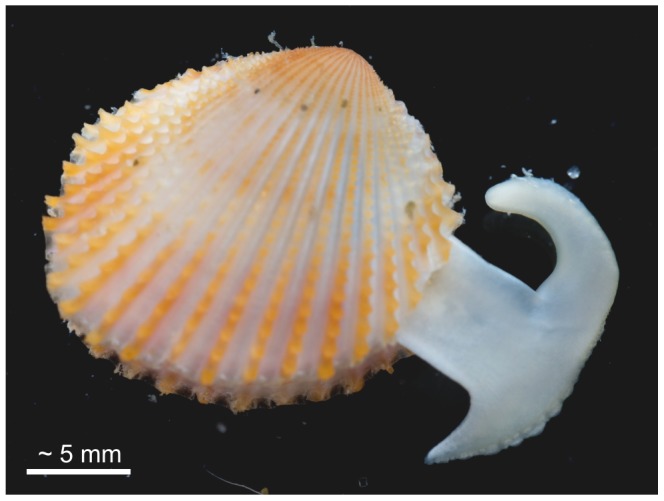
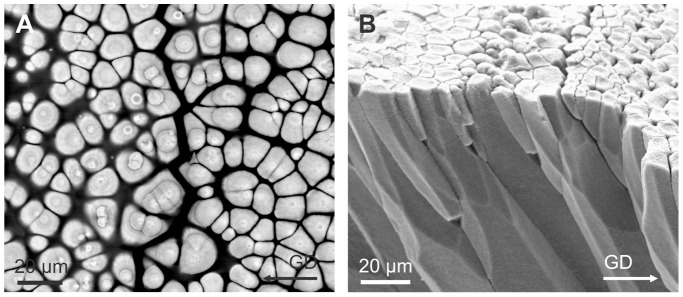
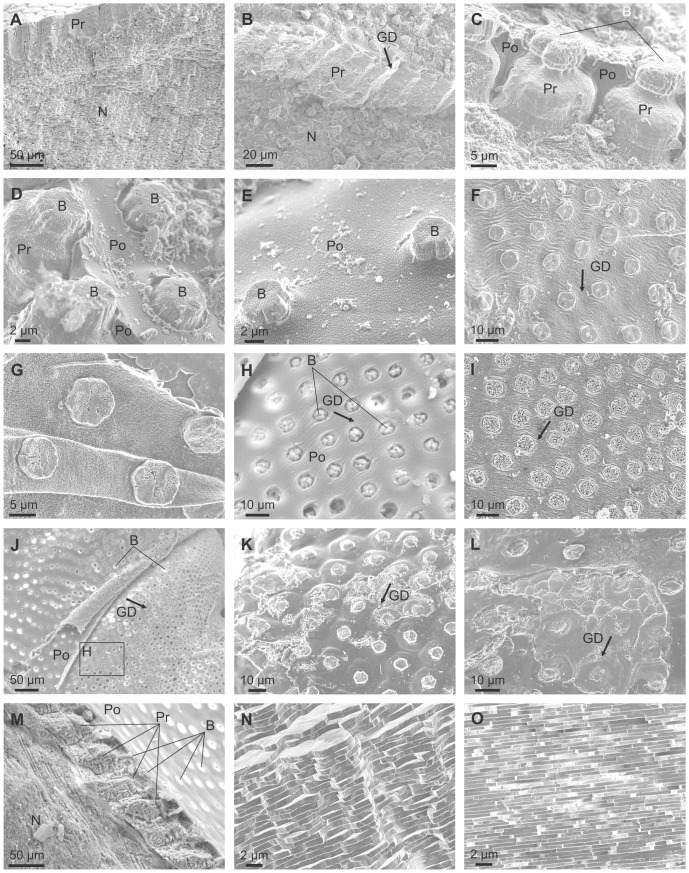
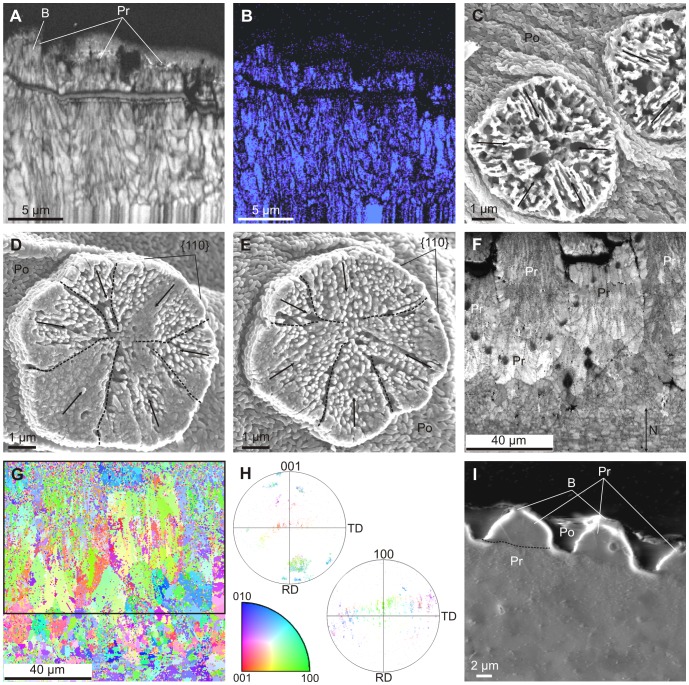
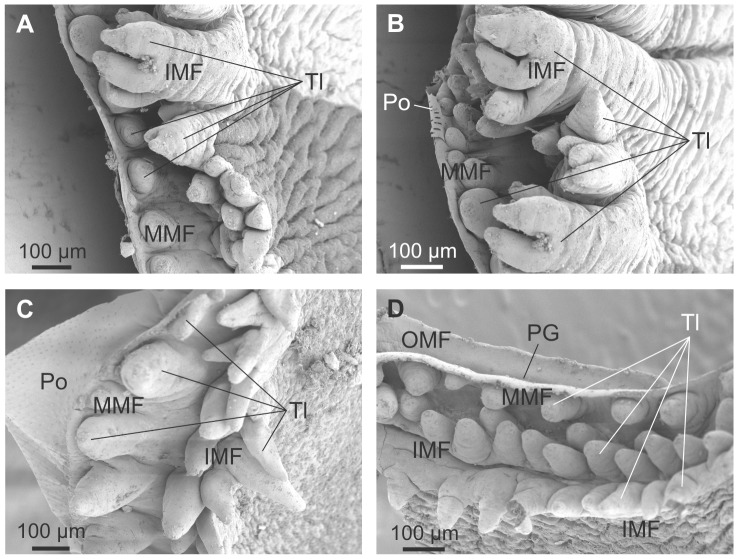
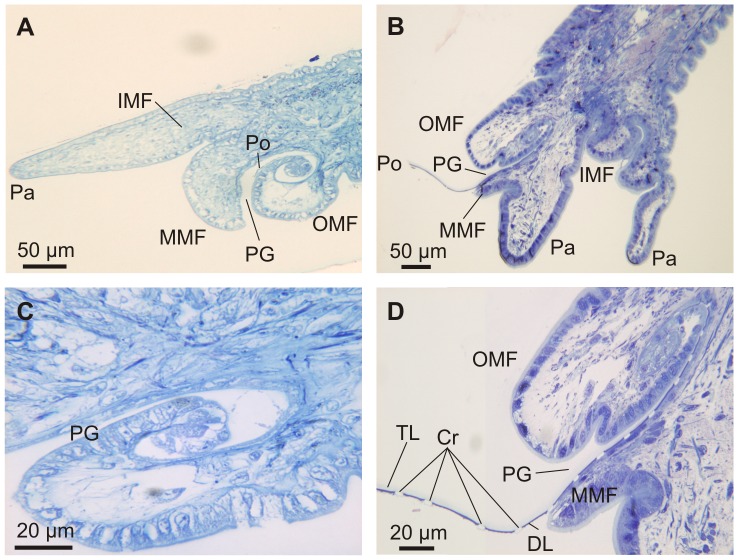
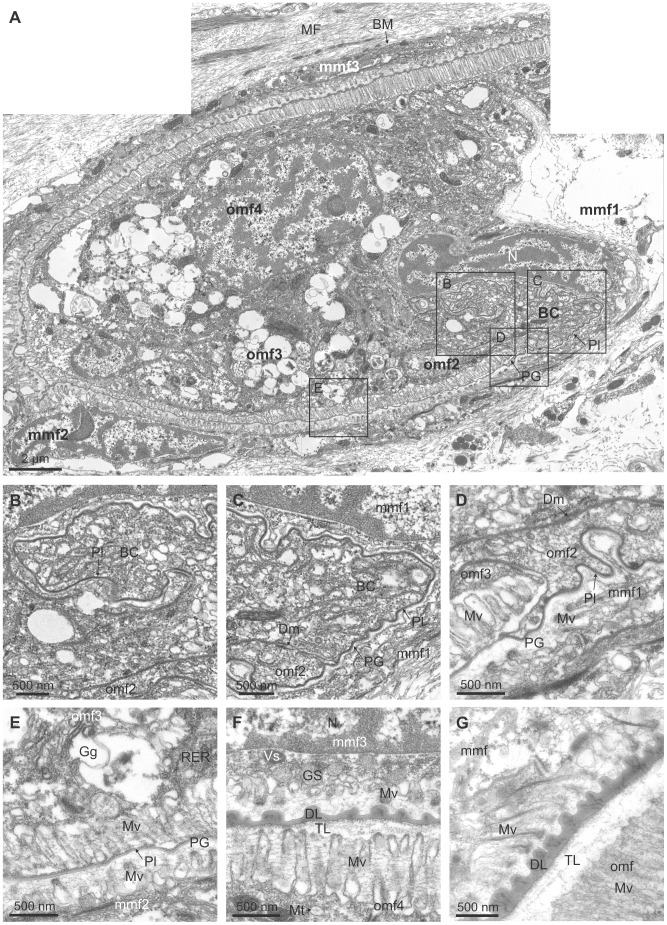
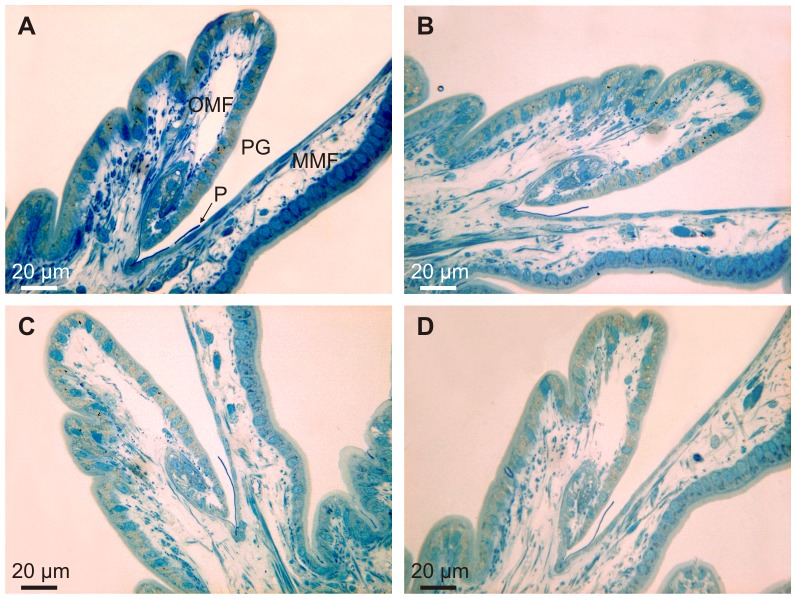
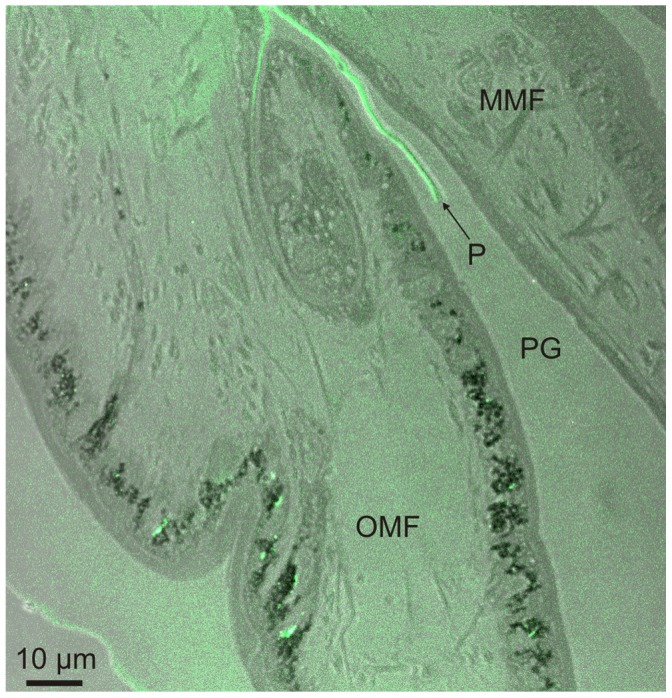
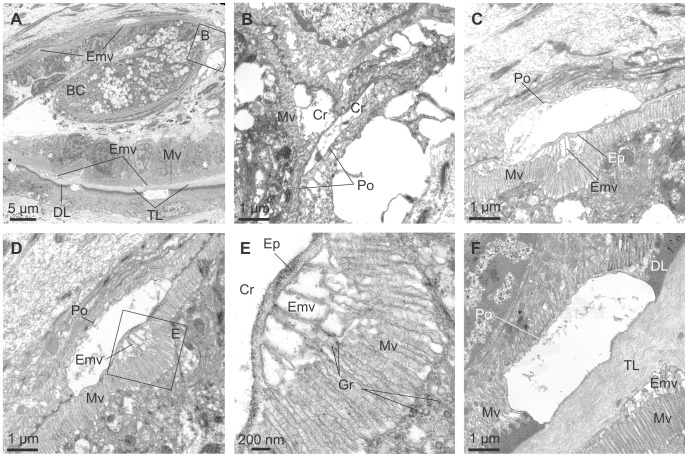
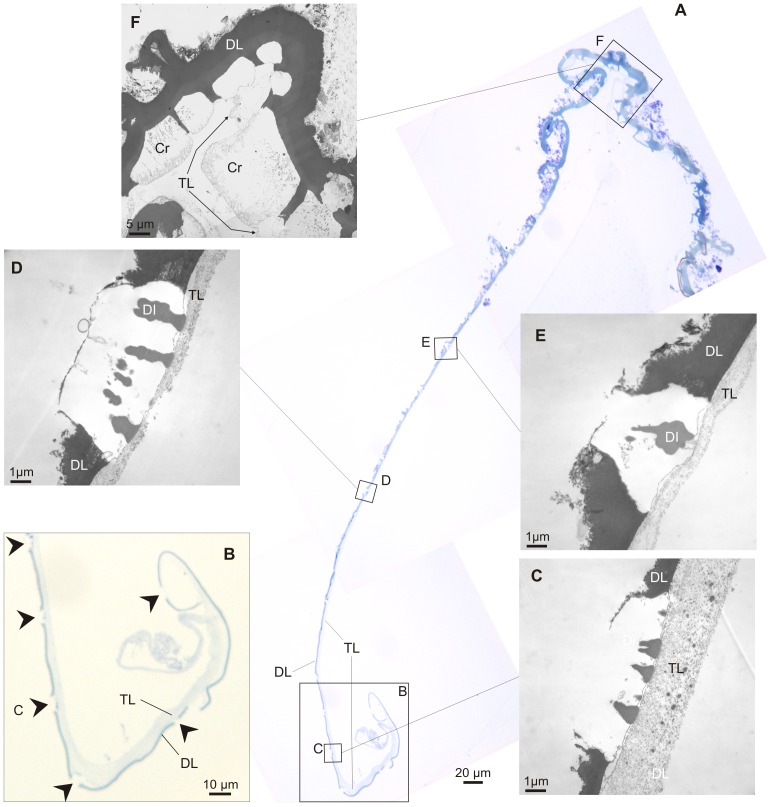
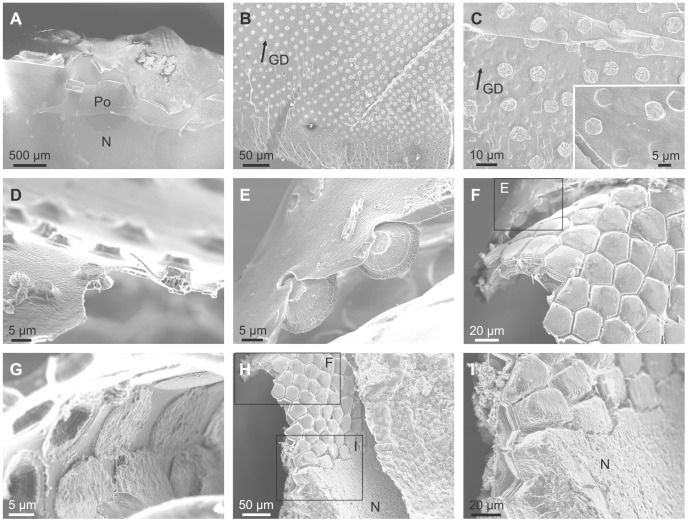
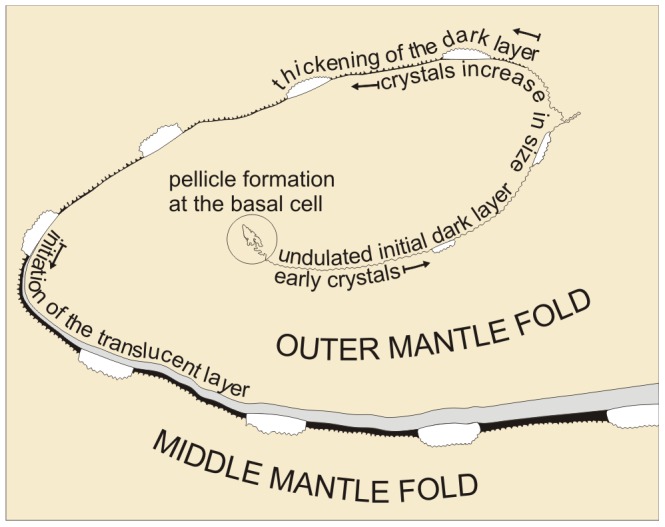
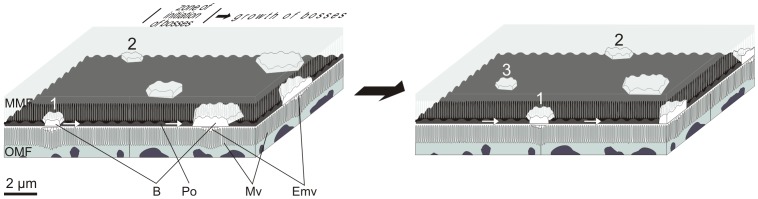
A detailed investigation of the shell formation of the palaeoheterodont 'living fossil' Neotrigonia concentrated on the timing and manufacture of the calcified 'bosses' which stud the outside of all trigonioid bivalves (extant and fossil) has been conducted. Electron microscopy and optical microscopy revealed that Neotrigonia spp. have a spiral-shaped periostracal groove. The periostracum itself is secreted by the basal cell, as a thin dark pellicle, becoming progressively transformed into a thin dark layer by additions of secretions from the internal outer mantle fold. Later, intense secretion of the internal surface of the outer mantle fold forms a translucent layer, which becomes transformed by tanning into a dark layer. The initiation of calcified bosses occurred at a very early stage of periostracum formation, deep within the periostracal groove immediately below the initialmost dark layer. At this stage, they consist of a series of polycyclically twinned crystals. The bosses grow as the periostracum traverse through the periostracal groove, in coordination with the thickening of the dark periostracal layer and until, upon reaching the mantle edge, they impinge upon each other and become transformed into large prisms separated by dark periostracal walls. In conclusion, the initial bosses and the external part of the prismatic layer are fully intraperiostracal. With later growth, the prisms transform into fibrous aggregates, although the details of the process are unknown. This reinforces the relationships with other groups that have the ability to form intraperiostracal calcifications, for example the unionoids with which the trigonioids form the clade Paleoheterodonta. The presence of similar structures in anomalodesmatans and other euheterodonts raises the question of whether this indicates a relationship or represents a convergence. The identification of very early calcification within an organic sheet has interesting implications for our understanding of how shells may have evolved.
对古有齿蛤“活化石” Neo-trigonia 的壳形成进行了详细研究,重点关注了覆盖所有三角蛤(现存和化石)外部的钙化“凸瘤”的形成时间和制造过程。电子显微镜和光学显微镜显示,Neotrigonia spp. 具有螺旋状的外皮沟。外皮本身由基细胞分泌,形成一层薄而暗的薄膜,通过来自外部外套膜褶皱内部的分泌物的添加逐渐转化为薄而暗的层。后来,外部外套膜褶皱内部表面的强烈分泌形成了一层半透明的层,通过鞣制转化为暗层。钙化凸瘤的起始发生在外皮形成的非常早期阶段,就在最内层暗层下方的外皮沟深处。在这个阶段,它们由一系列多晶孪晶组成。随着外皮沟穿过外皮沟,凸瘤与暗外皮层的增厚协调生长,直到到达外套边缘,它们相互碰撞并转化为大棱柱体,由暗外皮壁隔开。总之,最初的凸瘤和棱柱层的外部部分完全是在皮内的。随着后来的生长,棱柱体转化为纤维状聚集体,尽管这个过程的细节尚不清楚。这加强了与其他具有形成皮内钙化能力的群体的关系,例如与三角蛤形成 Paleoheterodonta 进化枝的珠蚌。在异常齿贝类和其他真有齿贝类中存在类似的结构,这提出了一个问题,即这是否表明存在关系或代表趋同。在有机薄片中发现早期钙化具有有趣的意义,有助于我们理解贝壳是如何进化的。