Engelhardt Britta, Liebner Stefan
Theodor Kocher Institute, University of Bern, Freiestrasse 1, 3012, Bern, Switzerland,
Cell Tissue Res. 2014 Mar;355(3):687-99. doi: 10.1007/s00441-014-1811-2. Epub 2014 Mar 4.
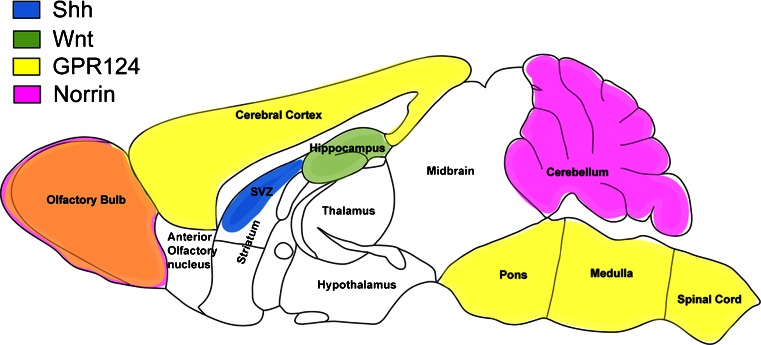
The blood-brain barrier (BBB) is essential for maintaining homeostasis within the central nervous system (CNS) and is a prerequisite for proper neuronal function. The BBB is localized to microvascular endothelial cells that strictly control the passage of metabolites into and out of the CNS. Complex and continuous tight junctions and lack of fenestrae combined with low pinocytotic activity make the BBB endothelium a tight barrier for water soluble moleucles. In combination with its expression of specific enzymes and transport molecules, the BBB endothelium is unique and distinguishable from all other endothelial cells in the body. During embryonic development, the CNS is vascularized by angiogenic sprouting from vascular networks originating outside of the CNS in a precise spatio-temporal manner. The particular barrier characteristics of BBB endothelial cells are induced during CNS angiogenesis by cross-talk with cellular and acellular elements within the developing CNS. In this review, we summarize the currently known cellular and molecular mechanisms mediating brain angiogenesis and introduce more recently discovered CNS-specific pathways (Wnt/β-catenin, Norrin/Frizzled4 and hedgehog) and molecules (GPR124) that are crucial in BBB differentiation and maturation. Finally, based on observations that BBB dysfunction is associated with many human diseases such as multiple sclerosis, stroke and brain tumors, we discuss recent insights into the molecular mechanisms involved in maintaining barrier characteristics in the mature BBB endothelium.
血脑屏障(BBB)对于维持中枢神经系统(CNS)内的稳态至关重要,并且是神经元正常功能的先决条件。血脑屏障定位于微血管内皮细胞,这些细胞严格控制代谢物进出中枢神经系统的通道。复杂且连续的紧密连接以及缺乏窗孔,再加上低胞饮活性,使得血脑屏障内皮细胞成为水溶性分子的紧密屏障。结合其特定酶和转运分子的表达,血脑屏障内皮细胞具有独特性,与体内所有其他内皮细胞不同。在胚胎发育过程中,中枢神经系统通过从中枢神经系统外部起源的血管网络以精确的时空方式进行血管生成芽生而实现血管化。血脑屏障内皮细胞的特殊屏障特性是在中枢神经系统血管生成过程中通过与发育中的中枢神经系统内的细胞和无细胞成分相互作用而诱导产生的。在本综述中,我们总结了目前已知的介导脑血管生成的细胞和分子机制,并介绍了最近发现的对血脑屏障分化和成熟至关重要的中枢神经系统特异性途径(Wnt/β-连环蛋白、Norrin/Frizzled4和刺猬信号通路)和分子(GPR124)。最后,基于血脑屏障功能障碍与许多人类疾病如多发性硬化症、中风和脑肿瘤相关的观察结果,我们讨论了关于成熟血脑屏障内皮细胞维持屏障特性所涉及的分子机制的最新见解。