Molecular Cell Biology, University of Groningen, 9747 AG Groningen, Netherlands.
J Cell Biol. 2014 Mar 3;204(5):659-68. doi: 10.1083/jcb.201310148.
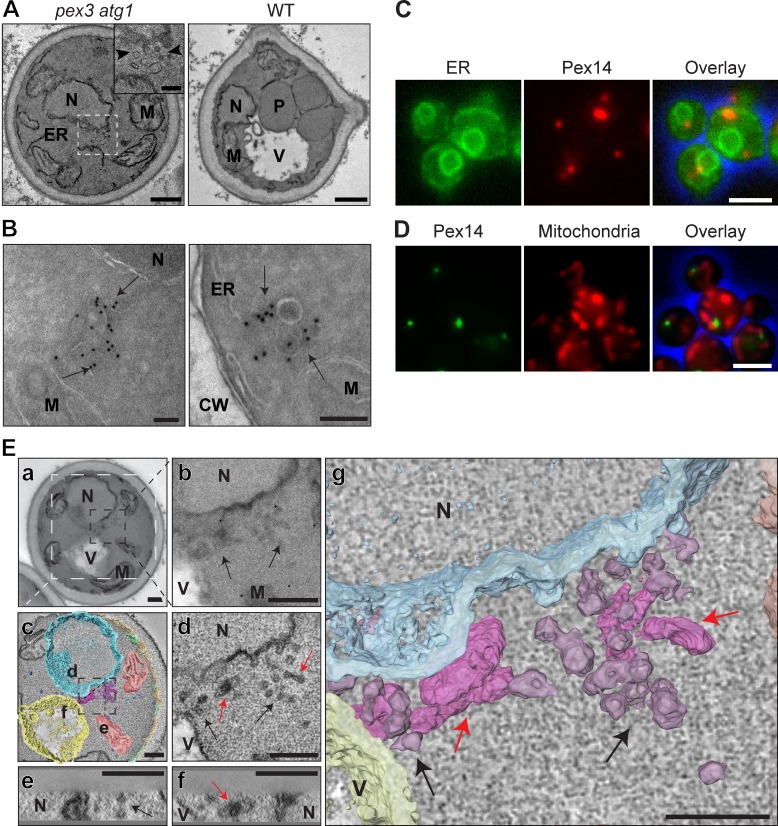
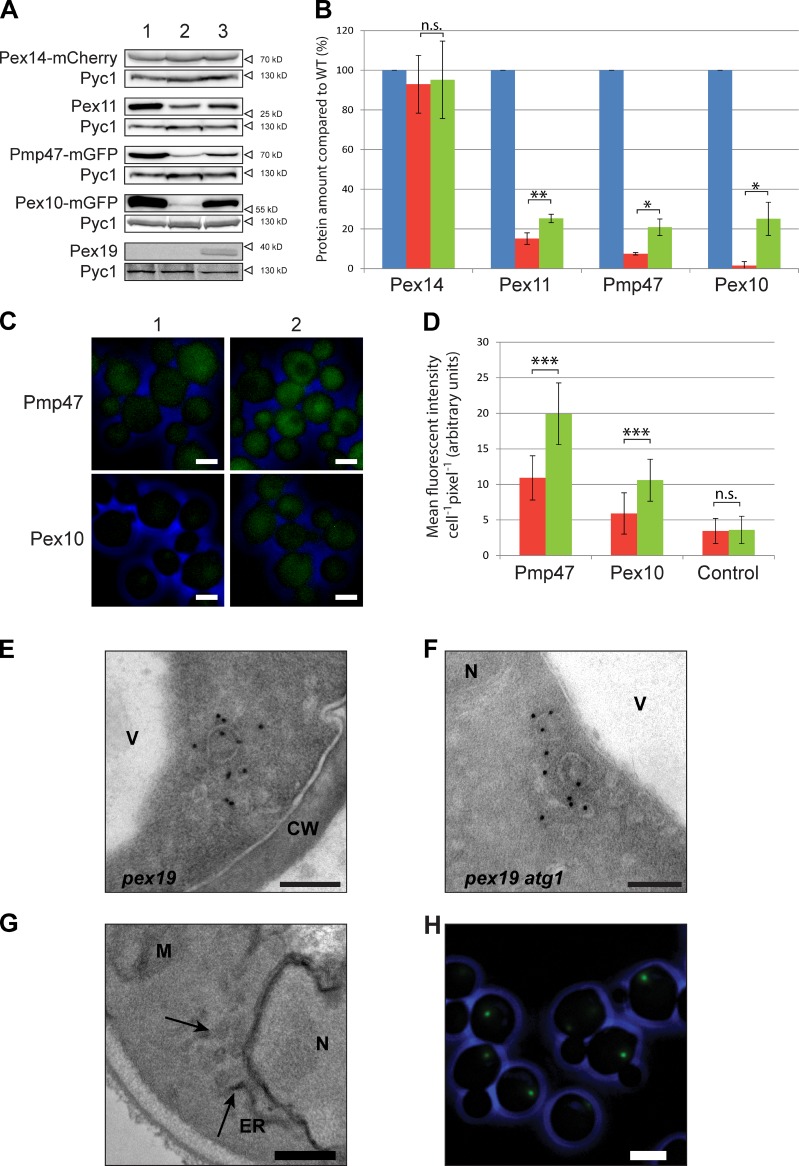
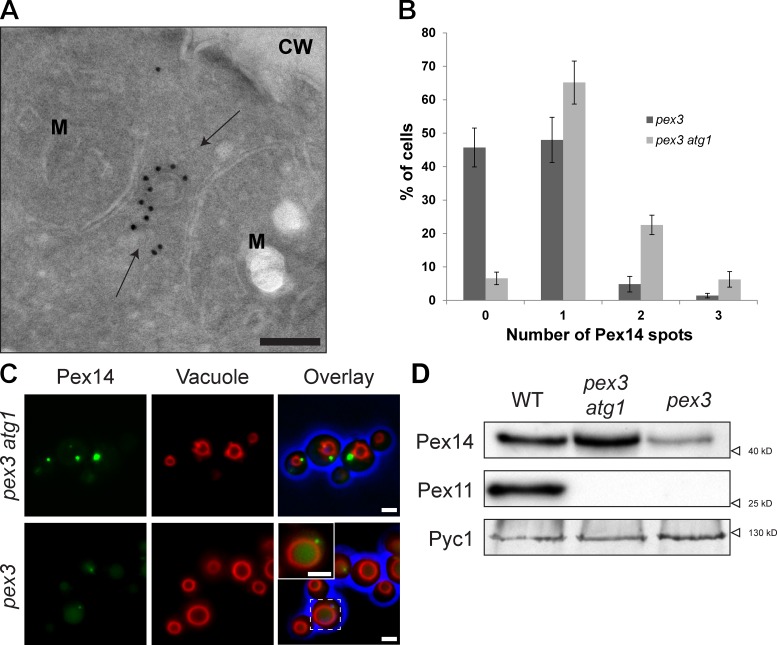
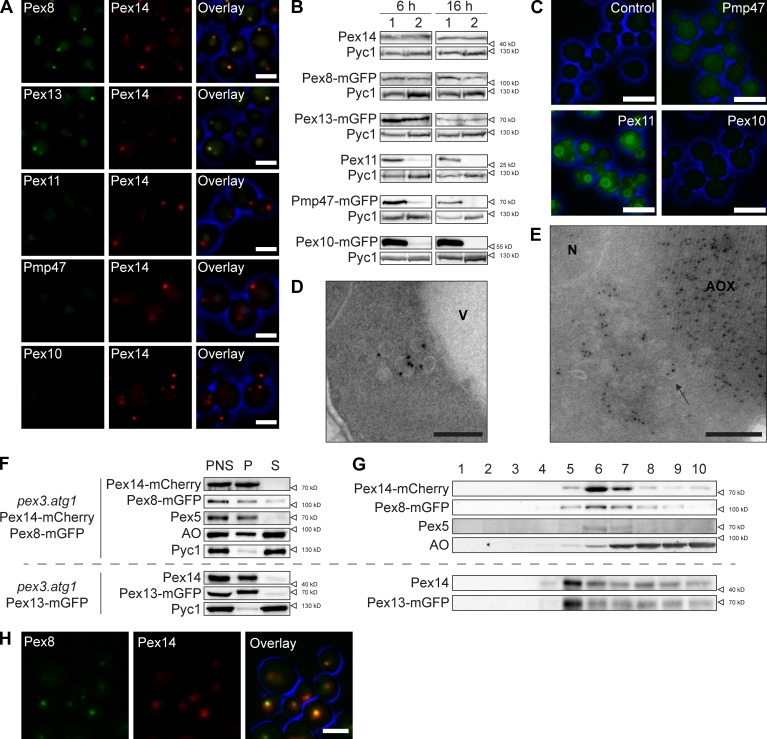
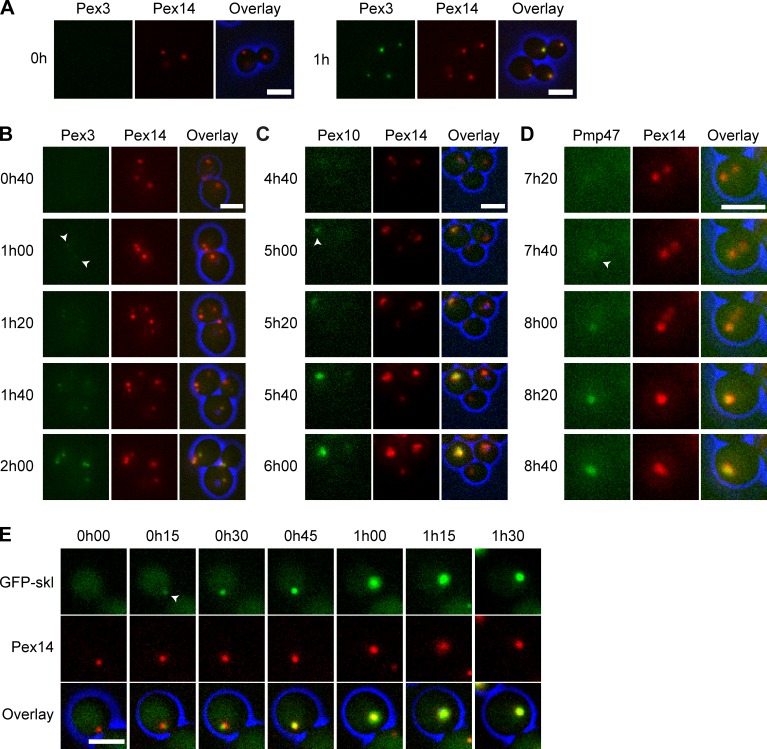
We demonstrate that the peroxin Pex3 is not required for the formation of peroxisomal membrane structures in yeast pex3 mutant cells. Notably, pex3 mutant cells already contain reticular and vesicular structures that harbor key proteins of the peroxisomal receptor docking complex-Pex13 and Pex14-as well as the matrix proteins Pex8 and alcohol oxidase. Other peroxisomal membrane proteins in these cells are unstable and transiently localized to the cytosol (Pex10, Pmp47) or endoplasmic reticulum (Pex11). These reticular and vesicular structures are more abundant in cells of a pex3 atg1 double deletion strain, as the absence of Pex3 may render them susceptible to autophagic degradation, which is blocked in this double mutant. Contrary to earlier suggestions, peroxisomes are not formed de novo from the endoplasmic reticulum when the PEX3 gene is reintroduced in pex3 cells. Instead, we find that reintroduced Pex3 sorts to the preperoxisomal structures in pex3 cells, after which these structures mature into normal peroxisomes.
我们证明,在酵母 pex3 突变细胞中,过氧化物酶体蛋白 Pex3 对于过氧化物酶体膜结构的形成并非必需。值得注意的是,pex3 突变细胞已经包含了网状和囊泡状结构,这些结构中含有过氧化物酶体受体 docking 复合物的关键蛋白——Pex13 和 Pex14 以及基质蛋白 Pex8 和酒精氧化酶。这些细胞中的其他过氧化物酶体膜蛋白不稳定且瞬时定位于细胞质(Pex10、Pmp47)或内质网(Pex11)。在 pex3 atg1 双缺失菌株的细胞中,这些网状和囊泡状结构更为丰富,因为 Pex3 的缺失可能使它们容易受到自噬降解的影响,而这种双突变体则阻止了自噬降解。与早期的观点相反,当 PEX3 基因在 pex3 细胞中重新引入时,过氧化物酶体并非从头从内质网中形成。相反,我们发现,重新引入的 Pex3 在 pex3 细胞中分拣到前过氧化物酶体结构,之后这些结构成熟为正常的过氧化物酶体。