Sengupta Nabonita, Ghosh Sourish, Vasaikar Suhas V, Gomes James, Basu Anirban
National Brain Research Centre, Manesar, Haryana, India.
Kusuma School of Biological Sciences, Indian Institute of Technology Delhi, New Delhi, India.
PLoS One. 2014 Mar 5;9(3):e90211. doi: 10.1371/journal.pone.0090211. eCollection 2014.
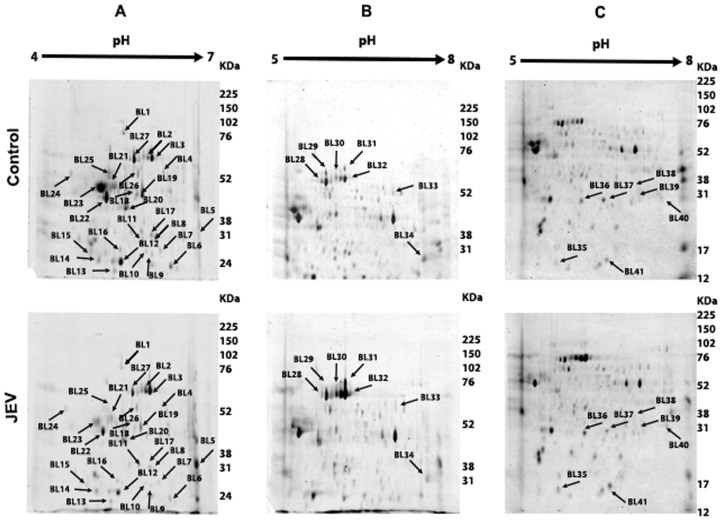
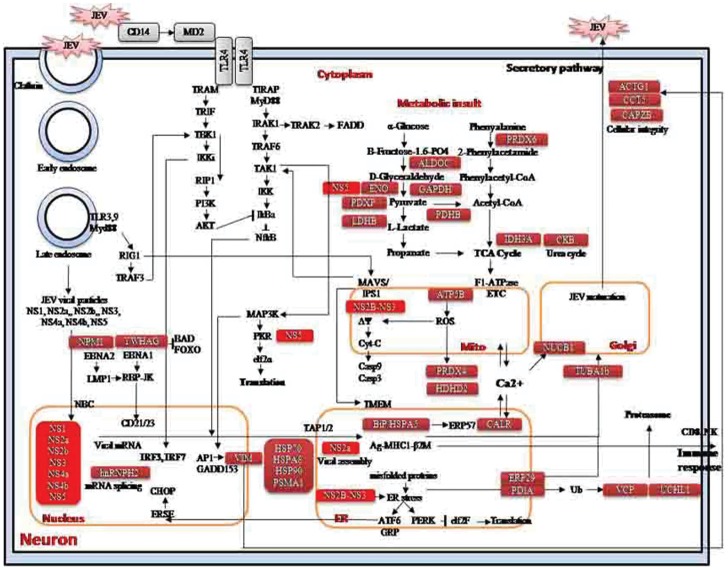
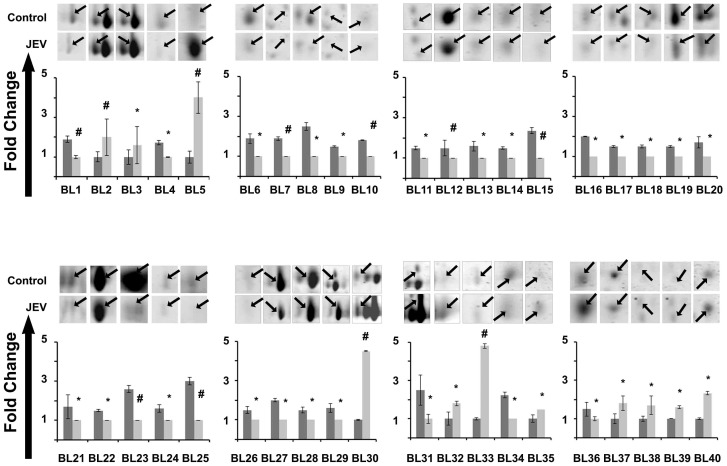
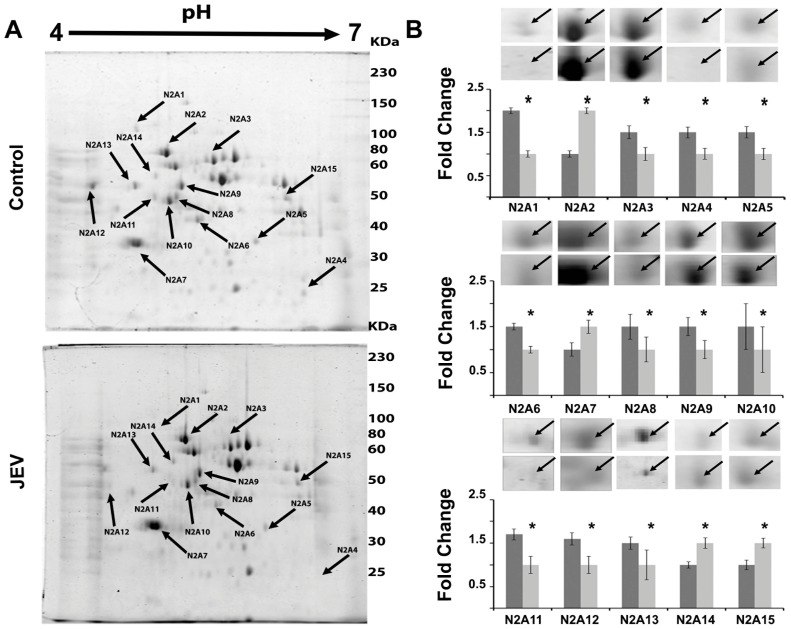
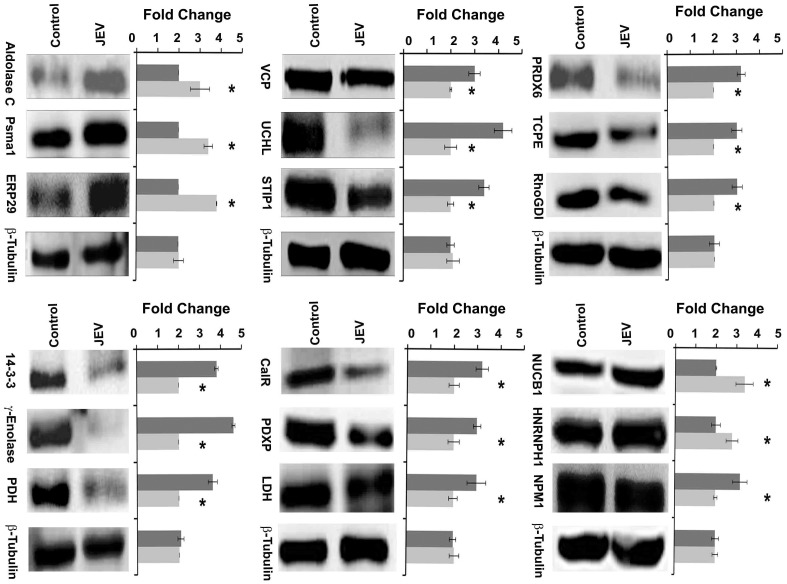
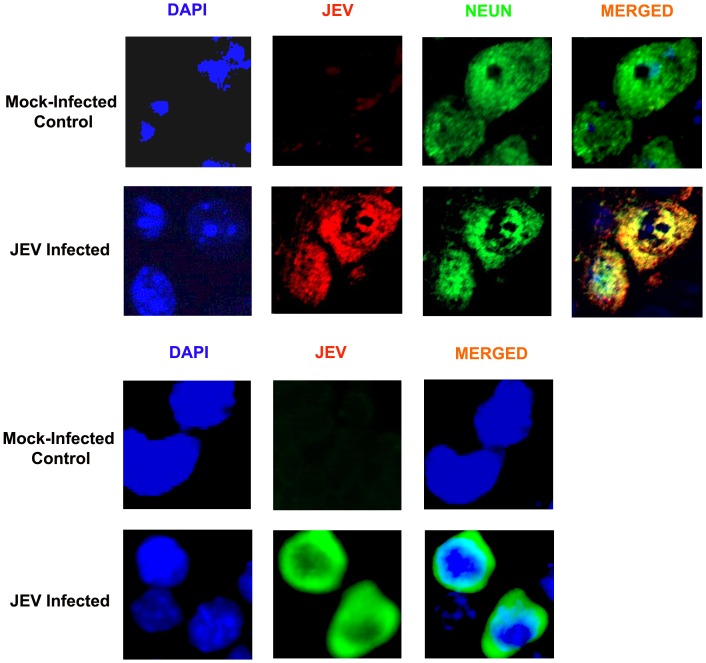
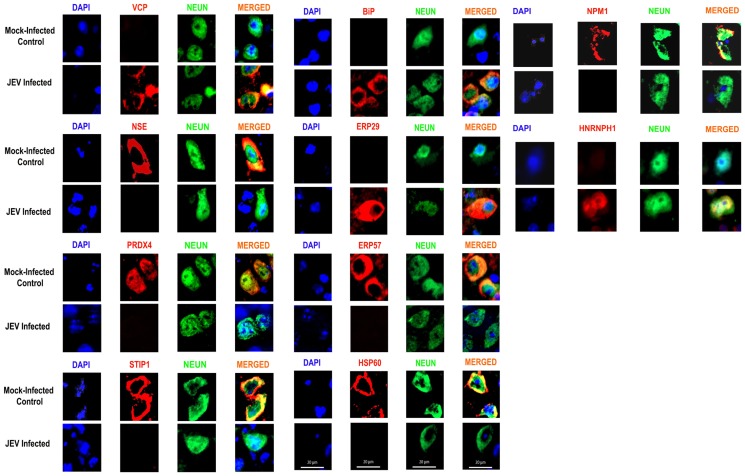
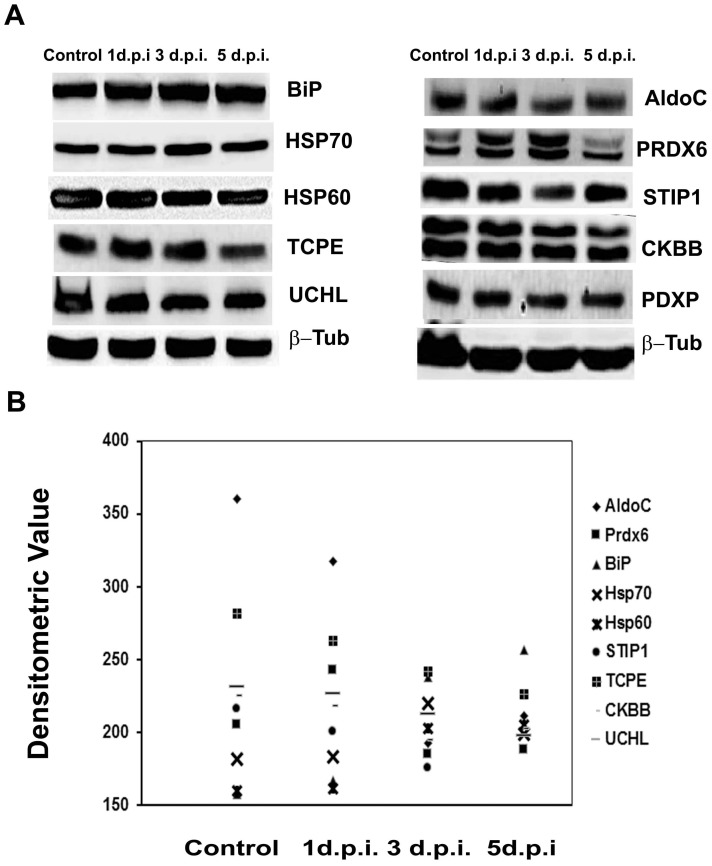
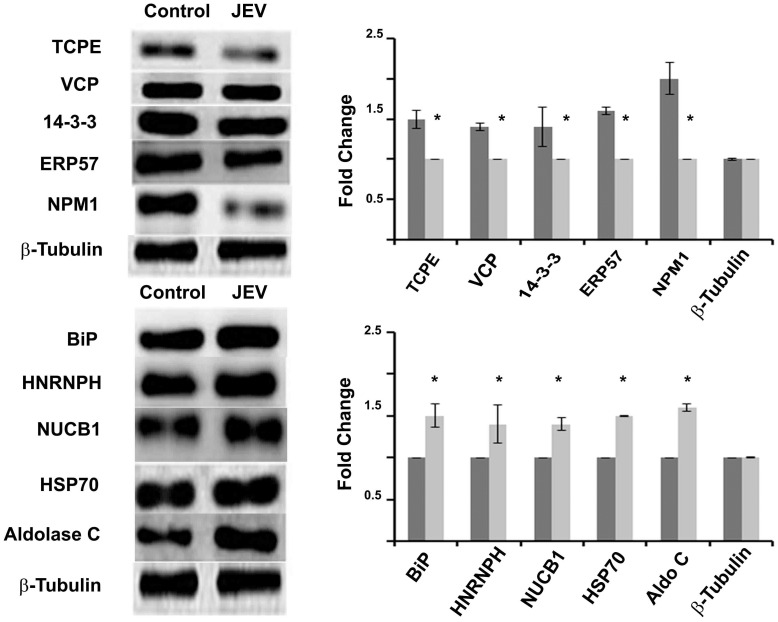
In this study we have reported the in vivo proteomic changes during Japanese Encephalitis Virus (JEV) infection in combination with in vitro studies which will help in the comprehensive characterization of the modifications in the host metabolism in response to JEV infection. We performed a 2-DE based quantitative proteomic study of JEV-infected mouse brain as well as mouse neuroblastoma (Neuro2a) cells to analyze the host response to this lethal virus. 56 host proteins were found to be differentially expressed post JEV infection (defined as exhibiting ≥ 1.5-fold change in protein abundance upon JEV infection). Bioinformatics analyses were used to generate JEV-regulated host response networks which reported that the identified proteins were found to be associated with various cellular processes ranging from intracellular protein transport, cellular metabolism and ER stress associated unfolded protein response. JEV was found to invade the host protein folding machinery to sustain its survival and replication inside the host thereby generating a vigorous unfolded protein response, subsequently triggering a number of pathways responsible for the JEV associated pathologies. The results were also validated using a human cell line to correlate them to the human response to JEV. The present investigation is the first report on JEV-host interactome in in vivo model and will be of potential interest for future antiviral research in this field.
在本研究中,我们报告了日本脑炎病毒(JEV)感染期间的体内蛋白质组学变化,并结合体外研究,这将有助于全面表征宿主代谢因JEV感染而发生的变化。我们对感染JEV的小鼠脑以及小鼠神经母细胞瘤(Neuro2a)细胞进行了基于二维电泳的定量蛋白质组学研究,以分析宿主对这种致命病毒的反应。发现56种宿主蛋白在JEV感染后差异表达(定义为JEV感染后蛋白质丰度变化≥1.5倍)。生物信息学分析用于生成JEV调节的宿主反应网络,该网络报告所鉴定的蛋白质与从细胞内蛋白质运输、细胞代谢到内质网应激相关的未折叠蛋白反应等各种细胞过程相关。发现JEV侵入宿主蛋白质折叠机制以维持其在宿主体内的存活和复制,从而产生强烈的未折叠蛋白反应,随后触发许多与JEV相关病理有关的途径。还使用人细胞系对结果进行了验证,以将它们与人类对JEV的反应相关联。本研究是关于体内模型中JEV-宿主相互作用组的首次报告,对该领域未来的抗病毒研究具有潜在意义。