Sir William Dunn School of Pathology, University of Oxford, South Parks Road, Oxford OX1 3RE, UK.
Virulence. 2021 Dec;12(1):2814-2838. doi: 10.1080/21505594.2021.1996059.
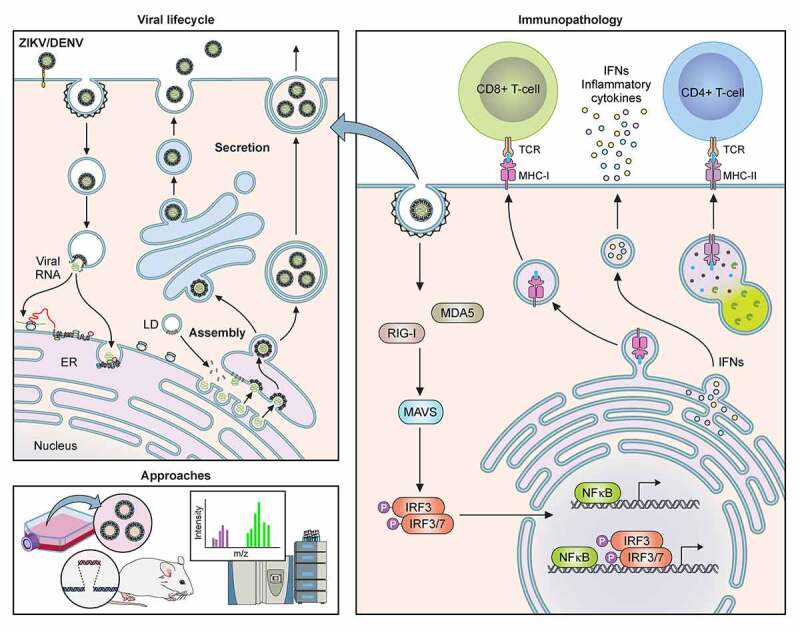
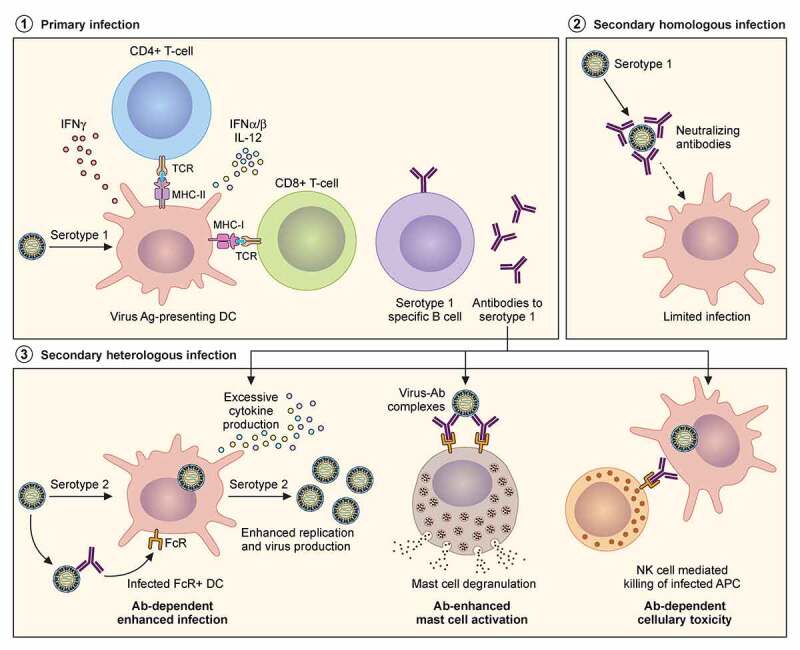
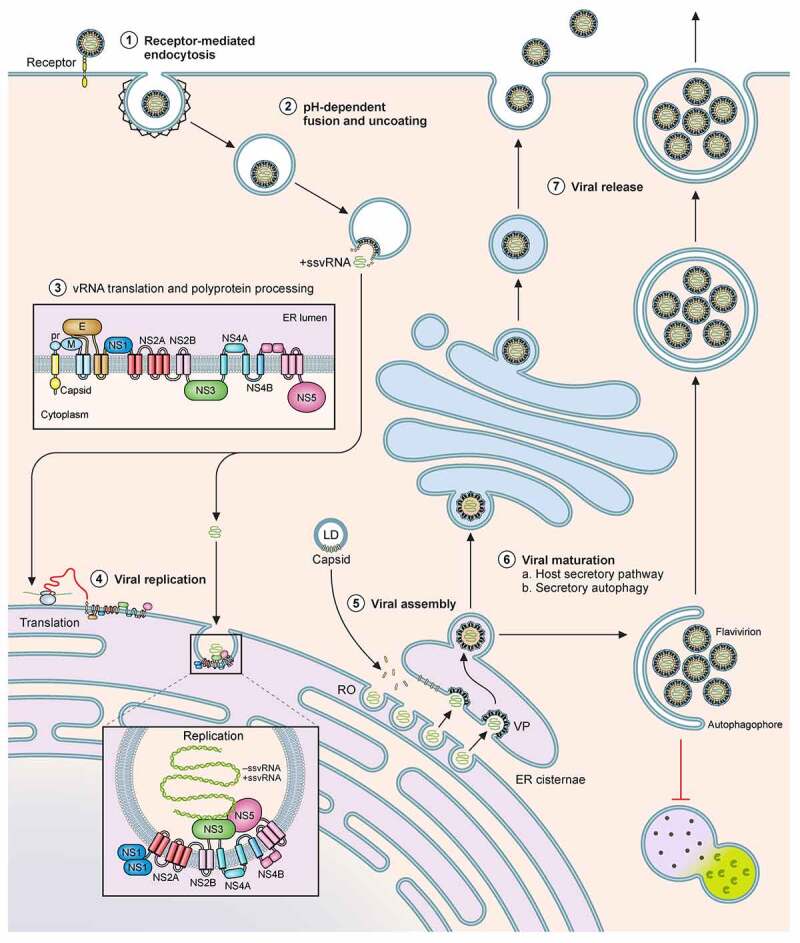
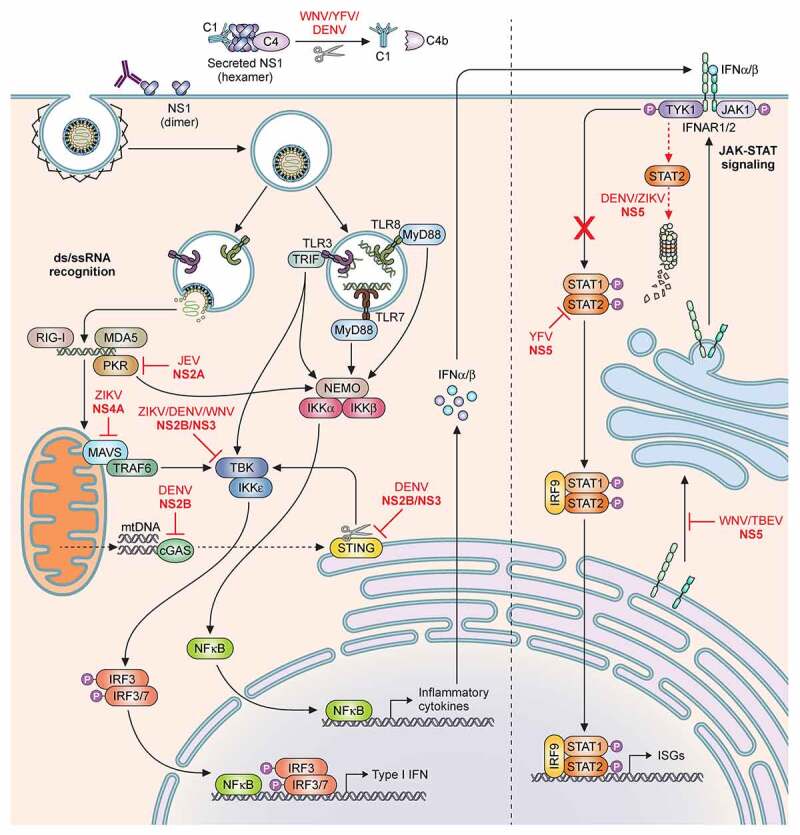
The Flavivirus genus consists of >70 members including several that are considered significant human pathogens. Flaviviruses display a broad spectrum of diseases that can be roughly categorised into two phenotypes - systemic disease involving haemorrhage exemplified by dengue and yellow Fever virus, and neurological complications associated with the likes of West Nile and Zika viruses. Attempts to develop vaccines have been variably successful against some. Besides, mosquito-borne flaviviruses can be vertically transmitted in the arthropods, enabling long term persistence and the possibility of re-emergence. Therefore, developing strategies to combat disease is imperative even if vaccines become available. The cellular interactions of flaviviruses with their human hosts are key to establishing the viral lifecycle on the one hand, and activation of host immunity on the other. The latter should ideally eradicate infection, but often leads to immunopathological and neurological consequences. In this review, we use Dengue and Zika viruses to discuss what we have learned about the cellular and molecular determinants of the viral lifecycle and the accompanying immunopathology, while highlighting current knowledge gaps which need to be addressed in future studies.
黄病毒属包含超过 70 个成员,其中一些被认为是重要的人类病原体。黄病毒表现出广泛的疾病谱,可以大致分为两种表型 - 全身疾病,包括登革热和黄热病病毒引起的出血,以及与西尼罗河和寨卡病毒等相关的神经并发症。针对其中一些病毒,人们已经尝试开发出不同程度成功的疫苗。此外,蚊媒传播的黄病毒可以在节肢动物中垂直传播,从而实现长期存在和再次出现的可能性。因此,即使疫苗可用,制定疾病防控策略也是至关重要的。黄病毒与其人类宿主的细胞相互作用是确定病毒生命周期的关键,一方面是建立病毒生命周期,另一方面是激活宿主免疫。后者理想情况下应该能消灭感染,但往往会导致免疫病理和神经学后果。在这篇综述中,我们使用登革热病毒和寨卡病毒来讨论我们对病毒生命周期和伴随的免疫病理学的细胞和分子决定因素的了解,同时强调了未来研究中需要解决的当前知识空白。