Teichert Tobias, Ferrera Vincent P, Grinband Jack
Department of Neuroscience, Columbia University, New York, New York, United States of America; Department of Psychiatry, University of Pittsburgh, Pittsburgh, Pennsylvania, United States of America.
Department of Neuroscience, Columbia University, New York, New York, United States of America.
PLoS One. 2014 Mar 5;9(3):e89638. doi: 10.1371/journal.pone.0089638. eCollection 2014.
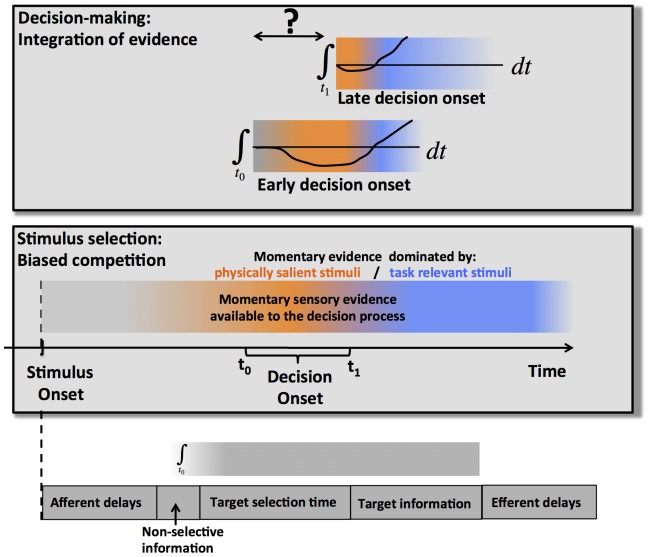
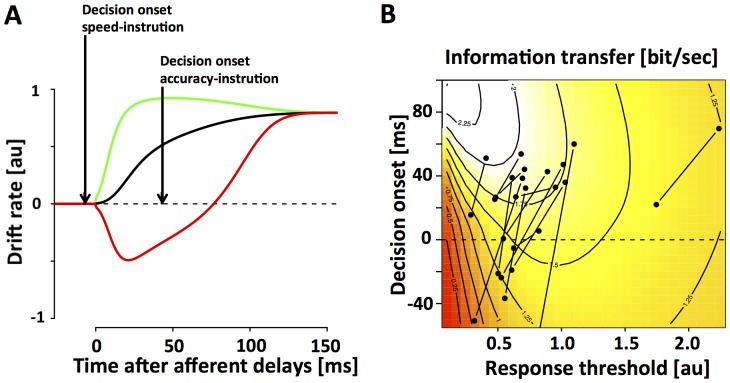
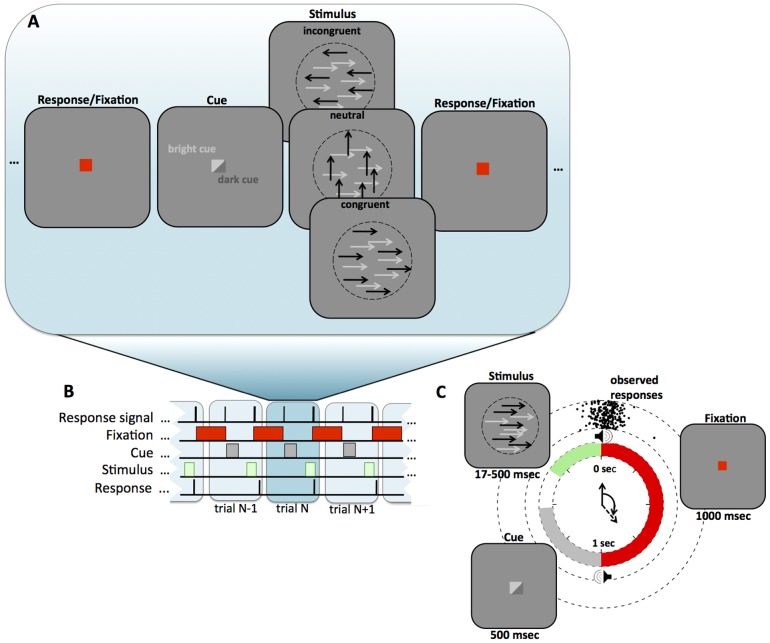
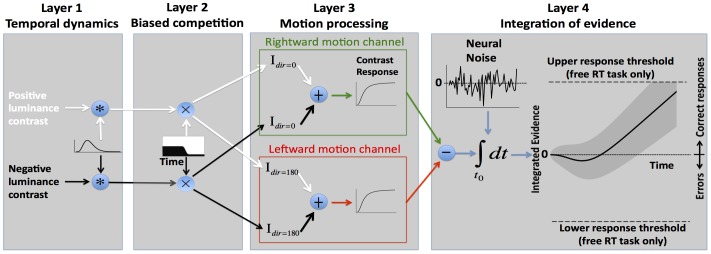
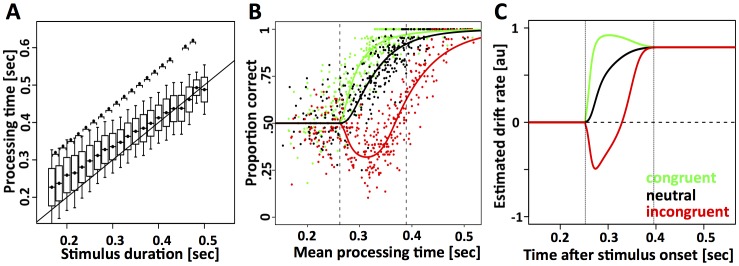
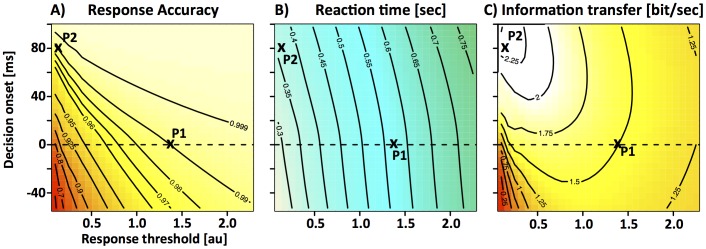
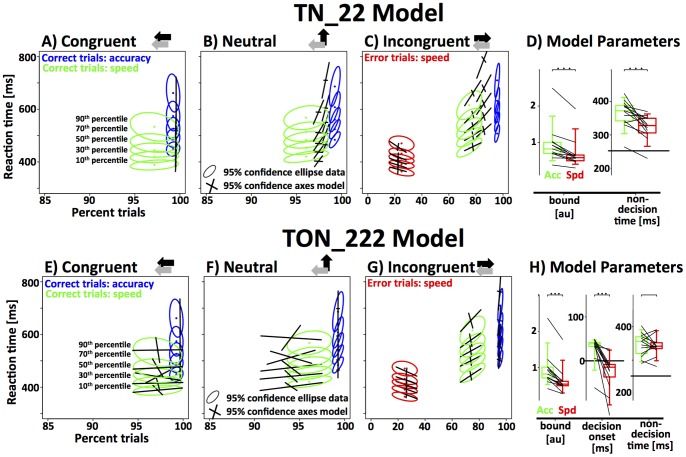
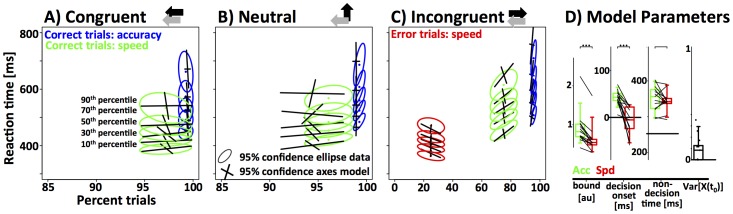
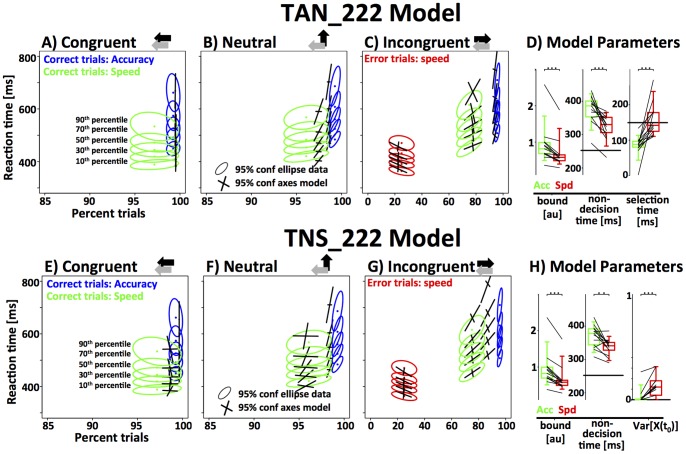
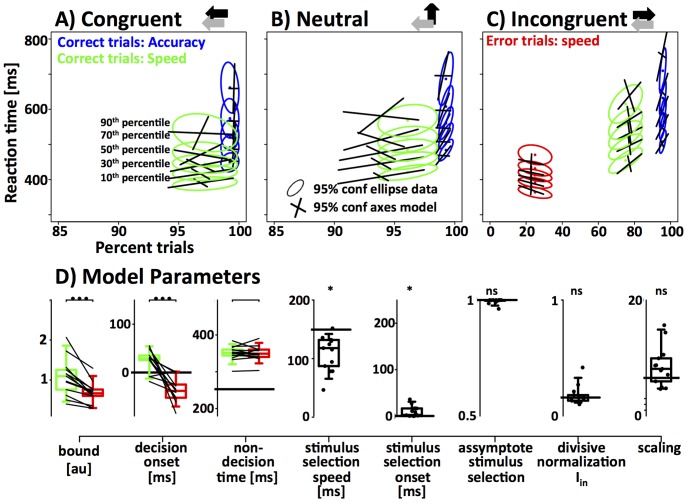
Why do humans make errors on seemingly trivial perceptual decisions? It has been shown that such errors occur in part because the decision process (evidence accumulation) is initiated before selective attention has isolated the relevant sensory information from salient distractors. Nevertheless, it is typically assumed that subjects increase accuracy by prolonging the decision process rather than delaying decision onset. To date it has not been tested whether humans can strategically delay decision onset to increase response accuracy. To address this question we measured the time course of selective attention in a motion interference task using a novel variant of the response signal paradigm. Based on these measurements we estimated time-dependent drift rate and showed that subjects should in principle be able trade speed for accuracy very effectively by delaying decision onset. Using the time-dependent estimate of drift rate we show that subjects indeed delay decision onset in addition to raising response threshold when asked to stress accuracy over speed in a free reaction version of the same motion-interference task. These findings show that decision onset is a critical aspect of the decision process that can be adjusted to effectively improve decision accuracy.
为什么人类在看似微不足道的感知决策上会犯错?研究表明,此类错误部分是因为在选择性注意将相关感官信息从显著干扰物中分离出来之前,决策过程(证据积累)就已经启动。然而,通常认为受试者是通过延长决策过程而非延迟决策开始来提高准确性的。迄今为止,尚未测试人类是否能够策略性地延迟决策开始以提高反应准确性。为了解决这个问题,我们使用反应信号范式的一种新颖变体,在运动干扰任务中测量了选择性注意的时间进程。基于这些测量,我们估计了随时间变化的漂移率,并表明受试者原则上应该能够通过延迟决策开始非常有效地以速度换取准确性。使用随时间变化的漂移率估计,我们表明在同一运动干扰任务的自由反应版本中,当要求受试者强调准确性而非速度时,他们除了提高反应阈值外,确实会延迟决策开始。这些发现表明,决策开始是决策过程的一个关键方面,可以进行调整以有效提高决策准确性。