Department of Psychology, Vanderbilt University, 2301 Vanderbilt Place, Nashville, TN 37240-7817, USA.
Psychol Rev. 2010 Oct;117(4):1113-43. doi: 10.1037/a0020311.
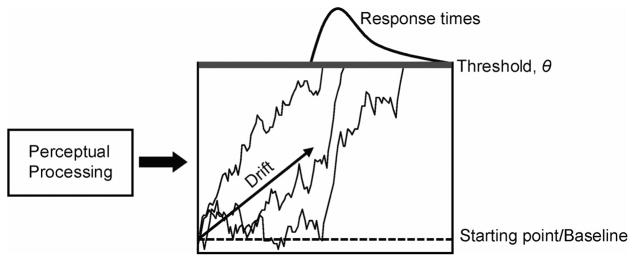
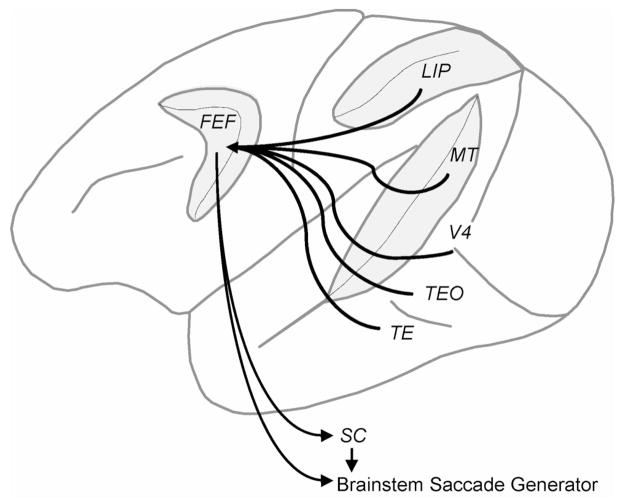
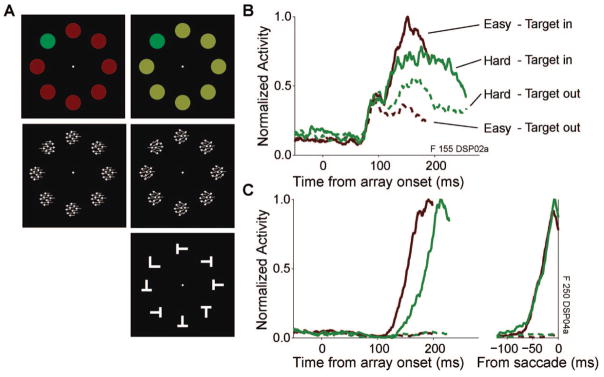
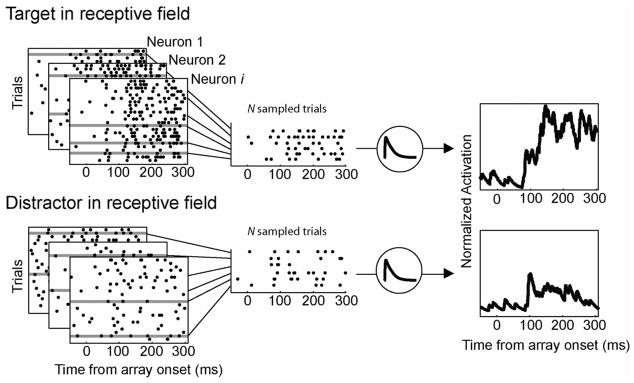
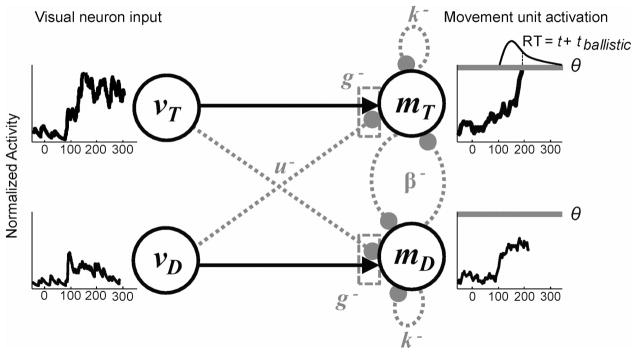
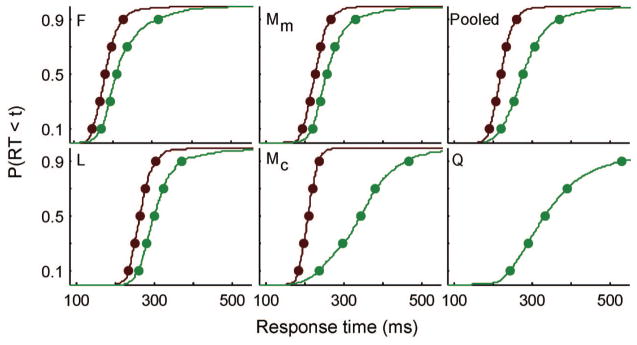
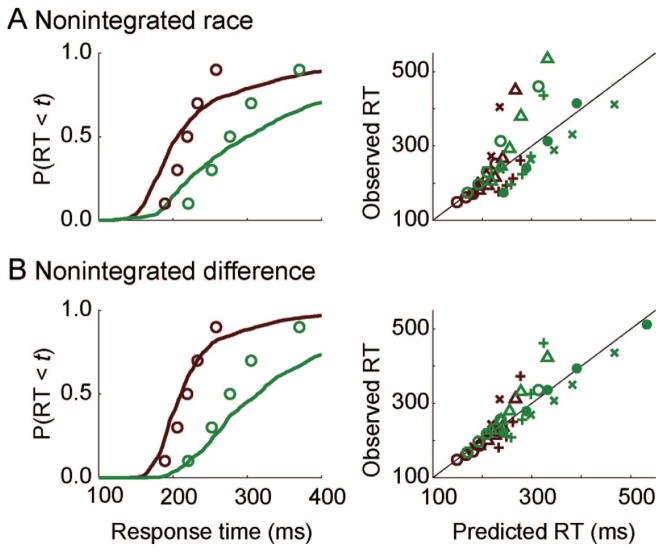
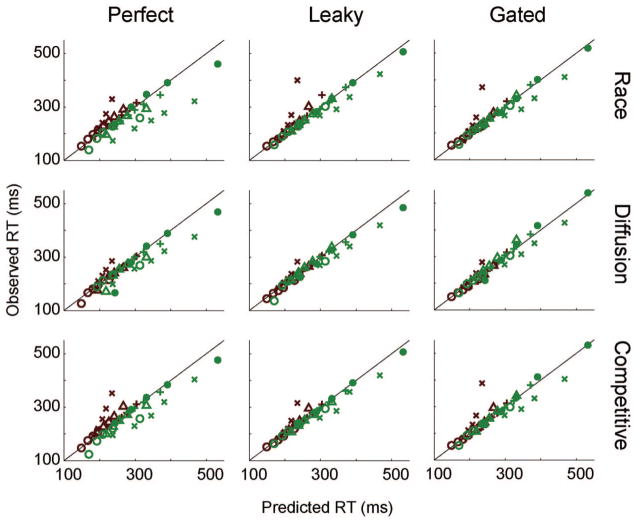
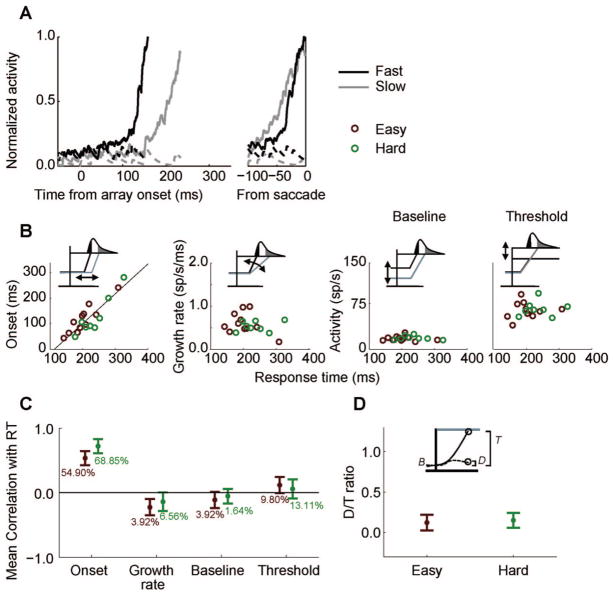
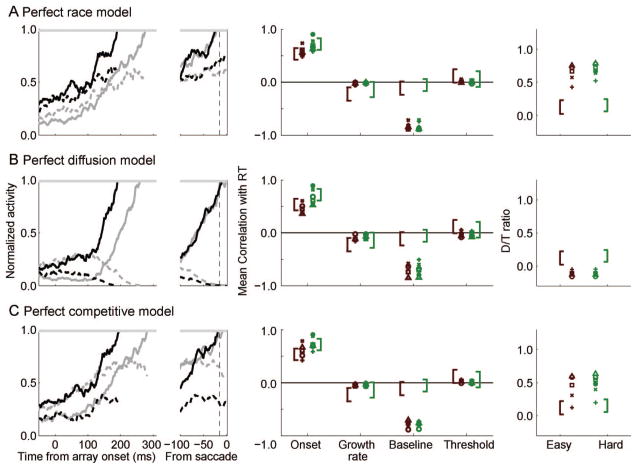
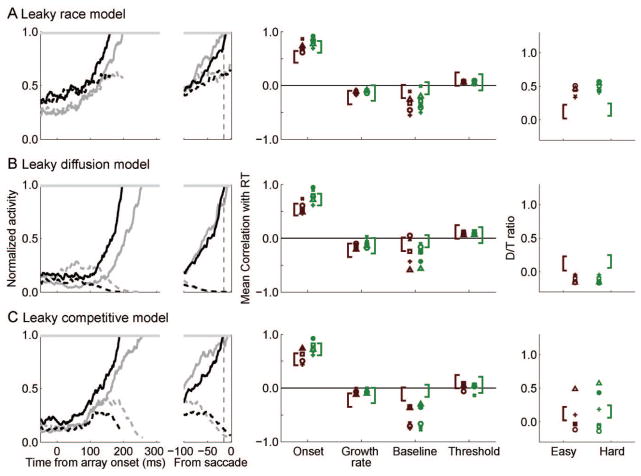
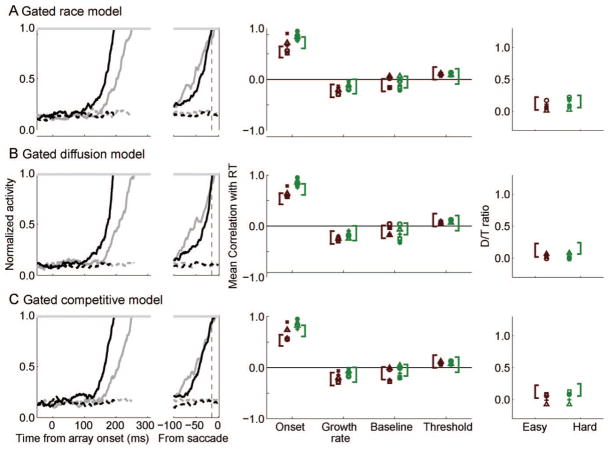
Stochastic accumulator models account for response time in perceptual decision-making tasks by assuming that perceptual evidence accumulates to a threshold. The present investigation mapped the firing rate of frontal eye field (FEF) visual neurons onto perceptual evidence and the firing rate of FEF movement neurons onto evidence accumulation to test alternative models of how evidence is combined in the accumulation process. The models were evaluated on their ability to predict both response time distributions and movement neuron activity observed in monkeys performing a visual search task. Models that assume gating of perceptual evidence to the accumulating units provide the best account of both behavioral and neural data. These results identify discrete stages of processing with anatomically distinct neural populations and rule out several alternative architectures. The results also illustrate the use of neurophysiological data as a model selection tool and establish a novel framework to bridge computational and neural levels of explanation.
随机累加器模型通过假设感知证据积累到一个阈值来解释感知决策任务中的反应时间。本研究将额眼区(FEF)视觉神经元的放电率映射到感知证据上,将 FEF 运动神经元的放电率映射到证据积累上,以测试在积累过程中证据是如何组合的替代模型。这些模型的评估依据是它们预测猴子执行视觉搜索任务时的反应时间分布和运动神经元活动的能力。假设感知证据门控到累加单元的模型可以最好地解释行为和神经数据。这些结果确定了具有解剖学上不同神经群体的离散处理阶段,并排除了几种替代架构。结果还说明了如何将神经生理学数据用作模型选择工具,并建立了一个新的框架来连接计算和神经解释层面。