Sen Ramesh K, Sud Sachin, Saini Gaurav, Rangdal Sushil, Sament Radheshyam, Bachhal Vikas
Department of Orthopaedics, Postgraduate Institute of Medical Education and Research, Chandigarh, India.
Department of Orthopaedics, Indira Gandhi Medical College, Shimla, Himachal Pradesh, India.
Indian J Orthop. 2014 Jan;48(1):14-9. doi: 10.4103/0019-5413.125480.
Glenoid fossa fractures are rare injuries having a prevalence of 0.1%. These fractures may be managed operatively if substantially displaced. However, several fractures of glenoid fossa are managed nonoperatively, even if displaced, due to high incidence of associated injuries which may render patient unfit to undergo major orthopaedic surgery. There is a relative paucity of articles reporting on outcome of treatment of glenoid fossa fractures. We present our experience of treating these injuries over past decade with operative and nonoperative methods.
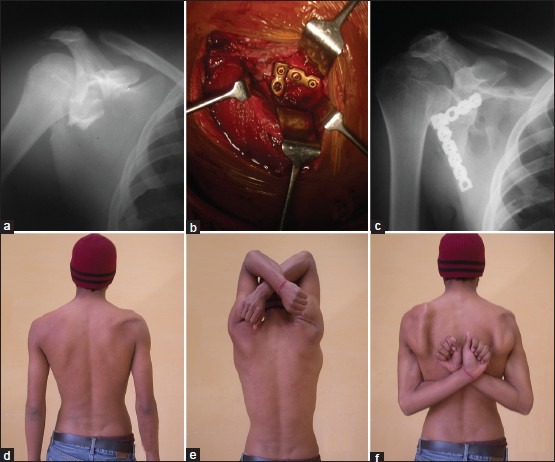
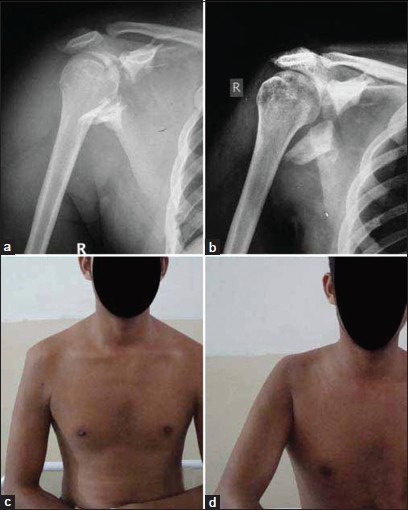
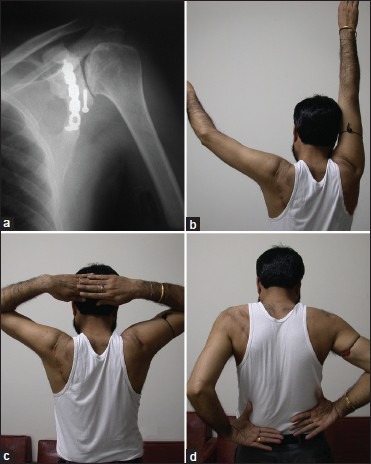
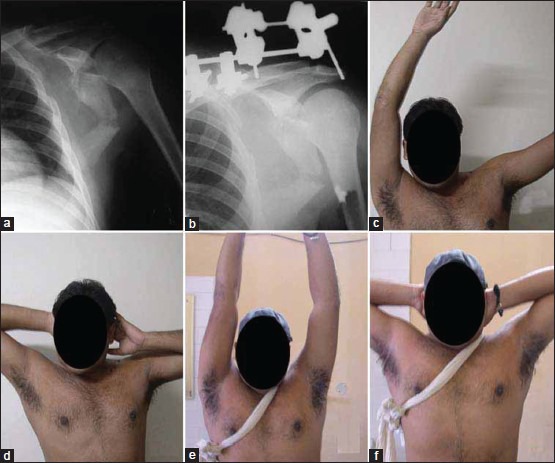
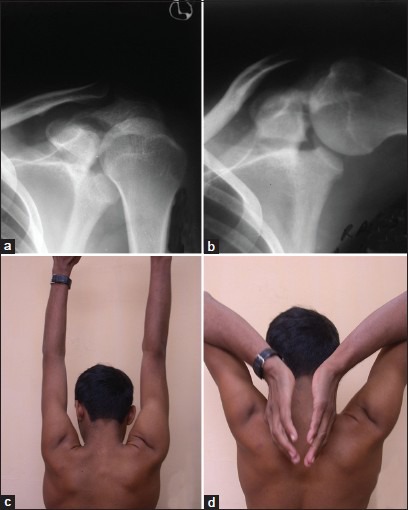
21 patients of glenoid fossa fractures were included in this series with 14 males and 7 females. Patients with displacement of >5 mm who were fit to undergo surgery within 3 weeks of injury were operated using a posterior Judet's approach. Overall 8 patients with displaced fractures were operated (Group A) while 9 patients with displaced fractures (Group B) and 4 patients with undisplaced fractures (Group C) were managed nonoperatively.
The mean age and followup period in this series was 29 years and 7.3 years respectively. In group A, average constant score was 87.25. The least constant score was observed for group B (58.55) while group C had an average constant score of 86. Brachial plexus injury and fracture-dislocations had poorer outcome.
Operative treatment for displaced glenoid fractures is a viable option at centers equipped to handle critically ill patients and subset of patients with fracture-dislocation as opposed to fracture alone should always be treated operatively due to persistent loss of function.
肩胛盂骨折是罕见损伤,患病率为0.1%。如果移位明显,这些骨折可通过手术治疗。然而,即使移位,一些肩胛盂骨折也采用非手术治疗,因为相关损伤发生率高,可能使患者不适合接受大型骨科手术。报道肩胛盂骨折治疗结果的文章相对较少。我们介绍过去十年间采用手术和非手术方法治疗这些损伤的经验。
本系列纳入21例肩胛盂骨折患者,其中男性14例,女性7例。损伤后3周内适合手术的移位>5 mm的患者采用Judet后侧入路进行手术。总共8例移位骨折患者接受了手术(A组),而9例移位骨折患者(B组)和4例无移位骨折患者(C组)采用非手术治疗。
本系列患者的平均年龄和随访时间分别为29岁和7.3年。A组的平均Constant评分是87.25。B组的Constant评分最低(58.55),而C组的平均Constant评分为86。臂丛神经损伤和骨折脱位的预后较差。
对于移位的肩胛盂骨折,在有能力处理重症患者的中心,手术治疗是一种可行的选择,与单纯骨折相比,骨折脱位患者应始终接受手术治疗,因为会持续存在功能丧失。