• 文献检索
  • 文档翻译
  • 深度研究
  • 学术资讯
  • Suppr Zotero 插件Zotero 插件
  • 邀请有礼
  • 套餐&价格
  • 历史记录
应用&插件
Suppr Zotero 插件Zotero 插件浏览器插件Mac 客户端Windows 客户端微信小程序
定价
高级版会员购买积分包购买API积分包
服务
文献检索文档翻译深度研究API 文档MCP 服务
关于我们
关于 Suppr公司介绍联系我们用户协议隐私条款
关注我们

Suppr 超能文献

核心技术专利:CN118964589B侵权必究
粤ICP备2023148730 号-1Suppr @ 2026

文献检索

告别复杂PubMed语法,用中文像聊天一样搜索,搜遍4000万医学文献。AI智能推荐,让科研检索更轻松。

立即免费搜索

文件翻译

保留排版,准确专业,支持PDF/Word/PPT等文件格式,支持 12+语言互译。

免费翻译文档

深度研究

AI帮你快速写综述,25分钟生成高质量综述,智能提取关键信息,辅助科研写作。

立即免费体验

生成改良的人类感染疾病的人源化小鼠模型。

Generation of improved humanized mouse models for human infectious diseases.

机构信息

The University of Massachusetts Medical School, 368 Plantation Street, Worcester, MA 01605, United States.

The Jackson Laboratory, 600 Main Street, Bar Harbor, ME 04609, United States.

出版信息

J Immunol Methods. 2014 Aug;410:3-17. doi: 10.1016/j.jim.2014.02.011. Epub 2014 Mar 4.

DOI:10.1016/j.jim.2014.02.011
PMID:24607601
原文链接:https://pmc.ncbi.nlm.nih.gov/articles/PMC4155027/
Abstract

The study of human-specific infectious agents has been hindered by the lack of optimal small animal models. More recently development of novel strains of immunodeficient mice has begun to provide the opportunity to utilize small animal models for the study of many human-specific infectious agents. The introduction of a targeted mutation in the IL2 receptor common gamma chain gene (IL2rg(null)) in mice already deficient in T and B cells led to a breakthrough in the ability to engraft hematopoietic stem cells, as well as functional human lymphoid cells and tissues, effectively creating human immune systems in immunodeficient mice. These humanized mice are becoming increasingly important as pre-clinical models for the study of human immunodeficiency virus-1 (HIV-1) and other human-specific infectious agents. However, there remain a number of opportunities to further improve humanized mouse models for the study of human-specific infectious agents. This is being done by the implementation of innovative technologies, which collectively will accelerate the development of new models of genetically modified mice, including; i) modifications of the host to reduce innate immunity, which impedes human cell engraftment; ii) genetic modification to provide human-specific growth factors and cytokines required for optimal human cell growth and function; iii) and new cell and tissue engraftment protocols. The development of "next generation" humanized mouse models continues to provide exciting opportunities for the establishment of robust small animal models to study the pathogenesis of human-specific infectious agents, as well as for testing the efficacy of therapeutic agents and experimental vaccines.

摘要

人类特异性传染因子的研究一直受到缺乏理想的小动物模型的阻碍。最近,免疫缺陷型小鼠新型品系的发展开始为许多人类特异性传染因子的研究提供了利用小动物模型的机会。在已经缺乏 T 细胞和 B 细胞的小鼠中引入白细胞介素 2 受体共同γ链基因(IL2rg(null))的靶向突变,导致了能够植入造血干细胞以及功能性人类淋巴样细胞和组织的突破,有效地在免疫缺陷型小鼠中创建了人类免疫系统。这些人源化小鼠作为人类免疫缺陷病毒-1(HIV-1)和其他人类特异性传染因子的临床前模型变得越来越重要。然而,仍然有许多机会可以进一步改进用于研究人类特异性传染因子的人源化小鼠模型。这是通过实施创新技术来实现的,这些技术将共同加速新型基因修饰小鼠模型的开发,包括:i)宿主的修饰以减少阻碍人类细胞植入的固有免疫;ii)基因修饰以提供最佳人类细胞生长和功能所需的人类特异性生长因子和细胞因子;iii)以及新的细胞和组织植入方案。“下一代”人源化小鼠模型的发展继续为建立强大的小动物模型以研究人类特异性传染因子的发病机制以及测试治疗剂和实验疫苗的疗效提供了令人兴奋的机会。
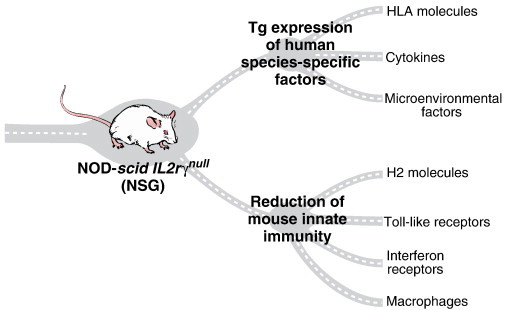
https://cdn.ncbi.nlm.nih.gov/pmc/blobs/728c/7094325/cc7764bb7201/gr4.jpg
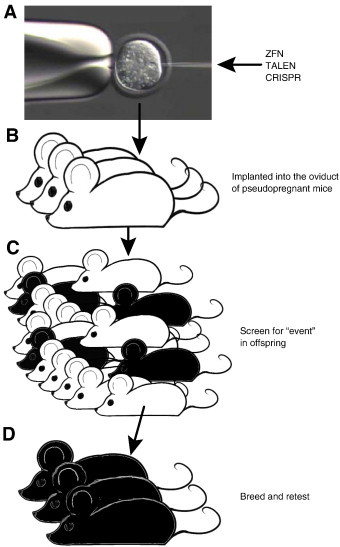
https://cdn.ncbi.nlm.nih.gov/pmc/blobs/728c/7094325/c0c47bd9744b/gr1.jpg
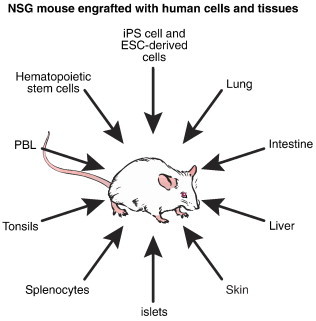
https://cdn.ncbi.nlm.nih.gov/pmc/blobs/728c/7094325/b19e6f06e152/gr2.jpg
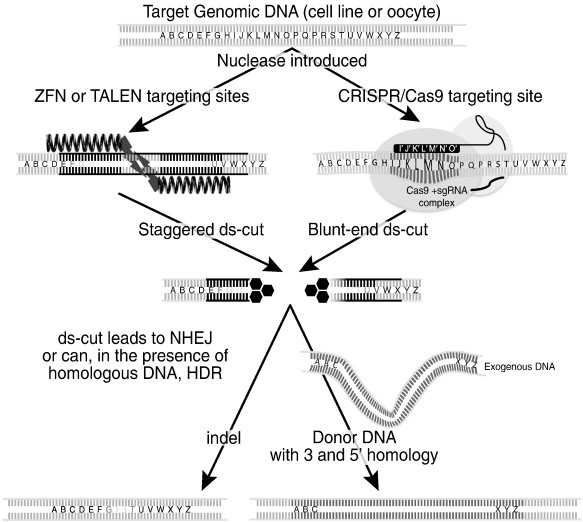
https://cdn.ncbi.nlm.nih.gov/pmc/blobs/728c/7094325/3ed8f70fd06f/gr3.jpg
https://cdn.ncbi.nlm.nih.gov/pmc/blobs/728c/7094325/cc7764bb7201/gr4.jpg
https://cdn.ncbi.nlm.nih.gov/pmc/blobs/728c/7094325/c0c47bd9744b/gr1.jpg
https://cdn.ncbi.nlm.nih.gov/pmc/blobs/728c/7094325/b19e6f06e152/gr2.jpg
https://cdn.ncbi.nlm.nih.gov/pmc/blobs/728c/7094325/3ed8f70fd06f/gr3.jpg
https://cdn.ncbi.nlm.nih.gov/pmc/blobs/728c/7094325/cc7764bb7201/gr4.jpg

相似文献

1
Generation of improved humanized mouse models for human infectious diseases.生成改良的人类感染疾病的人源化小鼠模型。
J Immunol Methods. 2014 Aug;410:3-17. doi: 10.1016/j.jim.2014.02.011. Epub 2014 Mar 4.
2
The utility of the new generation of humanized mice to study HIV-1 infection: transmission, prevention, pathogenesis, and treatment.新一代人源化小鼠在研究 HIV-1 感染方面的应用:传播、预防、发病机制和治疗。
Retrovirology. 2011 Aug 11;8:65. doi: 10.1186/1742-4690-8-65.
3
Novel Humanized Peripheral Blood Mononuclear Cell Mouse Model with Delayed Onset of Graft-versus-Host Disease for Preclinical HIV Research.新型人源化外周血单核细胞小鼠模型,用于临床前 HIV 研究的移植物抗宿主病延迟发作。
J Virol. 2022 Feb 9;96(3):e0139421. doi: 10.1128/JVI.01394-21. Epub 2021 Nov 24.
4
Overcoming current limitations in humanized mouse research.克服人源化小鼠研究中的当前局限性。
J Infect Dis. 2013 Nov;208 Suppl 2(Suppl 2):S125-30. doi: 10.1093/infdis/jit319.
5
Establishment of Humanized Mice from Peripheral Blood Mononuclear Cells or Cord Blood CD34+ Hematopoietic Stem Cells for Immune-Oncology Studies Evaluating New Therapeutic Agents.建立人源化小鼠模型,使用外周血单个核细胞或脐带血 CD34+造血干细胞,用于免疫肿瘤学研究评估新型治疗药物。
Curr Protoc Pharmacol. 2020 Jun;89(1):e77. doi: 10.1002/cpph.77.
6
Current humanized mouse models for studying human immunology and HIV-1 immuno-pathogenesis.用于研究人类免疫学和 HIV-1 免疫发病机制的当前人源化小鼠模型。
Sci China Life Sci. 2010 Feb;53(2):195-203. doi: 10.1007/s11427-010-0059-7. Epub 2010 Mar 7.
7
Humanized Mouse Models of Clinical Disease.临床疾病的人源化小鼠模型
Annu Rev Pathol. 2017 Jan 24;12:187-215. doi: 10.1146/annurev-pathol-052016-100332. Epub 2016 Dec 5.
8
Improvements and Limitations of Humanized Mouse Models for HIV Research: NIH/NIAID "Meet the Experts" 2015 Workshop Summary.用于HIV研究的人源化小鼠模型的改进与局限:美国国立卫生研究院/美国国立过敏和传染病研究所2015年“与专家见面”研讨会总结
AIDS Res Hum Retroviruses. 2016 Feb;32(2):109-19. doi: 10.1089/AID.2015.0258.
9
Development of novel major histocompatibility complex class I and class II-deficient NOD-SCID IL2R gamma chain knockout mice for modeling human xenogeneic graft-versus-host disease.用于模拟人类异种移植物抗宿主病的新型主要组织相容性复合体I类和II类缺陷的NOD-SCID IL2Rγ链敲除小鼠的研制。
Methods Mol Biol. 2010;602:105-17. doi: 10.1007/978-1-60761-058-8_7.
10
HIV-1 immunopathogenesis in humanized mouse models.人源化小鼠模型中的 HIV-1 免疫发病机制。
Cell Mol Immunol. 2012 May;9(3):237-44. doi: 10.1038/cmi.2012.7. Epub 2012 Apr 16.

引用本文的文献

1
Cytomegalovirus latency-the sum of subtleties.巨细胞病毒潜伏——细微之处的总和
J Virol. 2025 Aug 19;99(8):e0066425. doi: 10.1128/jvi.00664-25. Epub 2025 Jul 30.
2
Short-Term Immunosuppression in Rats Induces Prolonged Immune Tolerance Towards a Human Monoclonal Antibody, Erenumab.大鼠短期免疫抑制可诱导对人单克隆抗体erenumab产生长期免疫耐受。
AAPS J. 2025 May 16;27(4):94. doi: 10.1208/s12248-025-01083-0.
3
Humanized mouse model reveals the immunogenicity of Hepatitis B Virus vaccine candidates produced in CRISPR/Cas9-edited .

本文引用的文献

1
Correction of the Crb1rd8 allele and retinal phenotype in C57BL/6N mice via TALEN-mediated homology-directed repair.利用 TALEN 介导的同源定向修复校正 C57BL/6N 小鼠的 Crb1rd8 等位基因和视网膜表型。
Invest Ophthalmol Vis Sci. 2014 Jan 20;55(1):387-95. doi: 10.1167/iovs.13-13278.
2
Follicular dendritic cells: origin, phenotype, and function in health and disease.滤泡树突状细胞:起源、表型及其在健康与疾病中的功能。
Trends Immunol. 2014 Mar;35(3):105-13. doi: 10.1016/j.it.2013.11.001. Epub 2013 Dec 3.
3
Engrafted human cells generate adaptive immune responses to Mycobacterium bovis BCG infection in humanized mice.
人源化小鼠模型揭示了在CRISPR/Cas9编辑的细胞中产生的乙型肝炎病毒候选疫苗的免疫原性。
Front Immunol. 2025 Apr 9;16:1479689. doi: 10.3389/fimmu.2025.1479689. eCollection 2025.
4
Advanced technologies for the development of infectious disease vaccines.传染病疫苗开发的先进技术。
Nat Rev Drug Discov. 2024 Dec;23(12):914-938. doi: 10.1038/s41573-024-01041-z. Epub 2024 Oct 21.
5
Organoids derived from metastatic cancers: Present and future.源自转移性癌症的类器官:现状与未来。
Heliyon. 2024 Apr 27;10(9):e30457. doi: 10.1016/j.heliyon.2024.e30457. eCollection 2024 May 15.
6
Comparison of antibody-based immunotherapeutics for malignant hematological disease in an experimental murine model.在实验性小鼠模型中比较恶性血液病的基于抗体的免疫疗法。
Blood Adv. 2024 Apr 23;8(8):1934-1945. doi: 10.1182/bloodadvances.2023011647.
7
Humanized Mice for Studies of HIV-1 Persistence and Elimination.用于研究HIV-1持续性和清除的人源化小鼠
Pathogens. 2023 Jun 27;12(7):879. doi: 10.3390/pathogens12070879.
8
Thymocyte Development of Humanized Mice Is Promoted by Interactions with Human-Derived Antigen Presenting Cells upon Immunization.免疫时,人源化小鼠的胸腺细胞发育受人类来源的抗原呈递细胞相互作用的促进。
Int J Mol Sci. 2023 Jul 20;24(14):11705. doi: 10.3390/ijms241411705.
9
Next-generation humanized NSG-SGM3 mice are highly susceptible to infection.下一代人源化 NSG-SGM3 小鼠极易感染。
Front Immunol. 2023 Mar 10;14:1127709. doi: 10.3389/fimmu.2023.1127709. eCollection 2023.
10
Use of Hu-PBL Mice to Study Pathogenesis of Human-Restricted Viruses.利用 Hu-PBL 小鼠研究人类局限性病毒的发病机制。
Viruses. 2023 Jan 13;15(1):228. doi: 10.3390/v15010228.
移植的人源细胞在人源化小鼠中对牛型结核分枝杆菌 BCG 感染产生适应性免疫应答。
BMC Immunol. 2013 Dec 7;14:53. doi: 10.1186/1471-2172-14-53.
4
Targeting toll-like receptors: promising therapeutic strategies for the management of sepsis-associated pathology and infectious diseases.靶向 Toll 样受体:治疗脓毒症相关病理和传染病的有前景的治疗策略。
Front Immunol. 2013 Nov 18;4:387. doi: 10.3389/fimmu.2013.00387.
5
Host specificity of bacterial pathogens.细菌病原体的宿主特异性。
Cold Spring Harb Perspect Med. 2013 Dec 1;3(12):a010041. doi: 10.1101/cshperspect.a010041.
6
Analysis of off-target effects of CRISPR/Cas-derived RNA-guided endonucleases and nickases.CRISPR/Cas 衍生的 RNA 引导内切酶和 Nickase 的脱靶效应分析。
Genome Res. 2014 Jan;24(1):132-41. doi: 10.1101/gr.162339.113. Epub 2013 Nov 19.
7
Overcoming current limitations in humanized mouse research.克服人源化小鼠研究中的当前局限性。
J Infect Dis. 2013 Nov;208 Suppl 2(Suppl 2):S125-30. doi: 10.1093/infdis/jit319.
8
Recent advances in humanized mice: accelerating the development of an HIV vaccine.人源化小鼠的最新进展:加速 HIV 疫苗的开发。
J Infect Dis. 2013 Nov;208 Suppl 2(Suppl 2):S121-4. doi: 10.1093/infdis/jit451.
9
A novel TK-NOG based humanized mouse model for the study of HBV and HCV infections.一种新型基于 TK-NOG 的人源化小鼠模型,用于研究 HBV 和 HCV 感染。
Biochem Biophys Res Commun. 2013 Nov 8;441(1):230-5. doi: 10.1016/j.bbrc.2013.10.040. Epub 2013 Oct 16.
10
Sensitive detection of measles virus infection in the blood and tissues of humanized mouse by one-step quantitative RT-PCR.一步法实时定量 RT-PCR 检测人源化小鼠血液和组织中的麻疹病毒感染。
Front Microbiol. 2013 Oct 11;4:298. doi: 10.3389/fmicb.2013.00298. eCollection 2013.