Division of Medical Oncology, Cancer Research Institute, Kanazawa University, Kanazawa, Ishikawa, Japan.
Cancer Sci. 2014 May;105(5):499-505. doi: 10.1111/cas.12383. Epub 2014 Mar 26.
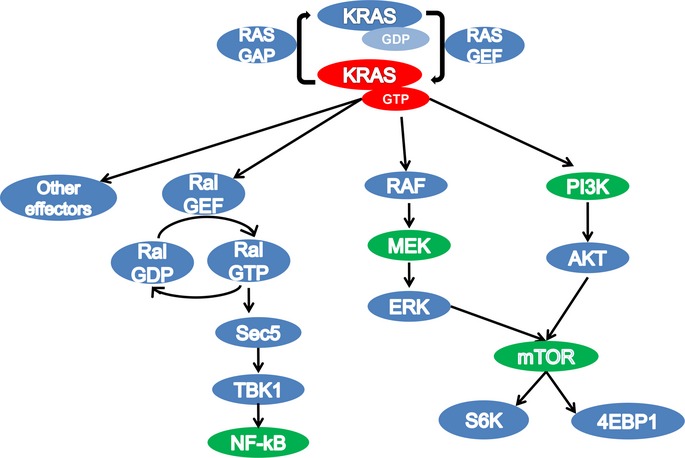
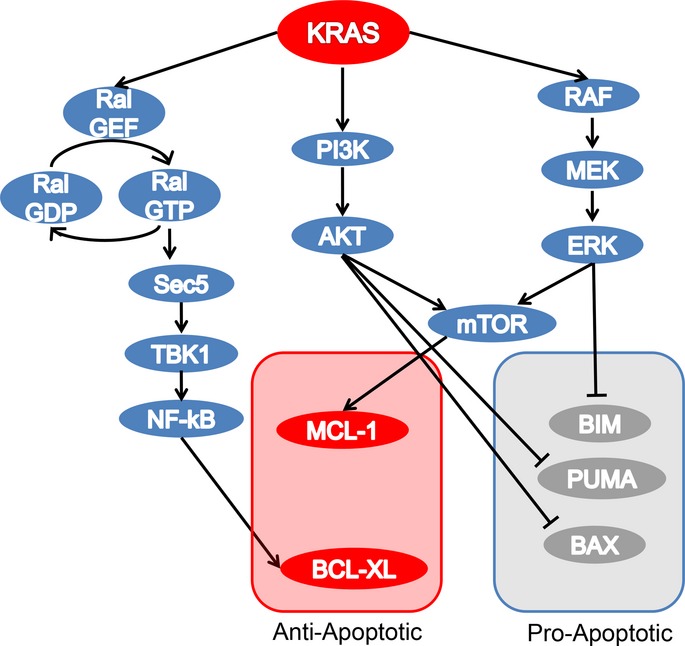
Mutations in Kirsten rat-sarcoma (KRAS) are well appreciated to be major drivers of human cancers through dysregulation of multiple growth and survival pathways. Similar to many other non-kinase oncogenes and tumor suppressors, efforts to directly target KRAS pharmaceutically have not yet materialized. As a result, there is broad interest in an alternative approach to develop therapies that induce synthetic lethality in cancers with mutant KRAS, therefore exposing the particular vulnerabilities of these cancers. Fueling these efforts is our increased understanding into the biology driving KRAS mutant cancers, in particular the important pathways that mutant KRAS governs to promote survival. In this mini-review, we summarize the latest approaches to treat KRAS mutant cancers and the rationale behind them.
KRAS 基因突变被认为是人类癌症的主要驱动因素,通过失调多种生长和存活途径。与许多其他非激酶致癌基因和肿瘤抑制基因类似,直接通过药物靶向 KRAS 的努力尚未实现。因此,人们广泛关注开发诱导具有突变 KRAS 的癌症产生合成致死性的疗法的替代方法,从而暴露出这些癌症的特定弱点。推动这些努力的是我们对驱动 KRAS 突变型癌症的生物学的深入了解,特别是突变 KRAS 所调控的促进存活的重要途径。在这篇迷你综述中,我们总结了治疗 KRAS 突变型癌症的最新方法及其背后的原理。