Kim Hye Sook, Kim Seung Tae, Kang Seok Ho, Sung Deuk Jae, Kim Chul Hwan, Shin Sang Won, Kim Yeul Hong, Cho Won Yong, Park Kyong Hwa
Division of Oncology/Hematology, Department of Internal Medicine, College of Medicine, Korea University, Inchon-ro 73, Seongbuk-Gu, Seoul 136-702, Korea.
J Med Case Rep. 2014 Mar 10;8:95. doi: 10.1186/1752-1947-8-95.
An increased understanding of the genetic pathways involved in renal cell carcinoma has resulted in the development of various drugs that target relevant signaling cascades for the specific treatment of this disease. However, no validated predictive markers have been identified to guide the decision whether patients should receive vascular endothelial growth factor-targeted therapy or mammalian target of rapamycin-targeted therapy. We present what is, to the best of our knowledge, the first case of renal cell carcinoma in a patient with tuberous sclerosis complex who was successfully treated with everolimus.
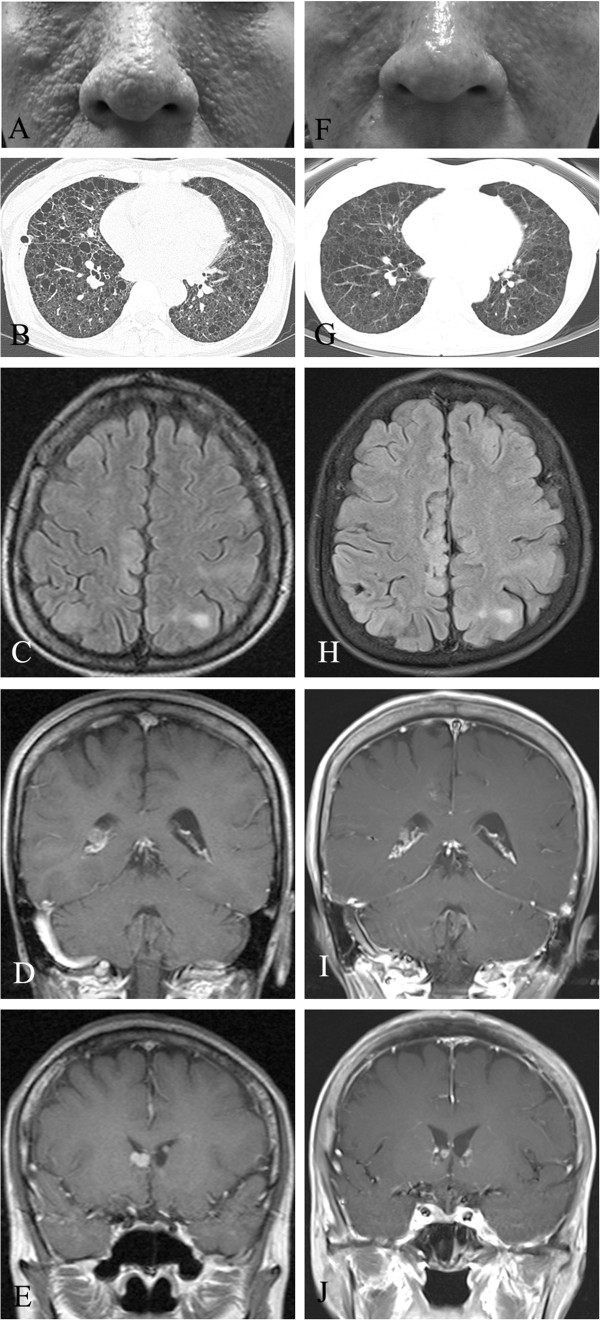
The patient was a 49-year-old Korean woman with tuberous sclerosis complex and recurrent renal cell carcinoma. The patient was treated with the tyrosine kinase inhibitor sunitinib followed by the mammalian target of rapamycin inhibitor everolimus. This treatment resulted in a prolonged response and significant clinical benefit. Notably, everolimus ameliorated the symptoms related not only to renal cell carcinoma but also to tuberous sclerosis complex.
This case provides a rationale for the use of everolimus as first-line treatment for this specific patient population in order to target the correct pathway involved in carcinogenesis.
对肾细胞癌相关遗传途径的深入了解促使开发出多种靶向相关信号级联反应的药物,用于该疾病的特异性治疗。然而,尚未确定经过验证的预测标志物来指导患者是否应接受血管内皮生长因子靶向治疗或雷帕霉素靶蛋白靶向治疗的决策。据我们所知,我们报告了首例结节性硬化症患者的肾细胞癌,该患者接受依维莫司治疗成功。
患者为一名49岁的韩国女性,患有结节性硬化症并复发性肾细胞癌。患者先接受酪氨酸激酶抑制剂舒尼替尼治疗,随后接受雷帕霉素靶蛋白抑制剂依维莫司治疗。这种治疗带来了延长的缓解期和显著的临床获益。值得注意的是,依维莫司不仅改善了与肾细胞癌相关的症状,还改善了与结节性硬化症相关的症状。
该病例为将依维莫司用作这一特定患者群体的一线治疗提供了理论依据,以便靶向参与致癌过程的正确途径。