Zhou Yang, Harrison David E, Love-Myers Kimberly, Chen Yi, Grider Arthur, Wickwire Kathie, Burgess John R, Stochelski Mateusz A, Pazdro Robert
Department of Foods and Nutrition and University of Georgia, Athens, GA 30602, USA.
The Jackson Laboratory, Bar Harbor, ME 04609, USA.
Free Radic Biol Med. 2014 Jun;71:157-164. doi: 10.1016/j.freeradbiomed.2014.02.027. Epub 2014 Mar 5.
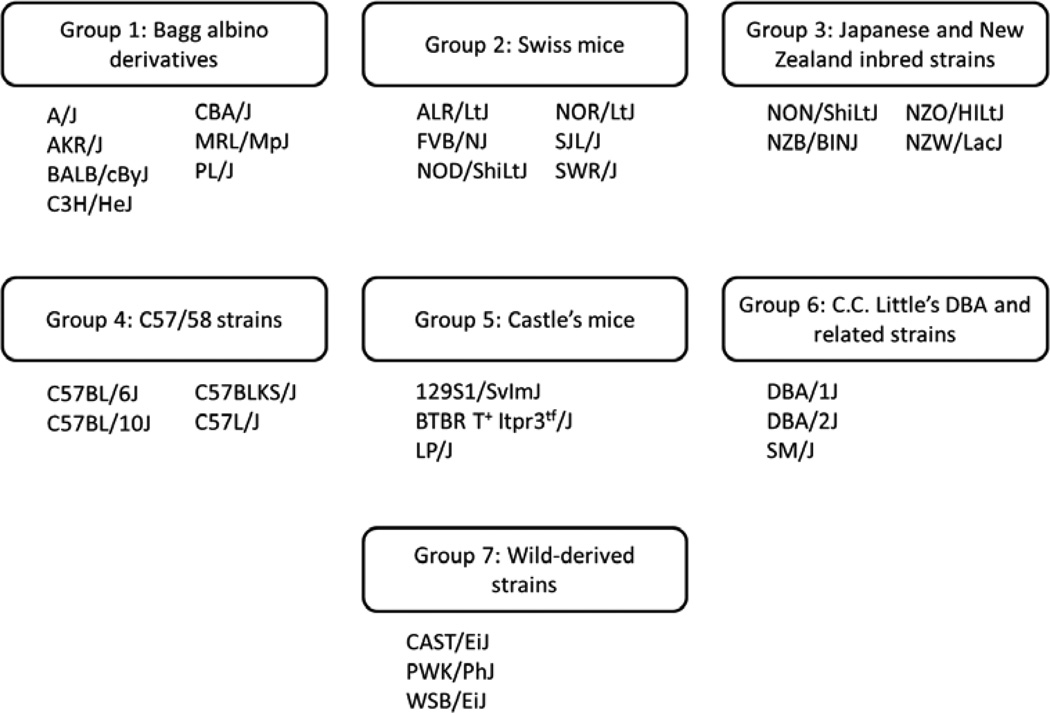
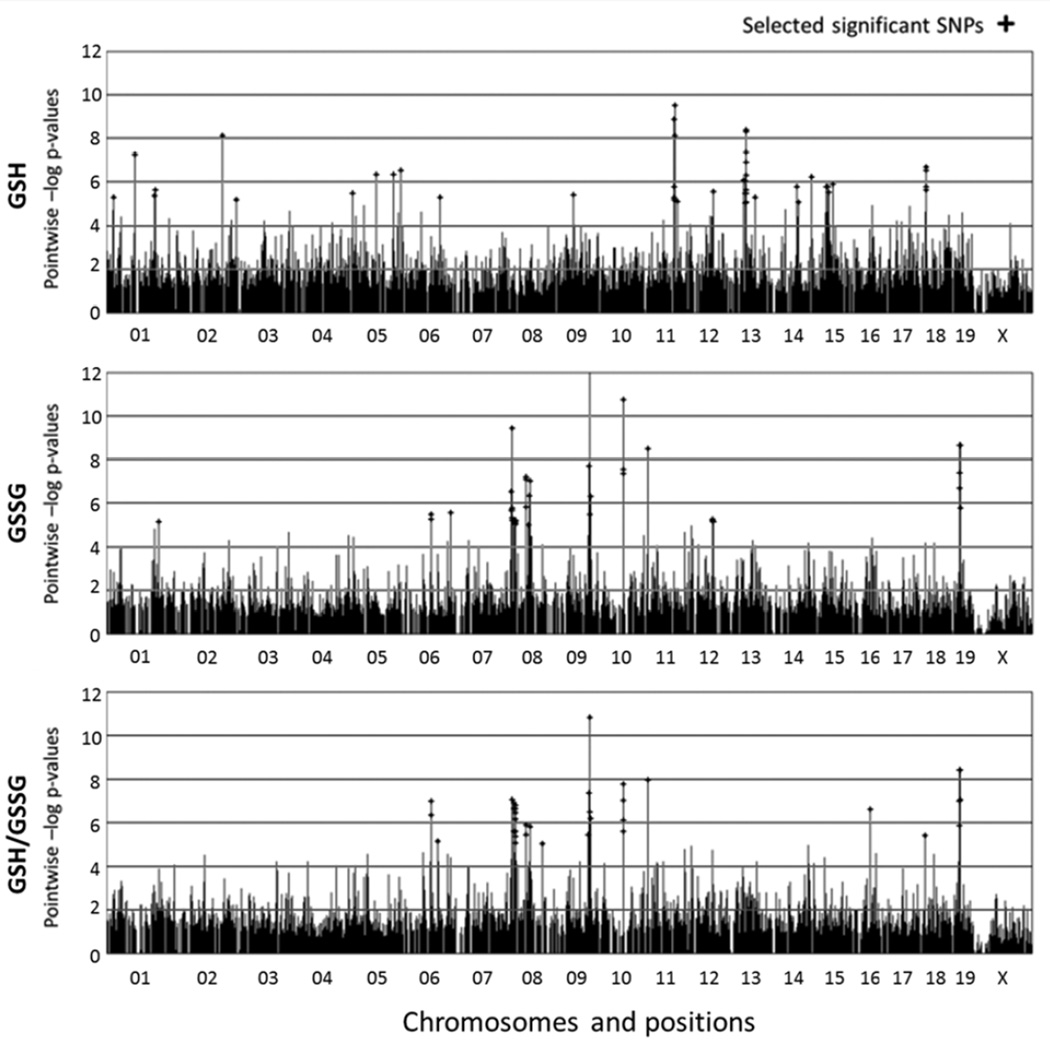
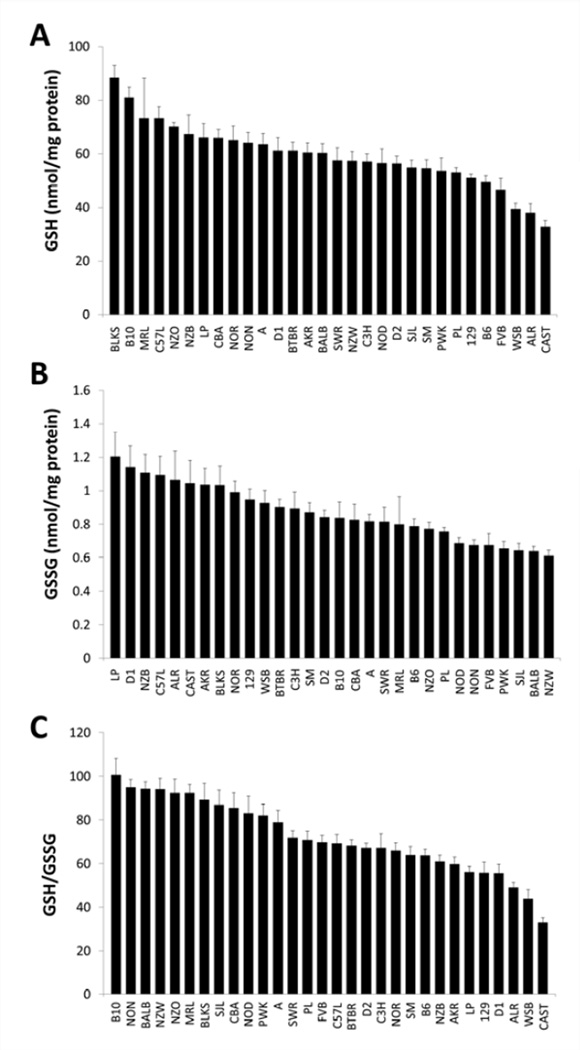
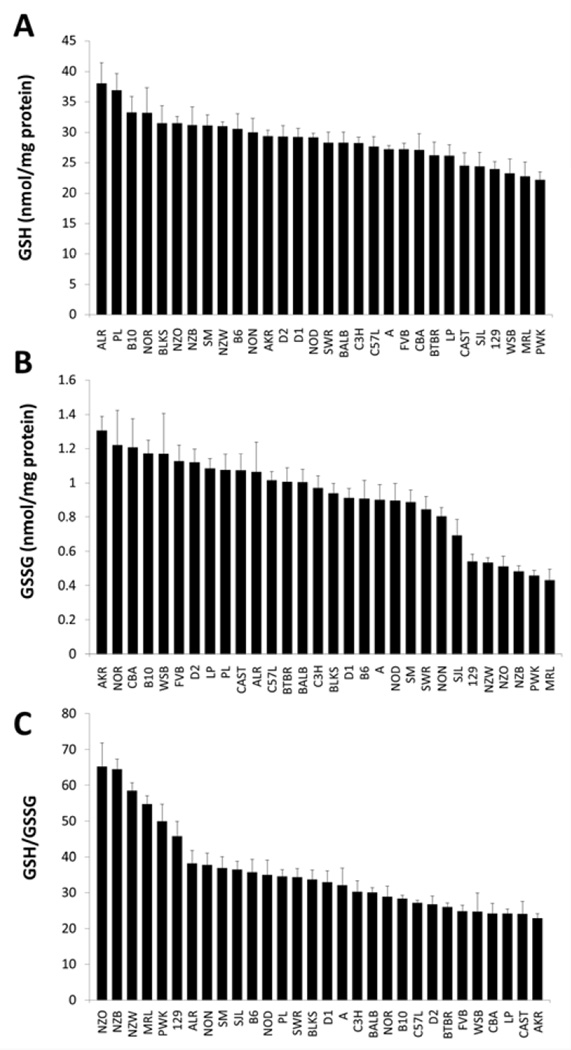
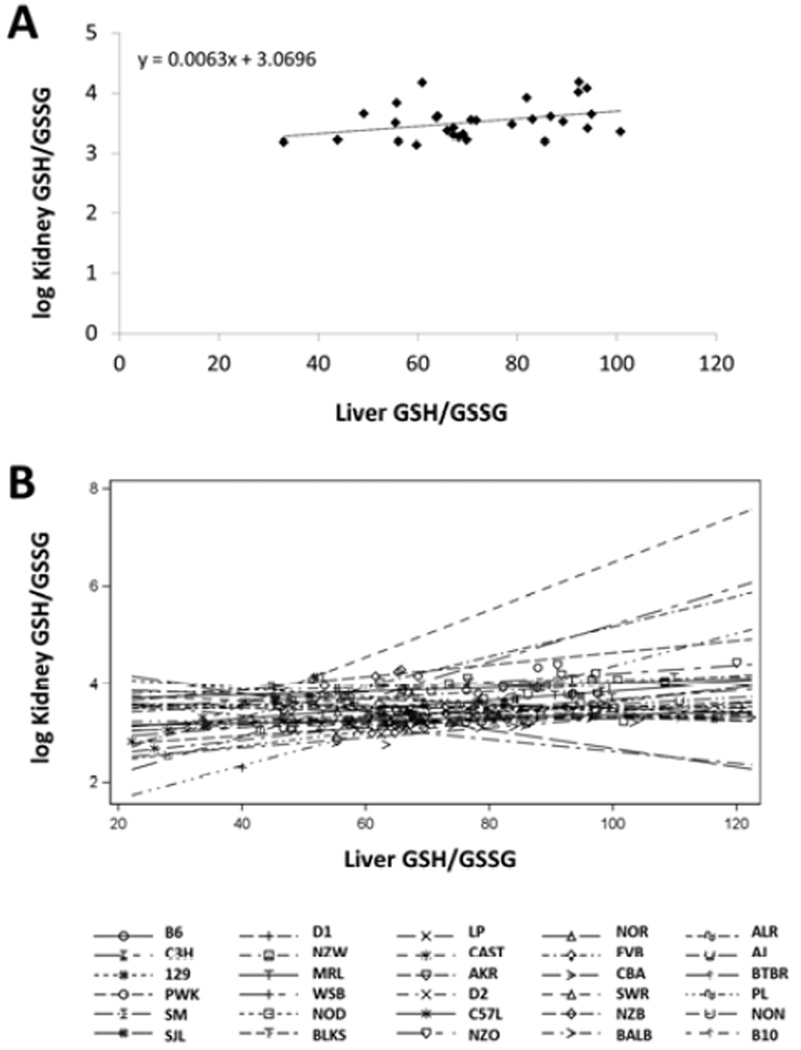
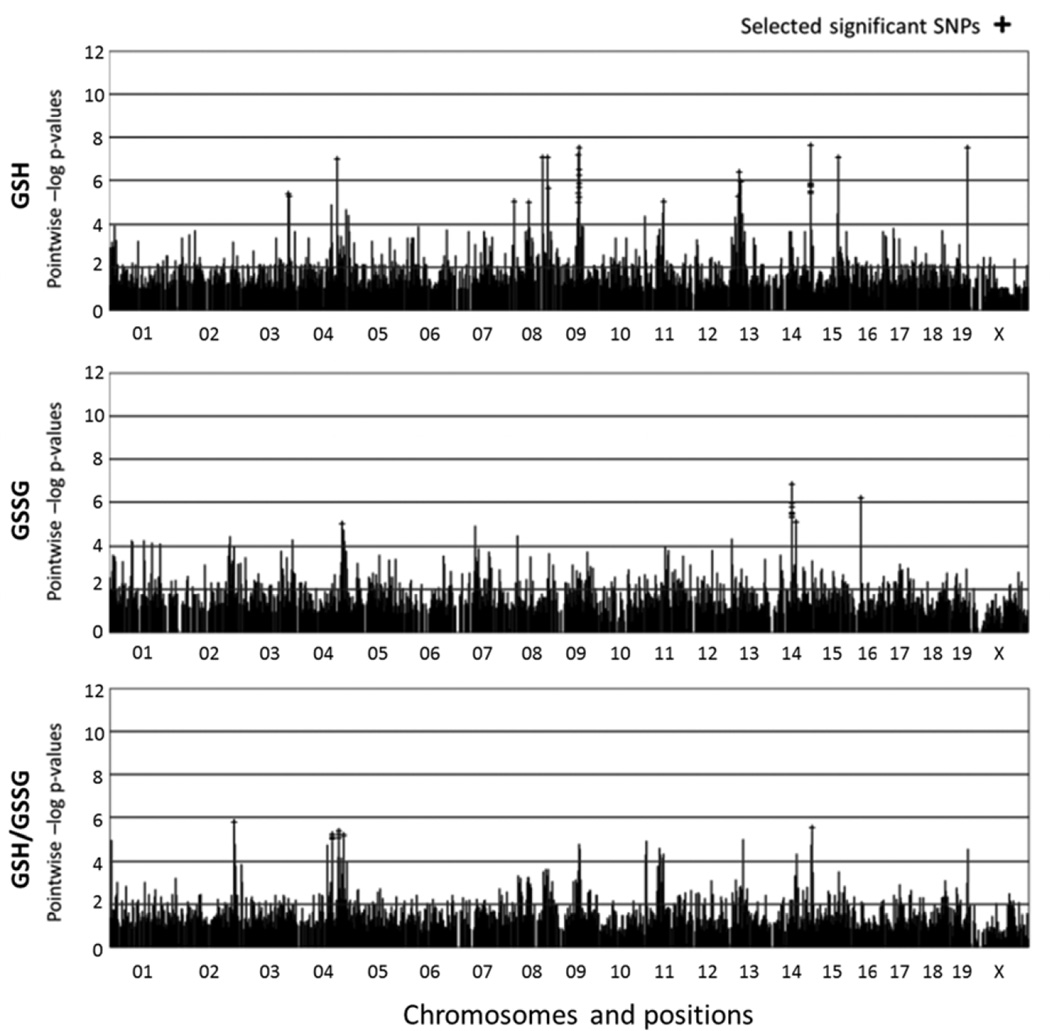
Glutathione redox balance-defined as the ratio GSH/GSSG-is a critical regulator of cellular redox state, and declines in this ratio are closely associated with oxidative stress and disease. However, little is known about the impact of genetic variation on this trait. Previous mouse studies suggest that tissue GSH/GSSG is regulated by genetic background and is therefore heritable. In this study, we measured glutathione concentrations and GSH/GSSG in liver and kidney of 30 genetically diverse inbred mouse strains. Genetic background caused an approximately threefold difference in hepatic and renal GSH/GSSG between the most disparate strains. Haplotype association mapping determined the loci associated with hepatic and renal glutathione phenotypes. We narrowed the number of significant loci by focusing on those located within protein-coding genes, which we now consider to be candidate genes for glutathione homeostasis. No candidate genes were associated with both hepatic and renal GSH/GSSG, suggesting that genetic regulation of GSH/GSSG occurs predominantly in a tissue-specific manner. This is the first quantitative trait locus study to examine the genetic regulation of glutathione concentrations and redox balance in mammals. We identified novel candidate genes that have the potential to redefine our knowledge of redox biochemistry and its regulation and inform future therapeutic applications.
谷胱甘肽氧化还原平衡(定义为GSH/GSSG比值)是细胞氧化还原状态的关键调节因子,该比值的下降与氧化应激和疾病密切相关。然而,关于基因变异对这一特性的影响知之甚少。先前的小鼠研究表明,组织中的GSH/GSSG受遗传背景调控,因此具有遗传性。在本研究中,我们测量了30个遗传背景各异的近交系小鼠品系肝脏和肾脏中的谷胱甘肽浓度及GSH/GSSG。遗传背景导致差异最大的品系之间肝脏和肾脏的GSH/GSSG存在约三倍的差异。单倍型关联图谱确定了与肝脏和肾脏谷胱甘肽表型相关的基因座。我们通过聚焦于蛋白质编码基因内的基因座来缩小显著基因座的数量,我们现在认为这些基因座是谷胱甘肽稳态的候选基因。没有候选基因与肝脏和肾脏的GSH/GSSG都相关,这表明GSH/GSSG的遗传调控主要以组织特异性方式发生。这是第一项研究哺乳动物谷胱甘肽浓度和氧化还原平衡遗传调控的数量性状基因座研究。我们鉴定出了新的候选基因,这些基因有可能重新定义我们对氧化还原生物化学及其调控的认识,并为未来的治疗应用提供信息。