Liu Dan, Wu An'dong, Cui Lei, Hao Ruidong, Wang Yuan, He Jing, Guo Deyin
National Key Laboratory of Virology and Modern Virology Research Center, College of Life Sciences, Wuhan University, Wuhan City, P. R. China.
PLoS One. 2014 Mar 11;9(3):e91658. doi: 10.1371/journal.pone.0091658. eCollection 2014.
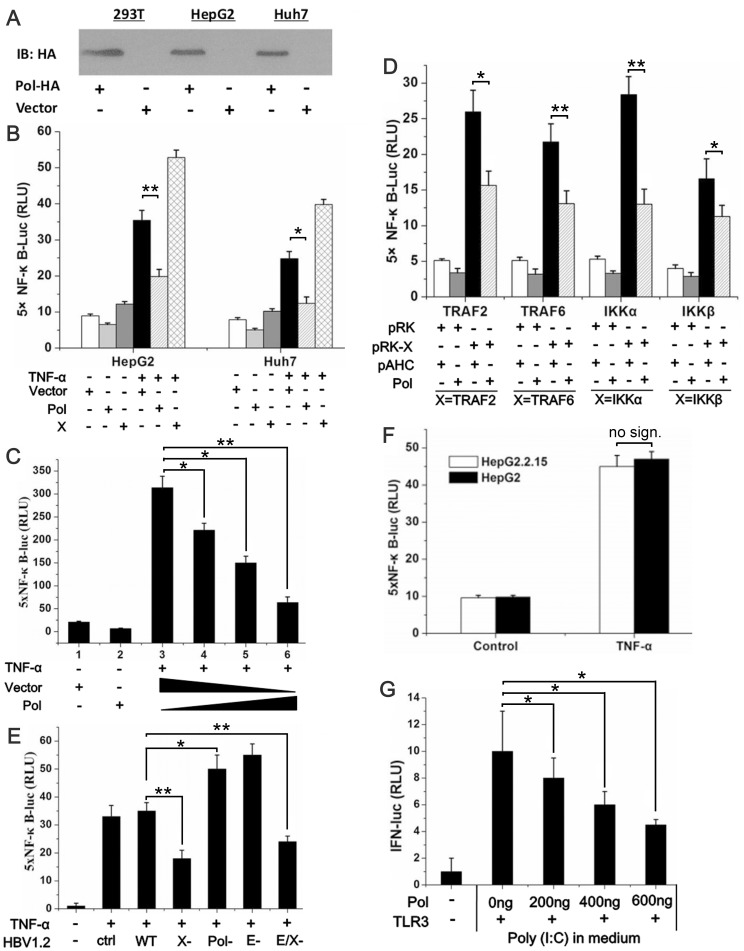
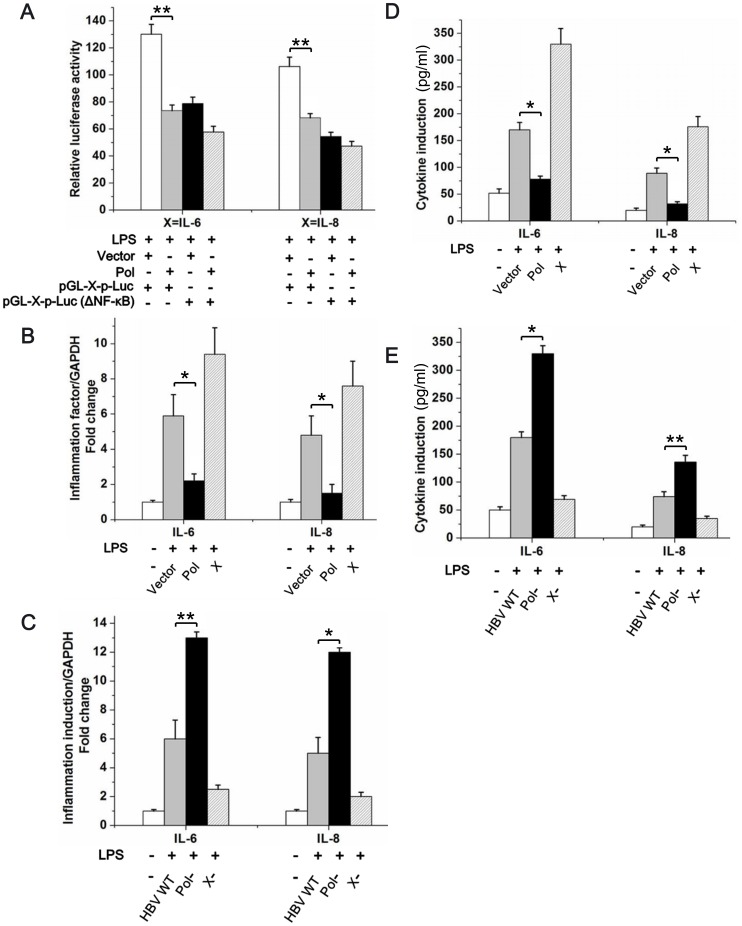
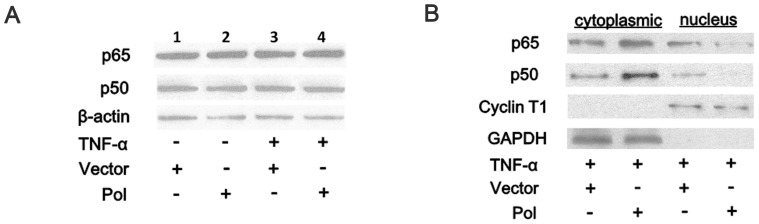
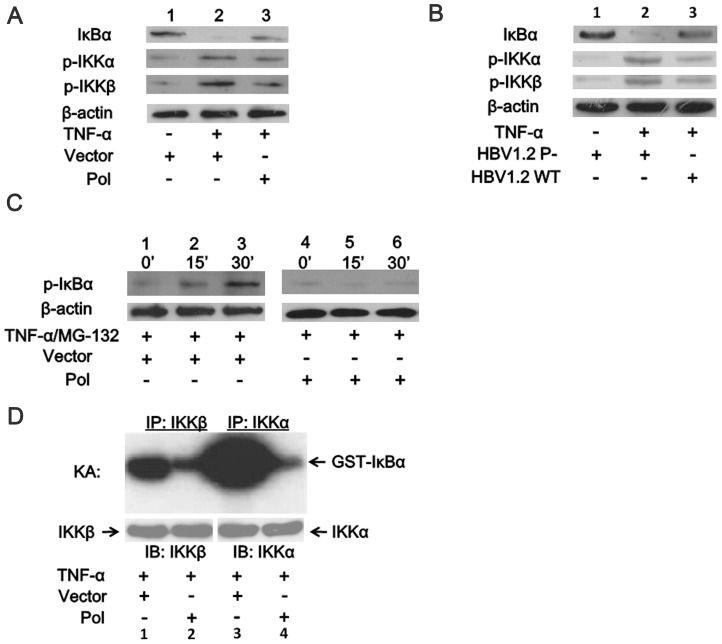
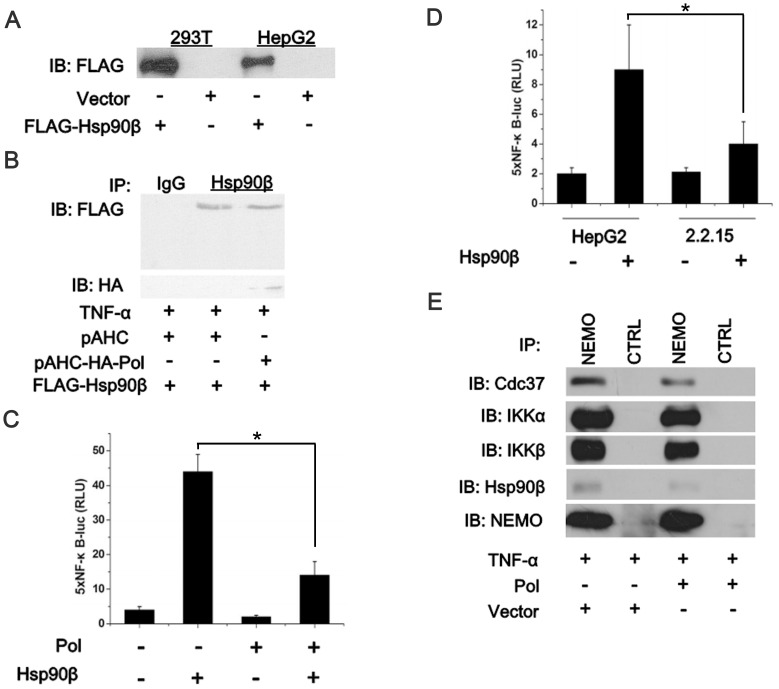
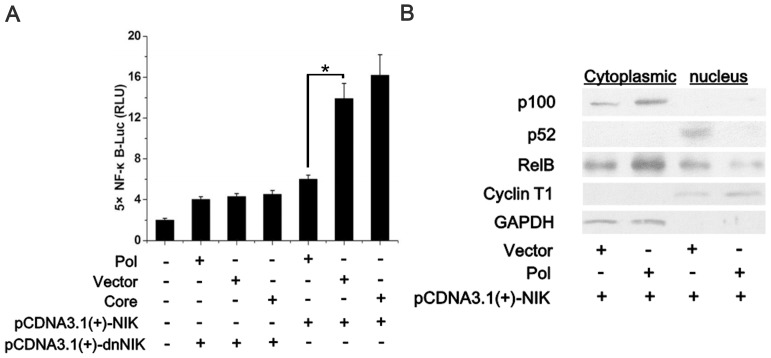
Nuclear factor-κB (NF-κB) plays a central role in the regulation of diverse biological processes, including immune responses, development, cell growth, and cell survival. To establish persistent infection, many viruses have evolved strategies to evade the host's antiviral immune defenses. In the case of hepatitis B virus (HBV), which can cause chronic infection in the liver, immune evasion strategies used by the virus are not fully understood. It has recently been reported that the polymerase of HBV (Pol) inhibits interferon-β (IFN-β) activity by disrupting the interaction between IKKε and the DDX3. In the current study, we found that HBV Pol suppressed NF-κB signaling, which can also contribute to IFN-β production. HBV Pol did not alter the level of NF-κB expression, but it prevented NF-κB subunits involved in both the canonical and non-canonical NF-κB pathways from entering the nucleus. Further experiments demonstrated that HBV Pol preferentially suppressed the activity of the IκB kinase (IKK) complex by disrupting the association of IKK/NEMO with Cdc37/Hsp90, which is critical for the assembly of the IKK complex and recruitment of the IKK complex to the tumor necrosis factor type 1 receptor (TNF-R1). Furthermore, we found that HBV Pol inhibited the NF-κB-mediated transcription of target genes. Taken together, it is suggested that HBV Pol could counteract host innate immune responses by interfering with two distinct signaling pathways required for IFN-β activation. Our studies therefore shed light on a potential therapeutic target for persistent infection with HBV.
核因子-κB(NF-κB)在多种生物学过程的调节中发挥核心作用,这些过程包括免疫反应、发育、细胞生长和细胞存活。为了建立持续性感染,许多病毒已经进化出逃避宿主抗病毒免疫防御的策略。就乙型肝炎病毒(HBV)而言,它可在肝脏中引起慢性感染,该病毒所采用的免疫逃避策略尚未完全明确。最近有报道称,HBV的聚合酶(Pol)通过破坏IKKε与DDX3之间的相互作用来抑制干扰素-β(IFN-β)活性。在本研究中,我们发现HBV Pol抑制NF-κB信号传导,而NF-κB信号传导也有助于IFN-β的产生。HBV Pol并未改变NF-κB的表达水平,但它阻止了参与经典和非经典NF-κB途径的NF-κB亚基进入细胞核。进一步的实验表明,HBV Pol通过破坏IKK/NEMO与Cdc37/Hsp90的结合来优先抑制IκB激酶(IKK)复合物的活性,这对于IKK复合物的组装以及IKK复合物募集到肿瘤坏死因子1型受体(TNF-R1)至关重要。此外,我们发现HBV Pol抑制NF-κB介导的靶基因转录。综上所述,提示HBV Pol可能通过干扰IFN-β激活所需的两条不同信号通路来对抗宿主的先天免疫反应。因此,我们的研究揭示了HBV持续性感染的一个潜在治疗靶点。