Mielke Grégore I, da Silva Inácio C M, Owen Neville, Hallal Pedro C
Postgraduate Program in Epidemiology, Federal University of Pelotas, Brazil.
Baker IDI Heart and Diabetes Institute, Melbourne, Australia.
PLoS One. 2014 Mar 11;9(3):e91614. doi: 10.1371/journal.pone.0091614. eCollection 2014.
There is rapidly-emerging evidence on the harmful health effects of sedentary behaviors. The aim of this paper was to quantify time in sedentary behaviors and document socio-demographic variations in different life domains among adults.
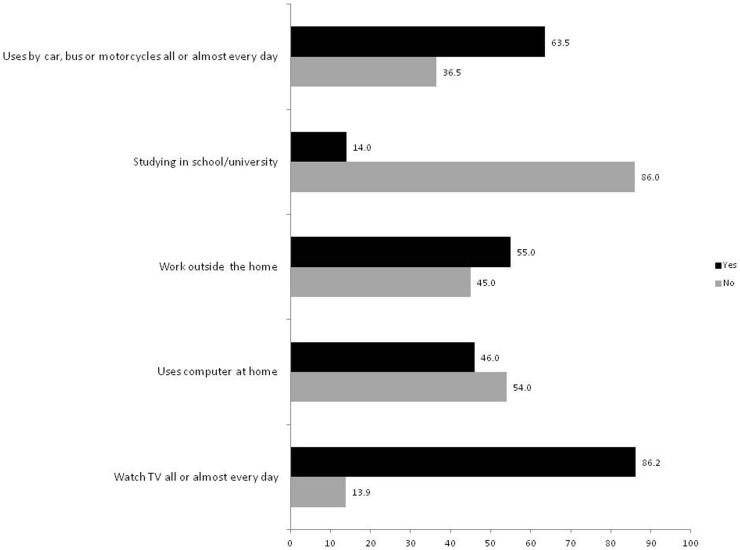
A population-based survey was carried out in 2012 through face-to-face interviews with Brazilian adults aged 20+ years (N = 2,927). Information about time spent sedentary in a typical weekday was collected for five different domains (workplace, commuting, school/university, watching TV, and computer use at home). Descriptive and bivariate analyses examined variations in overall and domain-specific sedentary time by gender, age, educational attainment and socioeconomic position.
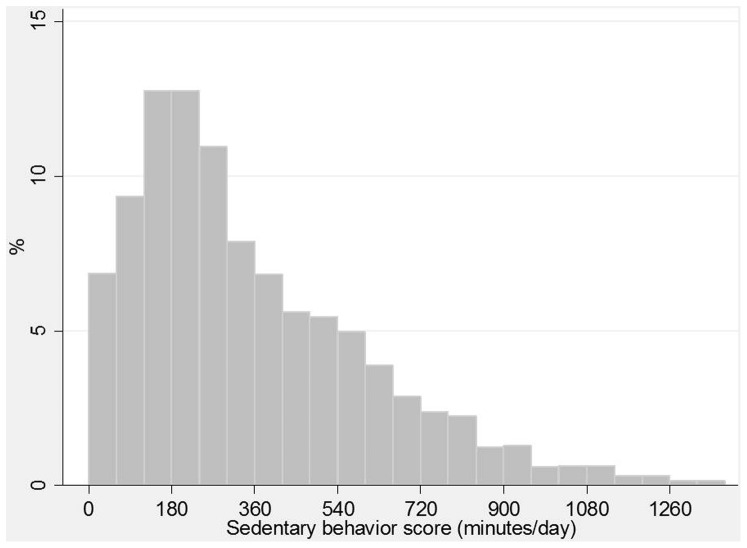
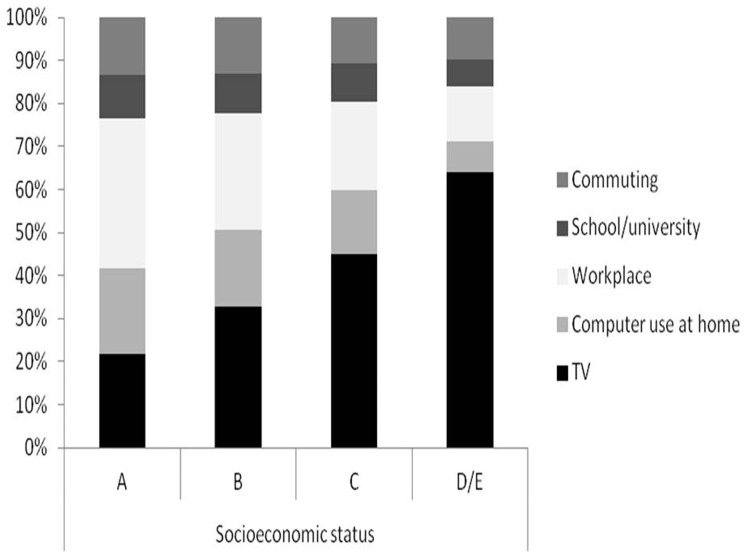
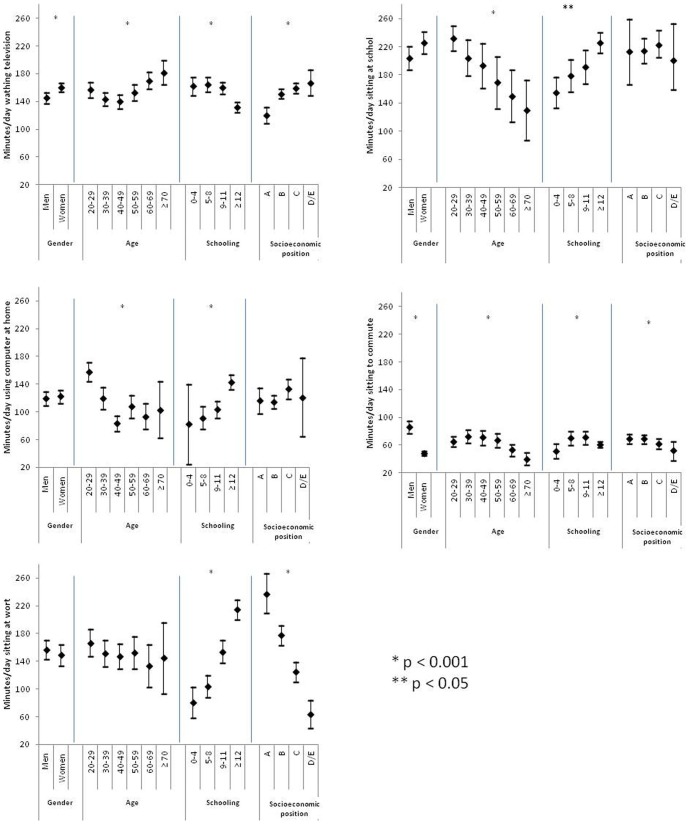
On average, participants reported spending 5.8 (SD 4.5) hours per day sitting. The median value was 4.5 (interquartile range: 2.5-8) hours. Men, younger adults, those with higher schooling and from the wealthiest socioeconomic groups had higher overall sedentary scores. TV time was higher in women, older adults and among those with low schooling and socioeconomic position. Sedentary time in transport was higher in men, younger adults, and participants with high schooling and high socioeconomic position. Computer use at home was more frequent among young adults and those from high socioeconomic groups. Sitting at work was higher in those with higher schooling and from the wealthiest socioeconomic groups. Sedentary behavior at school was related inversely to age and directly to schooling.
Patterns of sedentary behavior are different by life domains. Initiatives to reduce prolonged sitting among Brazilian adults will be required on multiple levels for different life domains.
关于久坐行为对健康有害影响的证据正在迅速涌现。本文旨在量化成年人久坐行为的时间,并记录不同生活领域中社会人口学差异。
2012年通过对20岁及以上巴西成年人(N = 2927)进行面对面访谈开展了一项基于人群的调查。收集了五个不同领域(工作场所、通勤、学校/大学、看电视和在家使用电脑)在典型工作日久坐时间的信息。描述性和双变量分析研究了按性别、年龄、教育程度和社会经济地位划分的总体和特定领域久坐时间的差异。
参与者平均每天报告久坐5.8(标准差4.5)小时。中位数为4.5(四分位间距:2.5 - 8)小时。男性、年轻人、受过高等教育者以及来自最富裕社会经济群体的人总体久坐得分较高。女性、老年人以及受教育程度和社会经济地位较低者看电视的时间更长。男性、年轻人以及受过高等教育和社会经济地位较高的参与者在交通中的久坐时间更长。年轻人和社会经济地位较高群体在家使用电脑的频率更高。受过高等教育且来自最富裕社会经济群体的人在工作时久坐时间更长。在学校的久坐行为与年龄呈反比,与受教育程度呈正比。
久坐行为模式因生活领域而异。需要针对不同生活领域在多个层面采取措施,以减少巴西成年人的久坐时间。