Wilson Roneé E, Salihu Hamisu M, Groer Maureen W, Dagne Getachew, O'Rourke Kathleen, Mbah Alfred K
Department of Epidemiology and Biostatistics, College of Public Health, University of South Florida, 13201 Bruce B. Downs, MDC56, Tampa, FL 33612, USA.
Department of Epidemiology and Biostatistics, College of Public Health, University of South Florida, 13201 Bruce B. Downs, MDC56, Tampa, FL 33612, USA ; Division of Maternal Fetal Medicine, Department of Obstetrics and Gynecology, College of Medicine, University of South Florida, 2 Tampa General Circle, STC, 6th Floor Tampa, FL 33606, USA.
J Thyroid Res. 2014;2014:872410. doi: 10.1155/2014/872410. Epub 2014 Jan 29.
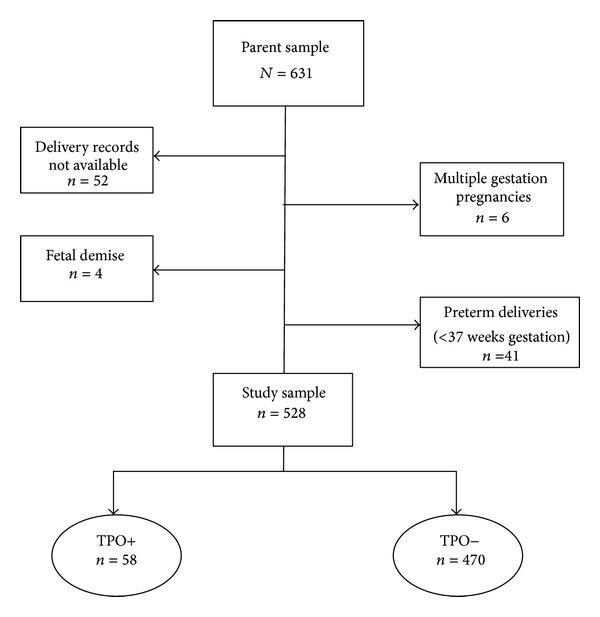
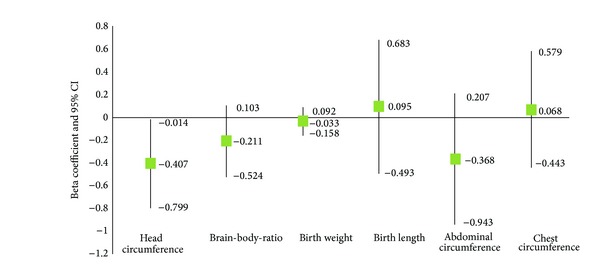
The obstetric consequences of abnormal thyroid function during pregnancy have been established. Less understood is the influence of maternal thyroid autoantibodies on infant outcomes. The objective of this study was to examine the influence of maternal thyroperoxidase (TPO) status on fetal/infant brain and body growth. Six-hundred thirty-one (631) euthyroid pregnant women were recruited from prenatal clinics in Tampa Bay, Florida, and the surrounding area between November 2007 and December 2010. TPO status was determined during pregnancy and fetal/infant brain and body growth variables were assessed at delivery. Regression analysis revealed maternal that TPO positivity was significantly associated with smaller head circumference, reduced brain weight, and lower brain-to-body ratio among infants born to TPO+ white, non-Hispanic mothers only, distinguishing race/ethnicity as an effect modifier in the relationship. No significant differences were noted in body growth measurements among infants born to TPO positive mothers of any racial/ethnic group. Currently, TPO antibody status is not assessed as part of the standard prenatal care laboratory work-up, but findings from this study suggest that fetal brain growth may be impaired by TPO positivity among certain populations; therefore autoantibody screening among high-risk subgroups may be useful for clinicians to determine whether prenatal thyroid treatment is warranted.
孕期甲状腺功能异常的产科后果已得到证实。而母体甲状腺自身抗体对婴儿结局的影响则了解较少。本研究的目的是探讨母体甲状腺过氧化物酶(TPO)状态对胎儿/婴儿脑和身体生长的影响。2007年11月至2010年12月期间,从佛罗里达州坦帕湾及周边地区的产前诊所招募了631名甲状腺功能正常的孕妇。在孕期确定TPO状态,并在分娩时评估胎儿/婴儿脑和身体生长变量。回归分析显示,仅在TPO阳性的白人、非西班牙裔母亲所生婴儿中,母体TPO阳性与较小的头围、减轻的脑重量和较低的脑体比显著相关,表明种族/族裔是该关系中的一个效应修饰因素。任何种族/族裔组的TPO阳性母亲所生婴儿的身体生长测量值均未发现显著差异。目前,TPO抗体状态不作为标准产前检查实验室检查的一部分进行评估,但本研究结果表明,某些人群中TPO阳性可能会损害胎儿脑生长;因此,对高危亚组进行自身抗体筛查可能有助于临床医生确定是否有必要进行产前甲状腺治疗。