Bigliardi P L, Neumann C, Teo Y L, Pant A, Bigliardi-Qi M
Institute of Medical Biology, Agency for Science Technology & Research (A*STAR), Singapore; Division of Rheumatology, National University Hospital, University Medicine Cluster, Singapore.
Br J Pharmacol. 2015 Jan;172(2):501-14. doi: 10.1111/bph.12687. Epub 2014 Jul 1.
In addition to its analgesic functions, the peripheral opioid receptor system affects skin homeostasis by influencing cell differentiation, migration and adhesion; also, wound healing is altered in δ-opioid receptor knockout mice (DOPr(-/-) ). Hence, we investigated δ-opioid receptor effects on the expression of several proteins of the desmosomal junction complex and on the migratory behaviour of keratinocytes.
Expression levels of desmosomal cadherins in wild-type and DOPr(-/-) mice, and the morphology of intercellular adhesion in human keratinocytes were analysed by immunofluorescence. To investigate the δ-opioid receptor activation pathway, protein expression was studied using Western blot and its effect on cellular migration determined by in vitro live cell migration recordings from human keratinocytes.
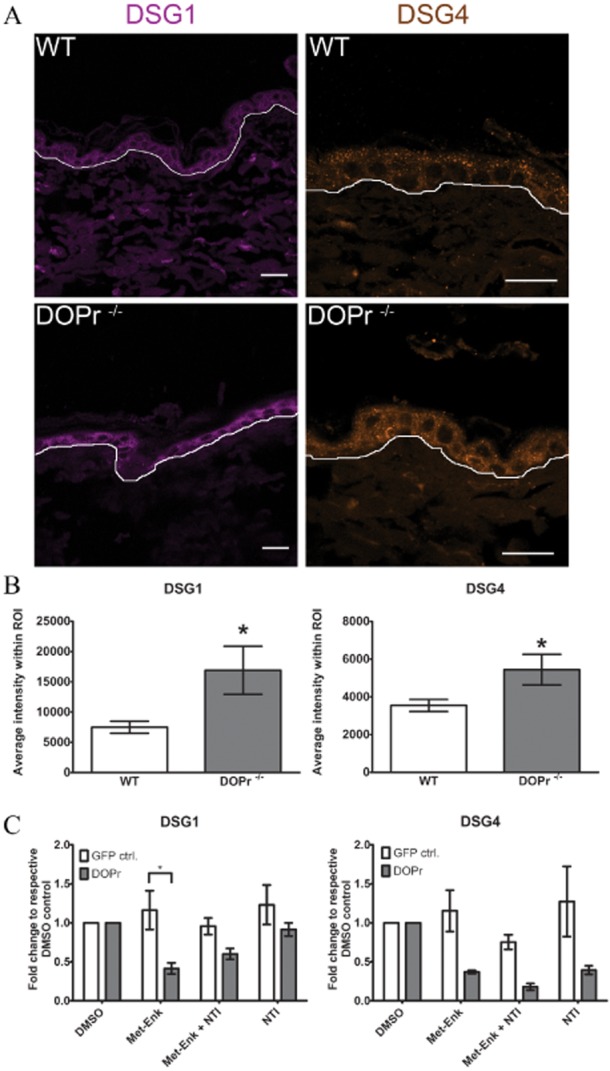
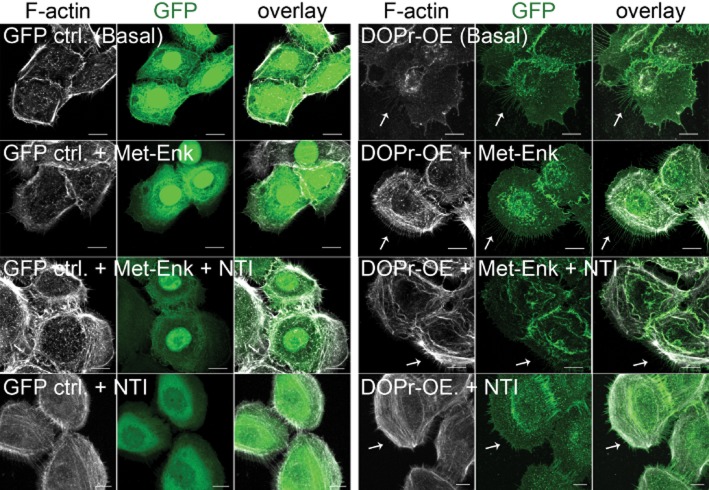
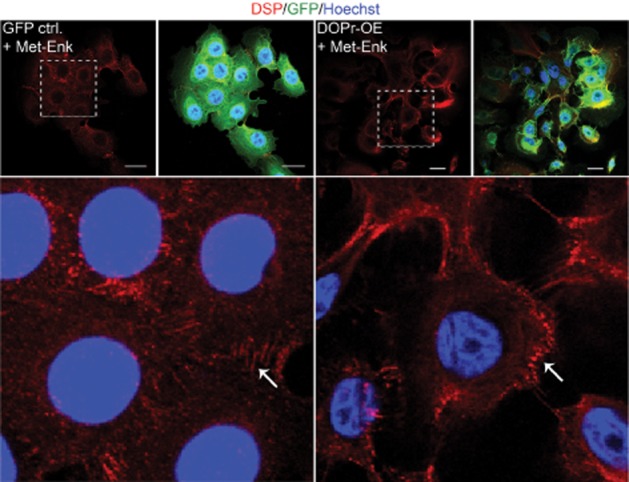
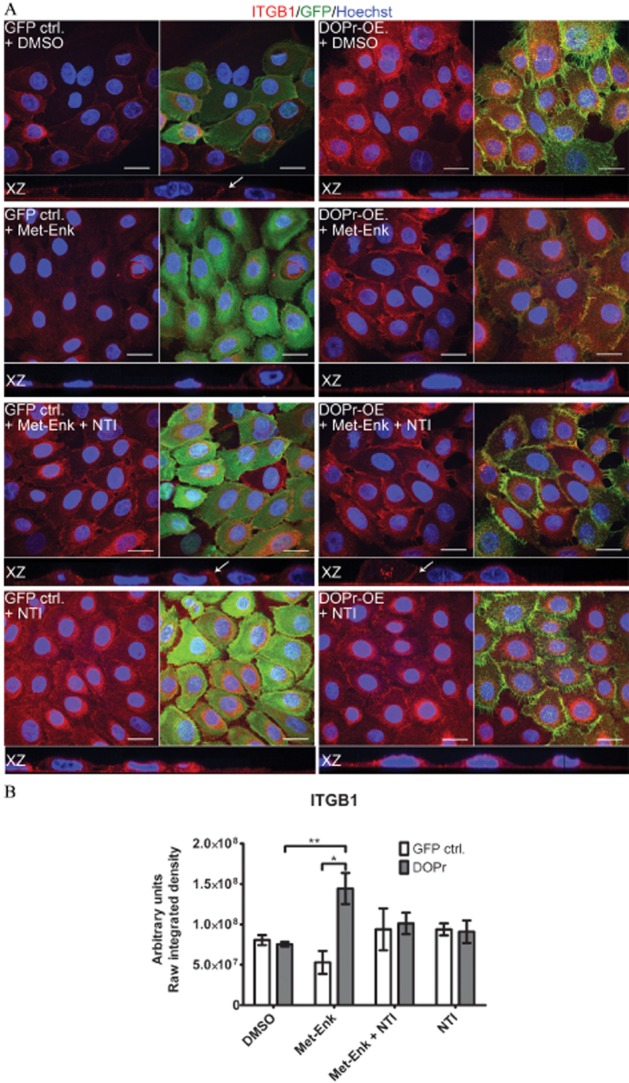
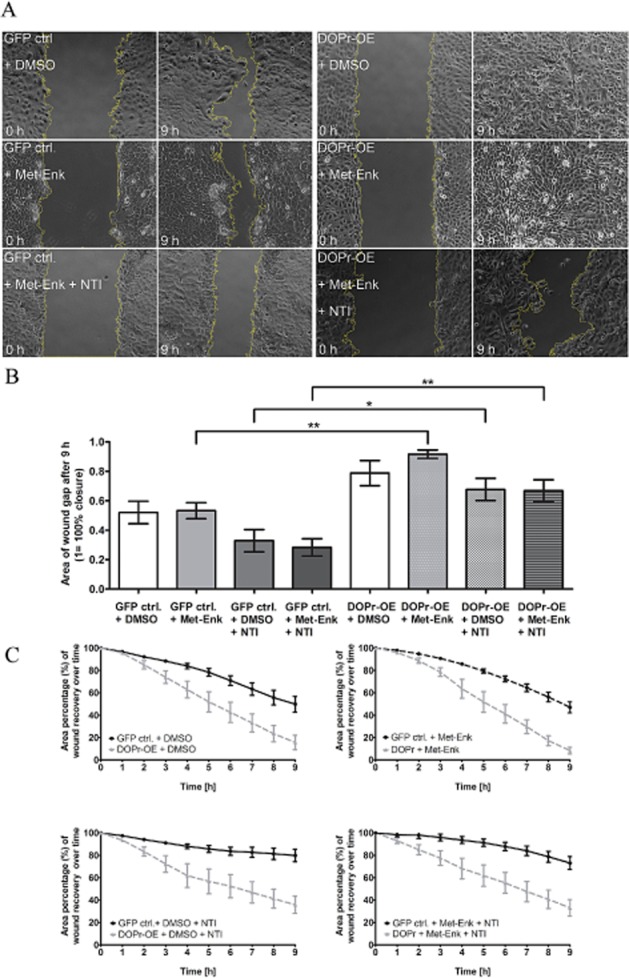
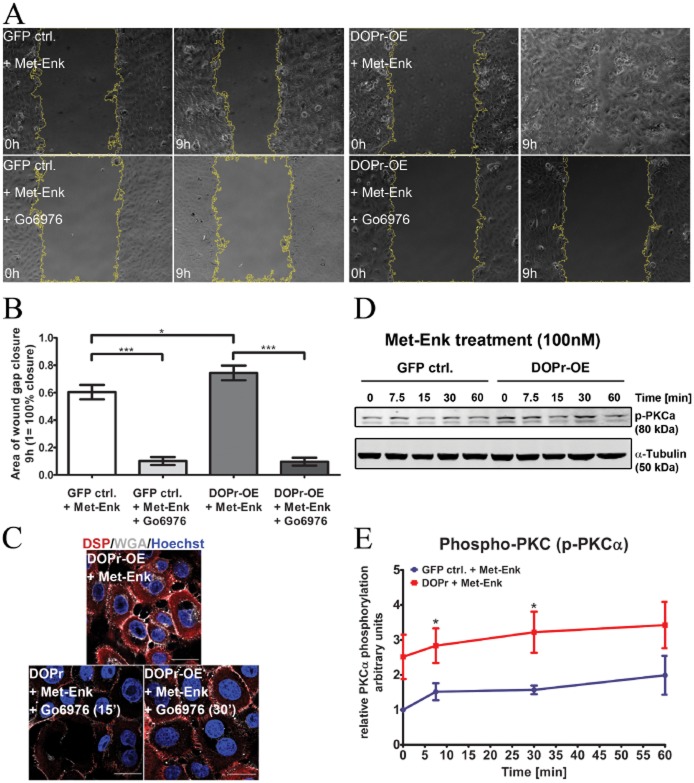
Expression of the desmosomal cadherins, desmogleins 1 and 4, was up-regulated in skin from DOPr(-/-) mice, and down-regulated in δ-opioid receptor-overexpressing human keratinocytes. The localization of desmoplakin expression was rearranged from linear arrays emanating from cell borders to puncta in cell periphery, resulting in less stable intercellular adhesion. Migration and wound recovery were enhanced in human keratinocyte monolayers overexpressing δ-opioid receptors in vitro. These δ-opioid receptor effects were antagonized by specific PKCα/β inhibition indicating they were mediated through the PKC signalling pathway. Finally, cells overexpressing δ-opioid receptors developed characteristically long but undirected protrusions containing filamentous actin and δ-opioid receptors, indicating an enhanced migratory phenotype.
Opioid receptors affect intercellular adhesion and wound healing mechanisms, underlining the importance of a cutaneous neuroendocrine system in wound healing and skin homeostasis.
This article is part of a themed section on Opioids: New Pathways to Functional Selectivity. To view the other articles in this section visit http://dx.doi.org/10.1111/bph.2015.172.issue-2.
外周阿片受体系统除了具有镇痛功能外,还通过影响细胞分化、迁移和黏附来影响皮肤稳态;此外,δ-阿片受体基因敲除小鼠(DOPr(-/-))的伤口愈合也发生了改变。因此,我们研究了δ-阿片受体对桥粒连接复合体几种蛋白表达以及角质形成细胞迁移行为的影响。
通过免疫荧光分析野生型和DOPr(-/-)小鼠中桥粒钙黏蛋白的表达水平以及人角质形成细胞中细胞间黏附的形态。为了研究δ-阿片受体激活途径,使用蛋白质印迹法研究蛋白表达,并通过对人角质形成细胞进行体外活细胞迁移记录来确定其对细胞迁移的影响。
桥粒钙黏蛋白桥粒芯糖蛋白1和4在DOPr(-/-)小鼠皮肤中的表达上调,而在δ-阿片受体过表达的人角质形成细胞中表达下调。桥粒斑蛋白表达的定位从细胞边界发出的线性排列重新排列为细胞周边的点状,导致细胞间黏附稳定性降低。体外过表达δ-阿片受体的人角质形成细胞单层的迁移和伤口愈合增强。这些δ-阿片受体效应被特异性PKCα/β抑制所拮抗,表明它们是通过PKC信号通路介导的。最后,过表达δ-阿片受体的细胞形成了特征性的长而无定向的突起,其中含有丝状肌动蛋白和δ-阿片受体,表明迁移表型增强。
阿片受体影响细胞间黏附和伤口愈合机制,强调了皮肤神经内分泌系统在伤口愈合和皮肤稳态中的重要性。
本文是关于阿片类药物:功能选择性新途径主题部分的一部分。要查看本部分的其他文章,请访问http://dx.doi.org/10.1111/bph.2015.172.issue-2。