Liu Mengying, Bian Chen, Zhang Jiqiang, Wen Feng
1] Department of Neurobiology, Chongqing Key Laboratory of Neurobiology, Third Military Medical University, Chongqing 400038, China [2] Student Camp Seven, Third Military Medical University, Chongqing 400038, China.
Department of Neurobiology, Chongqing Key Laboratory of Neurobiology, Third Military Medical University, Chongqing 400038, China.
Sci Rep. 2014 Mar 17;4:4383. doi: 10.1038/srep04383.
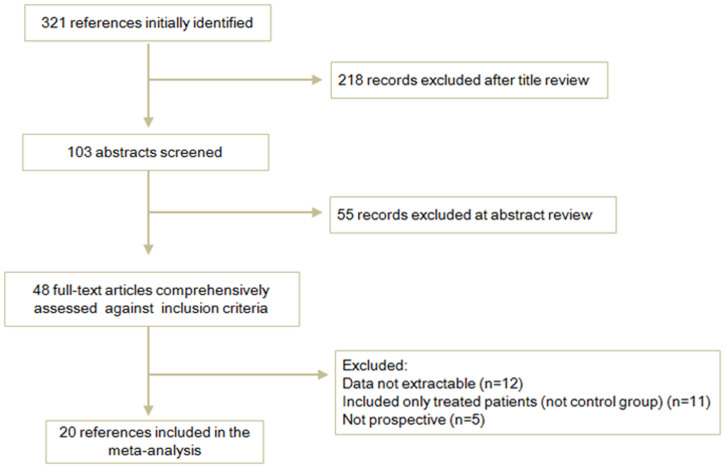
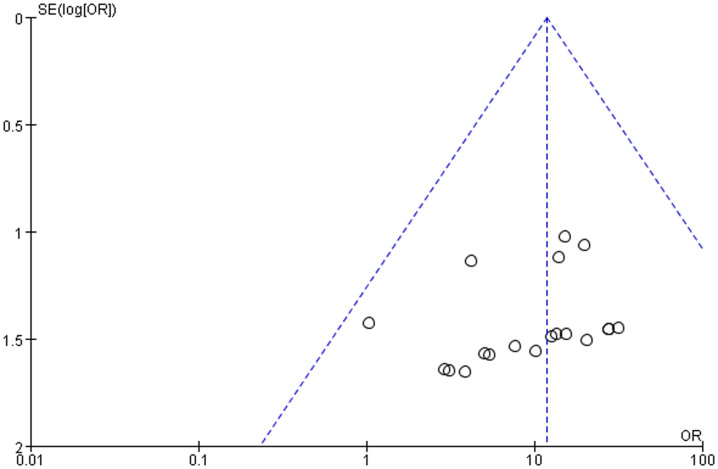
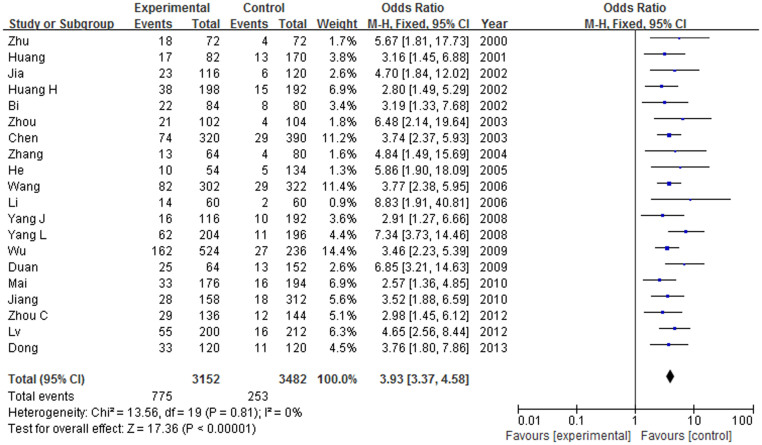
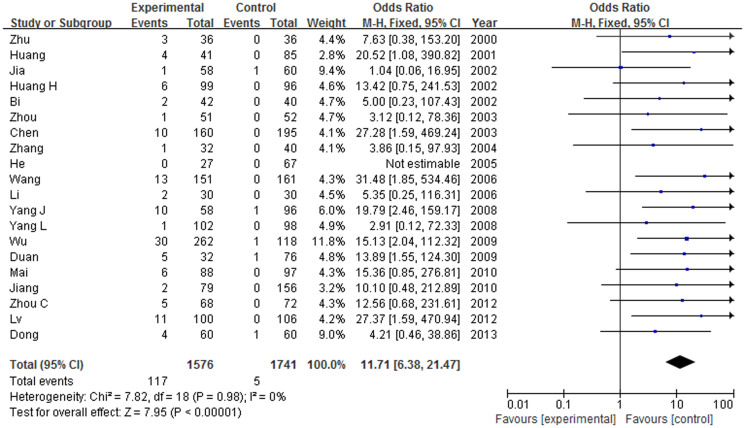
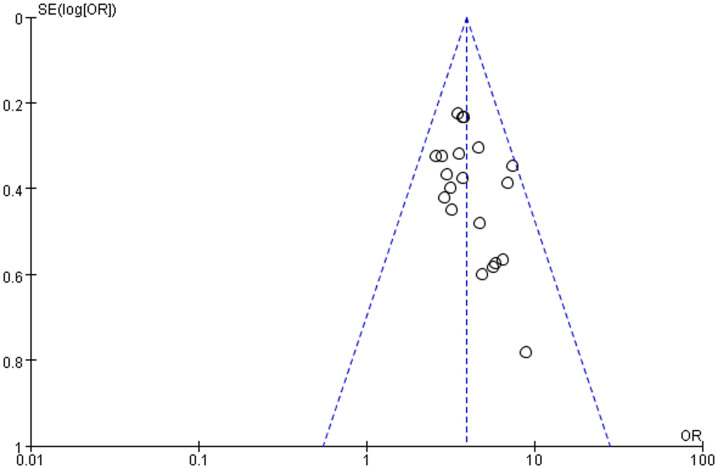
The relationship between Apolipoprotein E (ApoE) genotype and the risk of Alzheimer's disease (AD) is relatively well established in Caucasians, but less established in other ethnicities. To examine the association between ApoE polymorphism and the onset of AD in Chinese population, we searched the commonly used electronic databases between January 2000 and November 2013 for relevant studies. Total 20 studies, including 1576 cases and 1741 controls, were retrieved. The results showed statistically significant positive association between risk factor ε4 allele carriers and AD in Chinese population (OR = 3.93, 95% CI = 3.37-4.58, P < 0.00001). Genotype ApoE ε4/ε4 and ε4/ε3 have statistically significant association with AD as well (ε4/ε4: OR = 11.76, 95% CI = 6.38-21.47, P < 0.00001; ε4/ε3: OR = 3.08, 95% CI = 2.57-3.69, P < 0.00001). Furthermore, the frequency of the ApoE ε3 is lower in AD than that in the health controls, and the difference of ε3 allele is also statistically significant (OR = 0.42, 95% CI = 0.37-0.47, P < 0.00001). No significant heterogeneity was observed among all studies. This meta-analysis suggests that the subject with at least one ApoE ε4 allele has higher risk suffering from AD than controls in Chinese population. The results also provide a support for the protection effect of ApoE ε3 allele in developing AD.
载脂蛋白E(ApoE)基因型与阿尔茨海默病(AD)风险之间的关系在白种人中已相对明确,但在其他种族中则不太明确。为了研究ApoE基因多态性与中国人群AD发病之间的关联,我们检索了2000年1月至2013年11月期间常用的电子数据库中的相关研究。共检索到20项研究,包括1576例病例和1741例对照。结果显示,在中国人群中,危险因素ε4等位基因携带者与AD之间存在统计学上显著的正相关(OR = 3.93,95% CI = 3.37 - 4.58,P < 0.00001)。基因型ApoE ε4/ε4和ε4/ε3与AD也存在统计学上的显著关联(ε4/ε4:OR = 11.76,95% CI = 6.38 - 21.47,P < 0.00001;ε4/ε3:OR = 3.08,95% CI = 2.57 - 3.69,P < 0.00001)。此外,AD患者中ApoE ε3的频率低于健康对照,ε3等位基因的差异也具有统计学意义(OR = 0.42,95% CI = 0.37 - 0.47,P < 0.00001)。所有研究中均未观察到显著的异质性。这项荟萃分析表明,在中国人群中,至少携带一个ApoE ε4等位基因的个体患AD的风险高于对照组。研究结果也为ApoE ε3等位基因在AD发生中的保护作用提供了支持。