Department of Biology, Dalhousie University Halifax, Nova Scotia, B3H 4R2, Canada ; Great Lakes Institute for Environmental Research, University of Windsor Windsor, Ontario, N9B 3P4, Canada.
US Geological Survey, Alaska Science Center Anchorage, Alaska, 99508.
Ecol Evol. 2014 Feb;4(4):516-27. doi: 10.1002/ece3.956. Epub 2014 Jan 23.
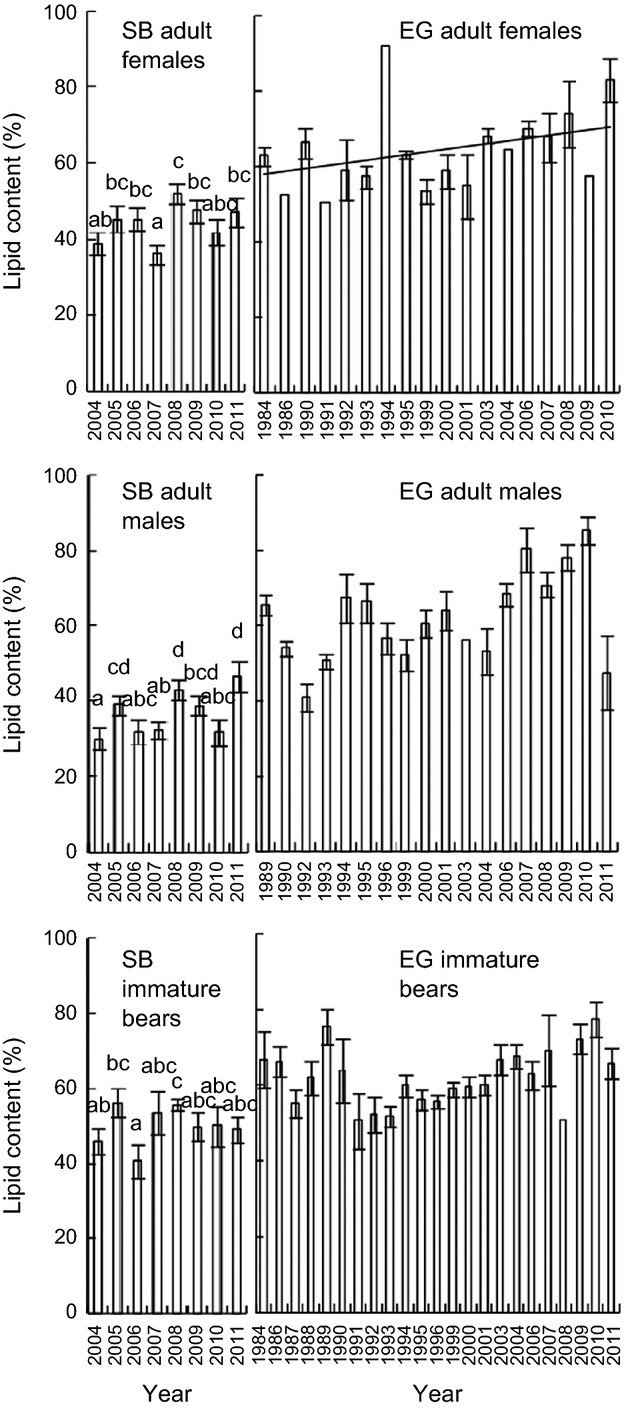
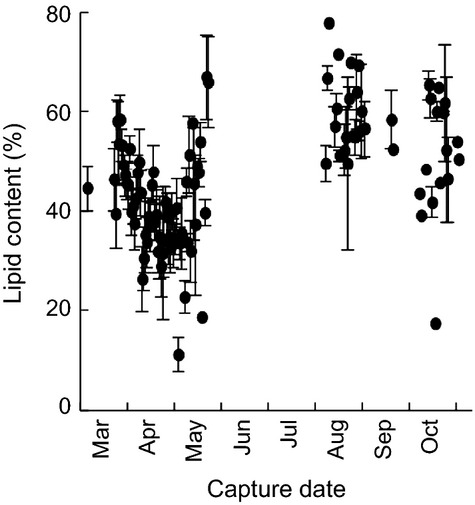
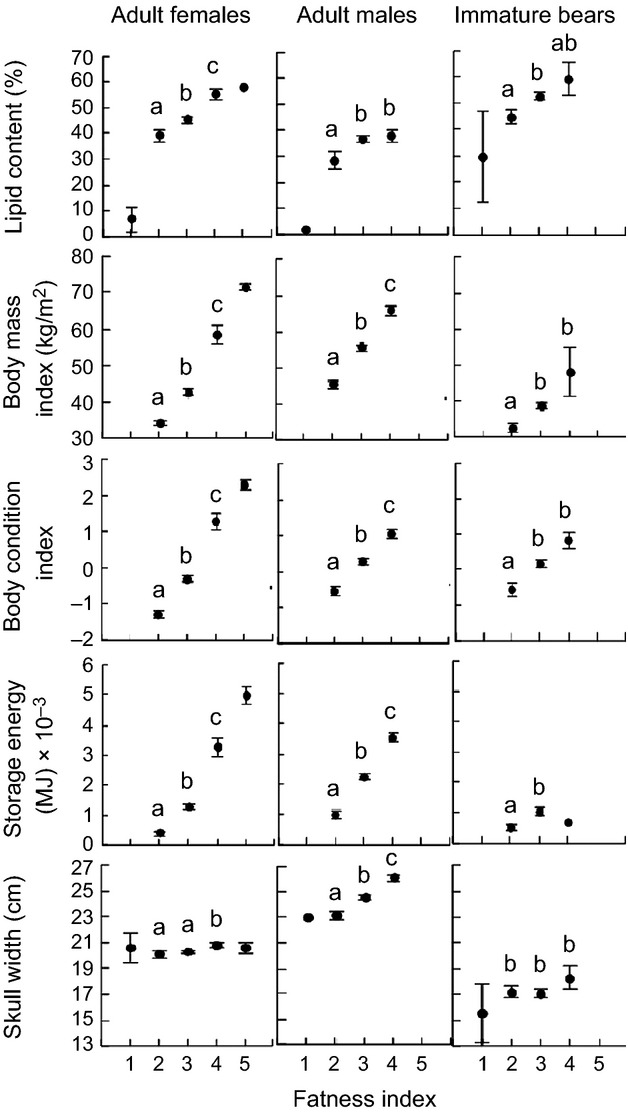
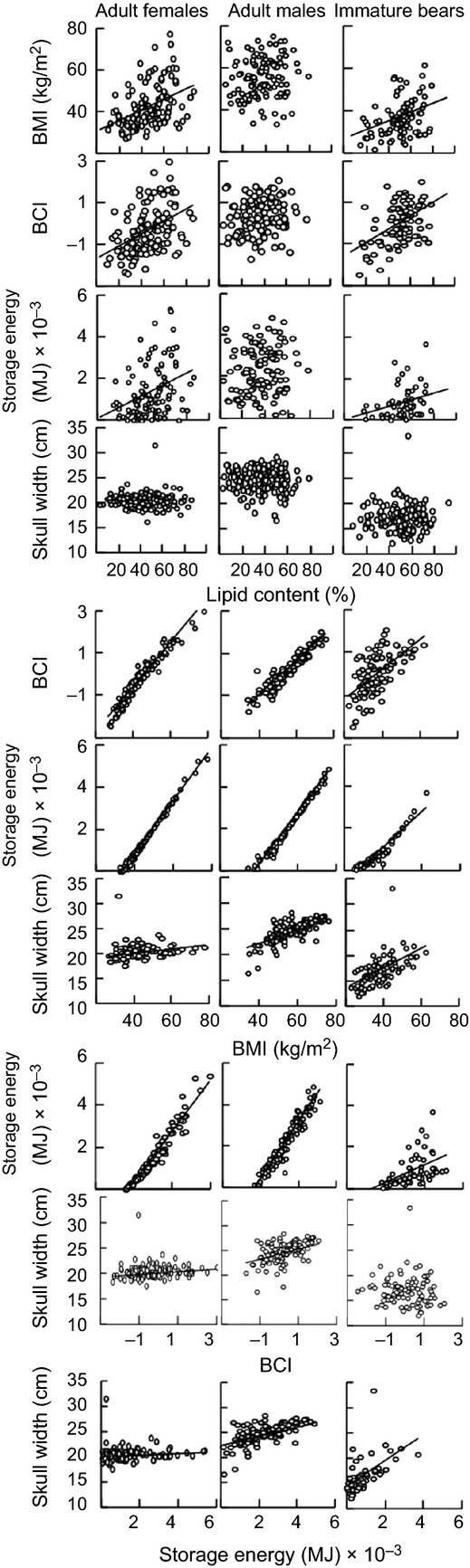
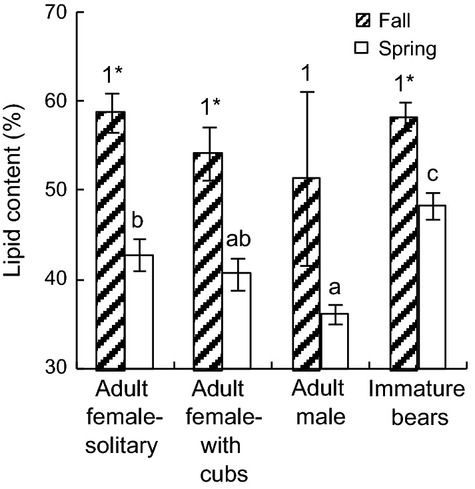
Body condition is a key indicator of individual and population health. Yet, there is little consensus as to the most appropriate condition index (CI), and most of the currently used CIs have not been thoroughly validated and are logistically challenging. Adipose samples from large datasets of capture biopsied, remote biopsied, and harvested polar bears were used to validate adipose lipid content as a CI via tests of accuracy, precision, sensitivity, biopsy depth, and storage conditions and comparisons to established CIs, to measures of health and to demographic and ecological parameters. The lipid content analyses of even very small biopsy samples were highly accurate and precise, but results were influenced by tissue depth at which the sample was taken. Lipid content of capture biopsies and samples from harvested adult females was correlated with established CIs and/or conformed to expected biological variation and ecological changes. However, lipid content of remote biopsies was lower than capture biopsies and harvested samples, possibly due to lipid loss during dart retrieval. Lipid content CI is a biologically relevant, relatively inexpensive and rapidly assessed CI and can be determined routinely for individuals and populations in order to infer large-scale spatial and long-term temporal trends. As it is possible to collect samples during routine harvesting or remotely using biopsy darts, monitoring and assessment of body condition can be accomplished without capture and handling procedures or noninvasively, which are methods that are preferred by local communities. However, further work is needed to apply the method to remote biopsies.
体况是个体和种群健康的关键指标。然而,对于最合适的体况指数(CI),人们尚未达成共识,并且大多数当前使用的 CI 尚未经过彻底验证,在实际操作中也具有挑战性。通过对准确性、精密度、灵敏度、活检深度以及存储条件的测试,并与已建立的 CI、健康指标以及人口统计学和生态学参数进行比较,利用来自捕获活检、远程活检和收获的北极熊的大量数据集的脂肪样本,验证了脂肪脂质含量作为 CI 的适用性。即使是非常小的活检样本的脂质含量分析也具有高度的准确性和精密度,但结果受到取样组织深度的影响。捕获活检和收获的成年雌性个体的样本的脂质含量与已建立的 CI 相关,或符合预期的生物学变化和生态变化。然而,远程活检的脂质含量低于捕获活检和收获的样本,这可能是由于在取回飞镖时脂质丢失所致。脂质含量 CI 是一种具有生物学意义、相对便宜且快速评估的 CI,可以为个体和种群常规测定,以推断大规模的空间和长期时间趋势。由于可以在常规收获期间或使用远程活检飞镖收集样本,因此可以在不进行捕获和处理程序或非侵入性操作的情况下完成身体状况的监测和评估,这些方法是当地社区所偏好的。然而,需要进一步的工作来将该方法应用于远程活检。