Université Paris Diderot, Sorbonne Paris Cité, Hôpital St. Louis 1, 75475 Paris Cedex 10, France.
J Cell Biol. 2014 Mar 17;204(6):931-45. doi: 10.1083/jcb.201305148.
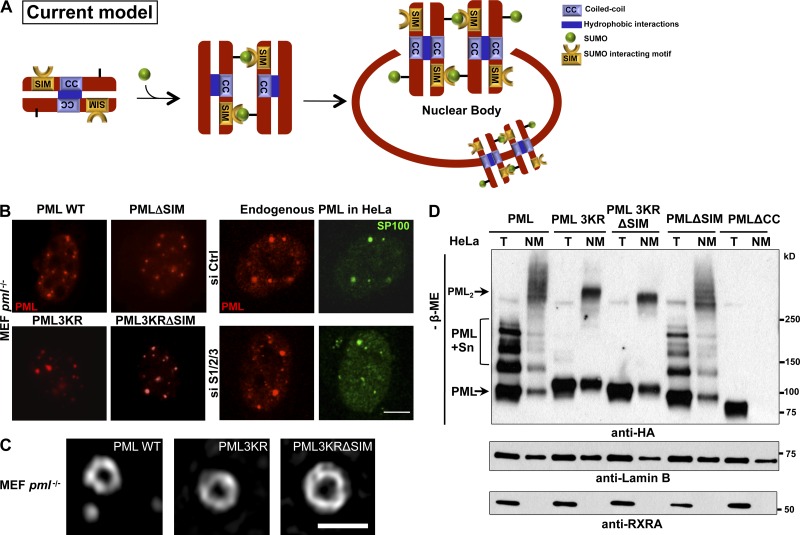
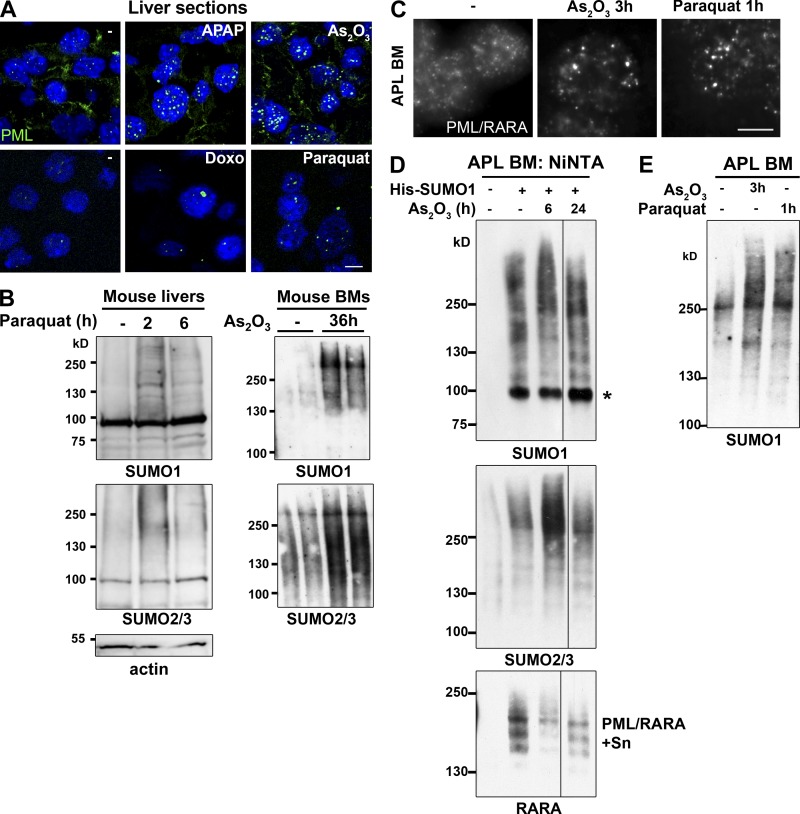
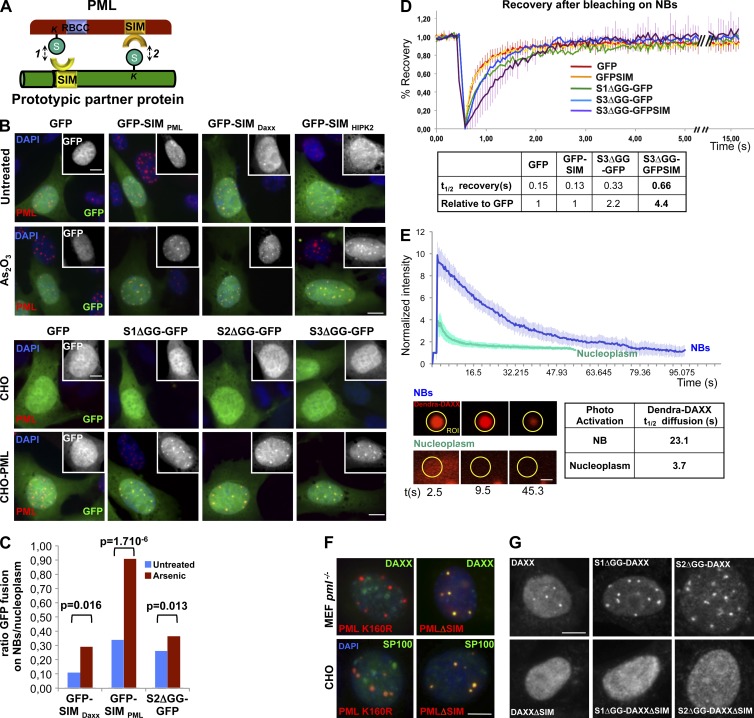
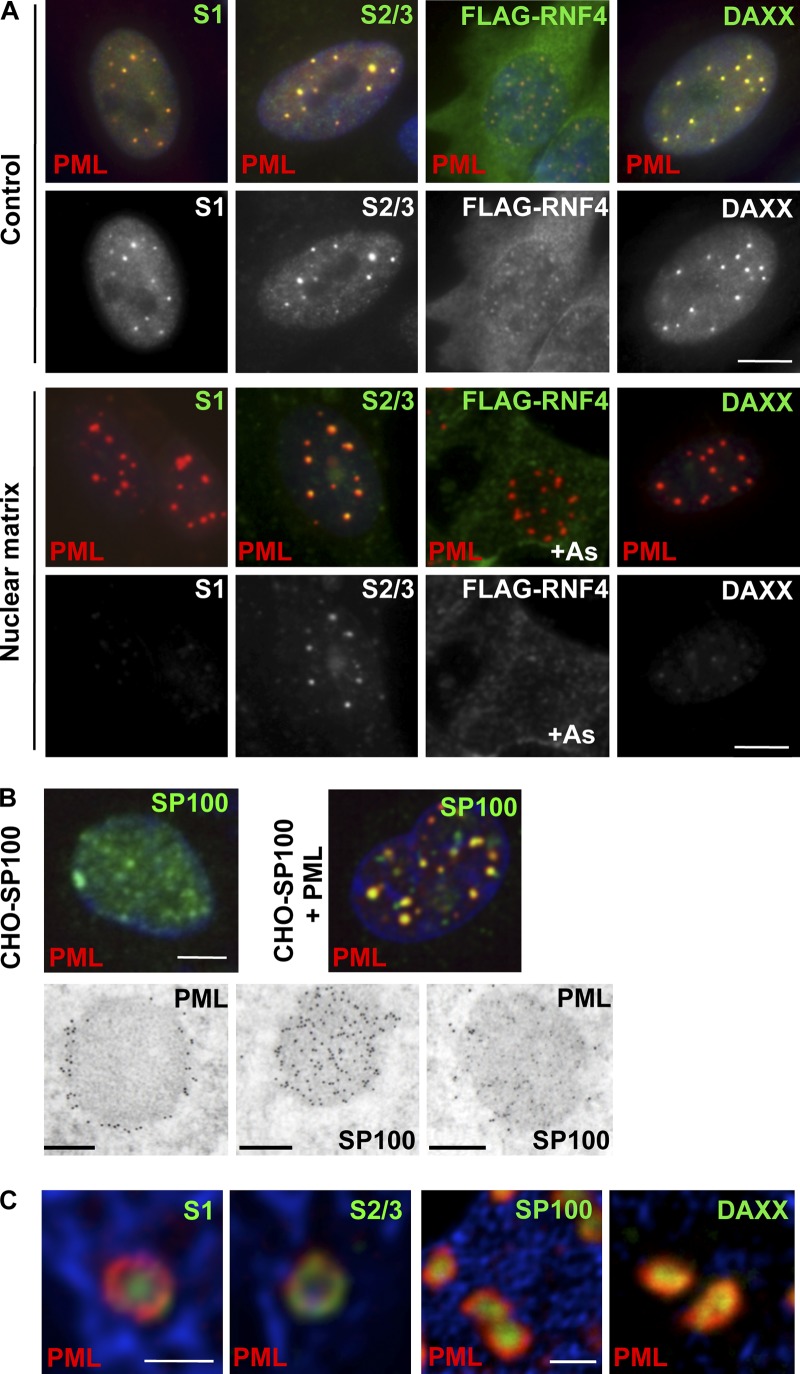
The promyelocytic leukemia (PML) protein organizes PML nuclear bodies (NBs), which are stress-responsive domains where many partner proteins accumulate. Here, we clarify the basis for NB formation and identify stress-induced partner sumoylation as the primary NB function. NB nucleation does not rely primarily on intermolecular interactions between the PML SUMO-interacting motif (SIM) and SUMO, but instead results from oxidation-mediated PML multimerization. Oxidized PML spherical meshes recruit UBC9, which enhances PML sumoylation, allow partner recruitment through SIM interactions, and ultimately enhance partner sumoylation. Intermolecular SUMO-SIM interactions then enforce partner sequestration within the NB inner core. Accordingly, oxidative stress enhances NB formation and global sumoylation in vivo. Some NB-associated sumoylated partners also become polyubiquitinated by RNF4, precipitating their proteasomal degradation. As several partners are protein-modifying enzymes, NBs could act as sensors that facilitate and confer oxidative stress sensitivity not only to sumoylation but also to other post-translational modifications, thereby explaining alterations of stress response upon PML or NB loss.
早幼粒细胞白血病蛋白(PML)组织 PML 核体(NBs),这是应激反应区域,许多伙伴蛋白聚集在这里。在这里,我们澄清了 NB 形成的基础,并确定应激诱导的伙伴 SUMO 化是 NB 的主要功能。NB 的成核并不主要依赖于 PML SUMO 相互作用基序(SIM)和 SUMO 之间的分子间相互作用,而是由于氧化介导的 PML 多聚化。氧化的 PML 球形网格招募 UBC9,增强 PML SUMO 化,通过 SIM 相互作用允许伙伴招募,并最终增强伙伴 SUMO 化。然后,分子间 SUMO-SIM 相互作用将伙伴隔离在 NB 内核内。因此,氧化应激增强了体内 NB 的形成和全局 SUMO 化。一些 NB 相关的 SUMO 化伙伴也被 RNF4 多泛素化,导致其蛋白酶体降解。由于一些伙伴是蛋白质修饰酶,因此 NBs 可以作为传感器,不仅对 SUMO 化,而且对其他翻译后修饰,从而解释 PML 或 NB 缺失时应激反应的改变。