Division of Innate Immune Regulation, International Research and Development Center for Mucosal Vaccines, Institute of Medical Science, The University of Tokyo, 4-6-1 Shirokanedai, Minato-ku, Tokyo 108-8639, Japan.
1] Laboratory of Host Defense, WPI Immunology Frontier Research Center, Osaka University, 3-1 Yamada-oka, Suita, Osaka 565-0871, Japan [2] Department of Host Defense, Research Institute for Microbial Diseases, Osaka University, 3-1 Yamada-oka, Suita, Osaka 565-0871, Japan [3] Laboratory of Molecular Immunobiology, Graduate School of Biological Sciences, Nara Institute of Science and Technology (NAIST), 8916-5 Takayama, Ikoma, Nara 630-0192, Japan.
Nat Commun. 2014 Mar 18;5:3492. doi: 10.1038/ncomms4492.
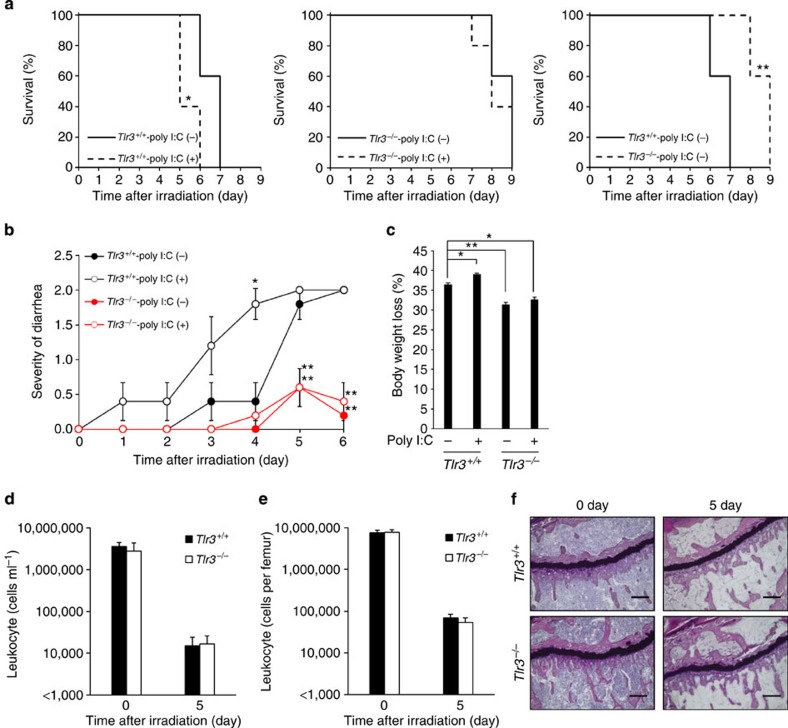
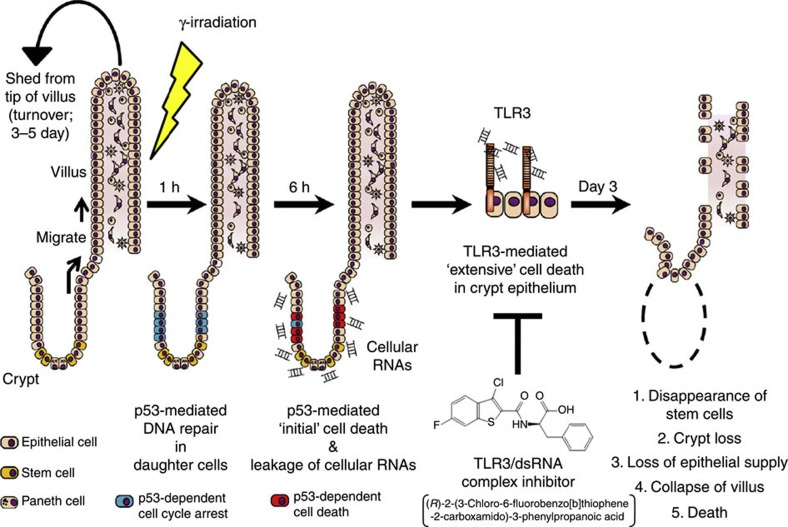
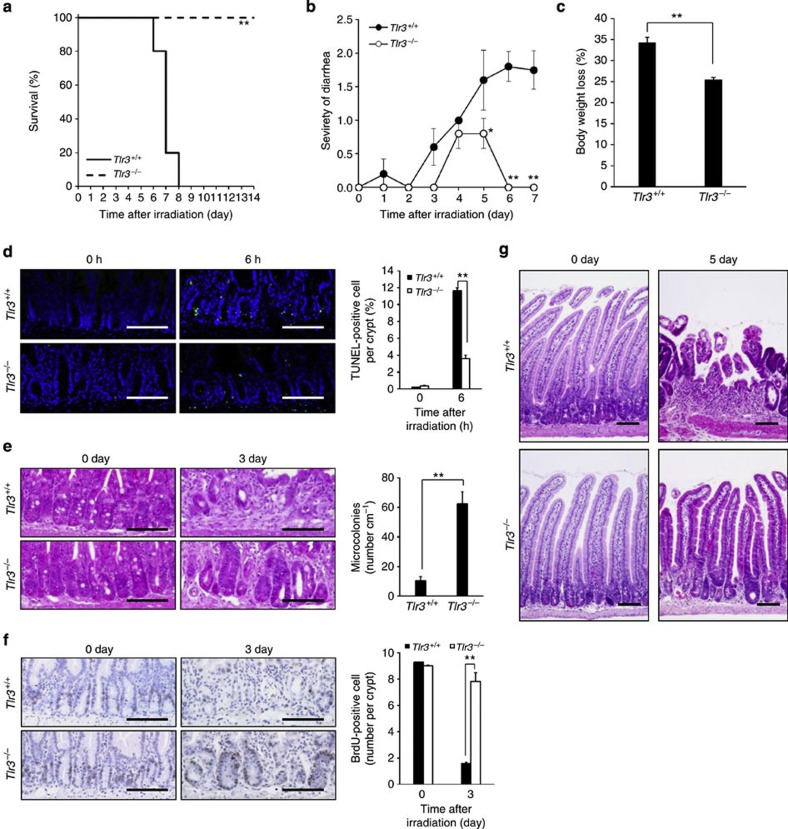
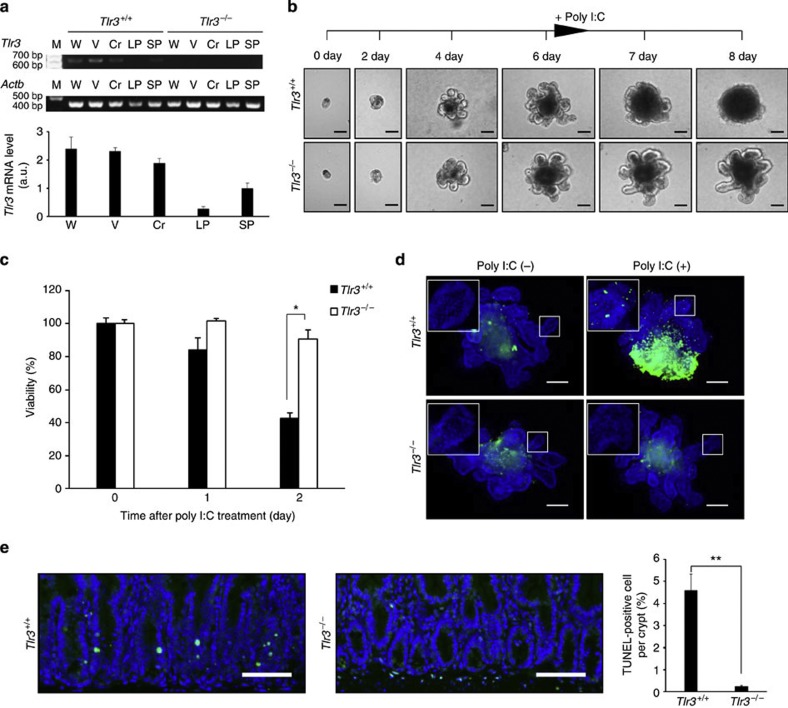
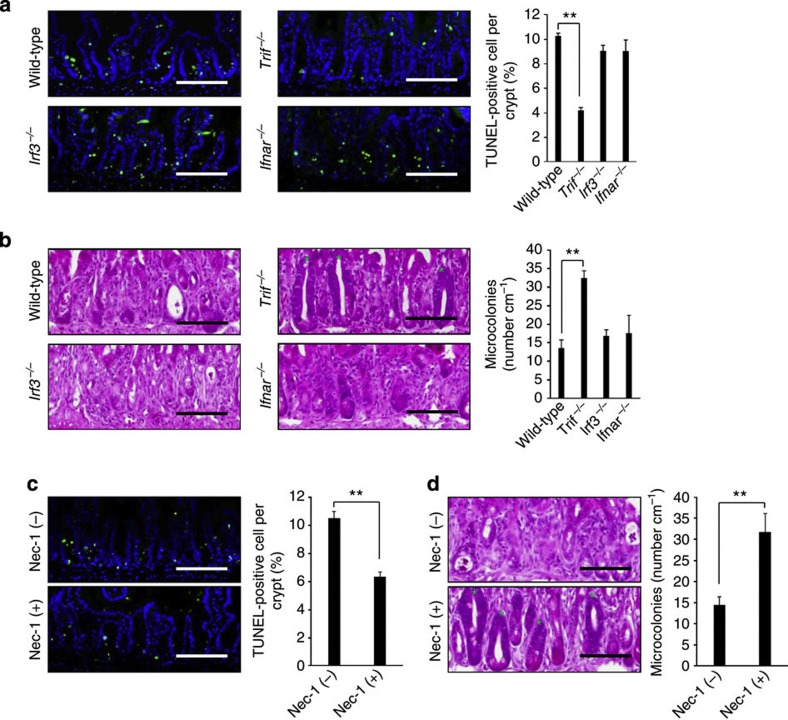
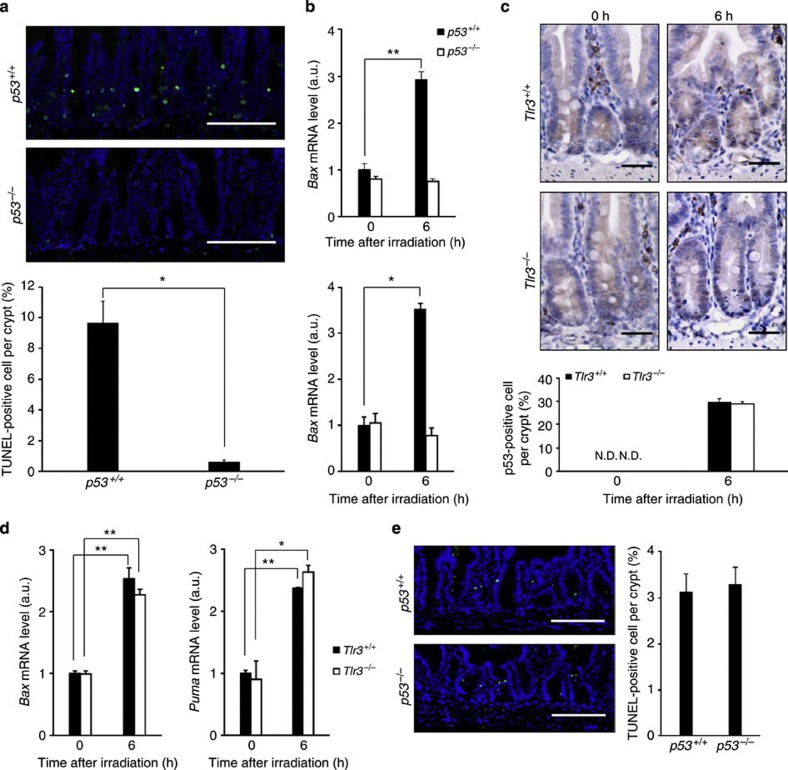
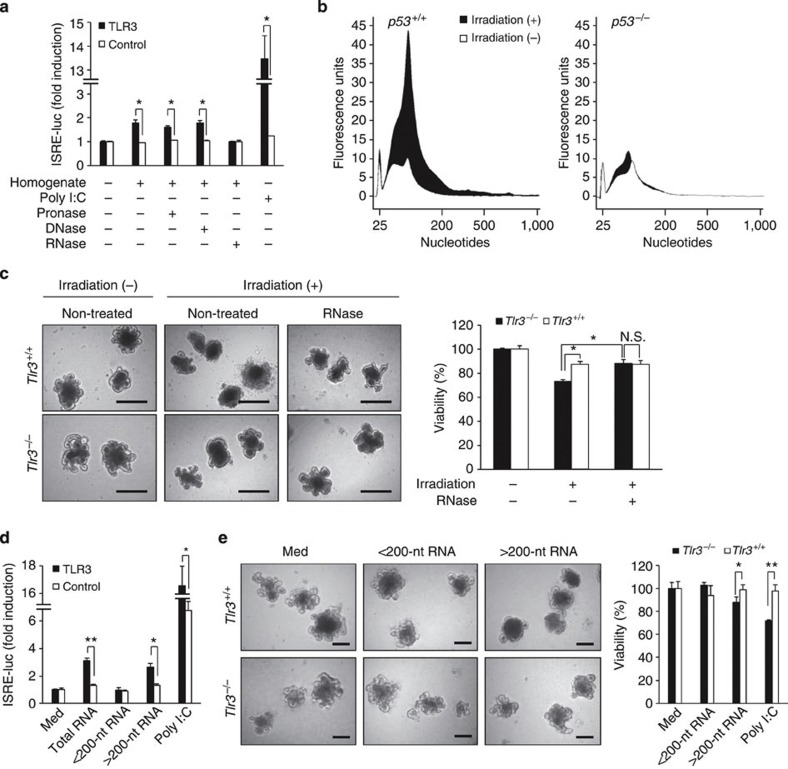
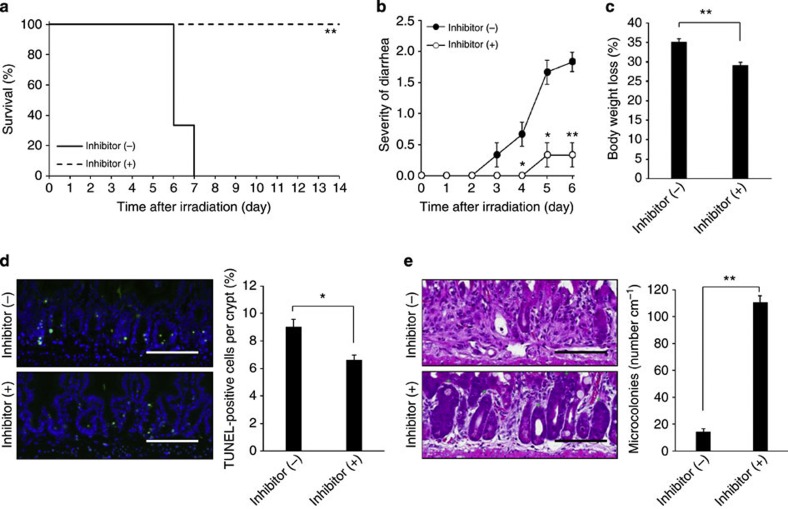
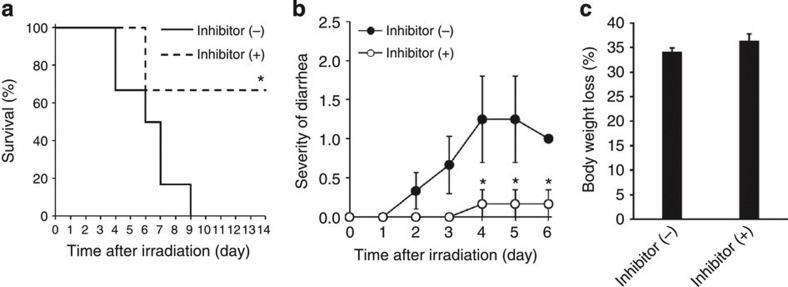
High-dose ionizing radiation induces severe DNA damage in the epithelial stem cells in small intestinal crypts and causes gastrointestinal syndrome (GIS). Although the tumour suppressor p53 is a primary factor inducing death of crypt cells with DNA damage, its essential role in maintaining genome stability means inhibiting p53 to prevent GIS is not a viable strategy. Here we show that the innate immune receptor Toll-like receptor 3 (TLR3) is critical for the pathogenesis of GIS. Tlr3(-/-) mice show substantial resistance to GIS owing to significantly reduced radiation-induced crypt cell death. Despite showing reduced crypt cell death, p53-dependent crypt cell death is not impaired in Tlr3(-/-) mice. p53-dependent crypt cell death causes leakage of cellular RNA, which induces extensive cell death via TLR3. An inhibitor of TLR3-RNA binding ameliorates GIS by reducing crypt cell death. Thus, we propose blocking TLR3 activation as a novel approach to treat GIS.
高剂量电离辐射会在小肠隐窝的上皮干细胞中诱导严重的 DNA 损伤,从而导致胃肠道综合征(GIS)。尽管肿瘤抑制因子 p53 是诱导具有 DNA 损伤的隐窝细胞死亡的主要因素,但它在维持基因组稳定性方面的关键作用意味着抑制 p53 以防止 GIS 并不是一个可行的策略。在这里,我们表明先天免疫受体 Toll 样受体 3(TLR3)对于 GIS 的发病机制至关重要。Tlr3(-/-) 小鼠由于辐射诱导的隐窝细胞死亡显著减少而对 GIS 具有很强的抵抗力。尽管隐窝细胞死亡减少,但 Tlr3(-/-) 小鼠中 p53 依赖性隐窝细胞死亡并未受损。p53 依赖性隐窝细胞死亡导致细胞 RNA 泄漏,通过 TLR3 诱导广泛的细胞死亡。TLR3-RNA 结合的抑制剂通过减少隐窝细胞死亡来改善 GIS。因此,我们提出阻断 TLR3 激活作为治疗 GIS 的新方法。