Department of Neuroscience, Temple University School of Medicine, Room# 749, 3500 N Broad Street, Philadelphia, PA, 19140, USA.
J Neurovirol. 2014 Apr;20(2):184-98. doi: 10.1007/s13365-014-0243-9. Epub 2014 Mar 18.
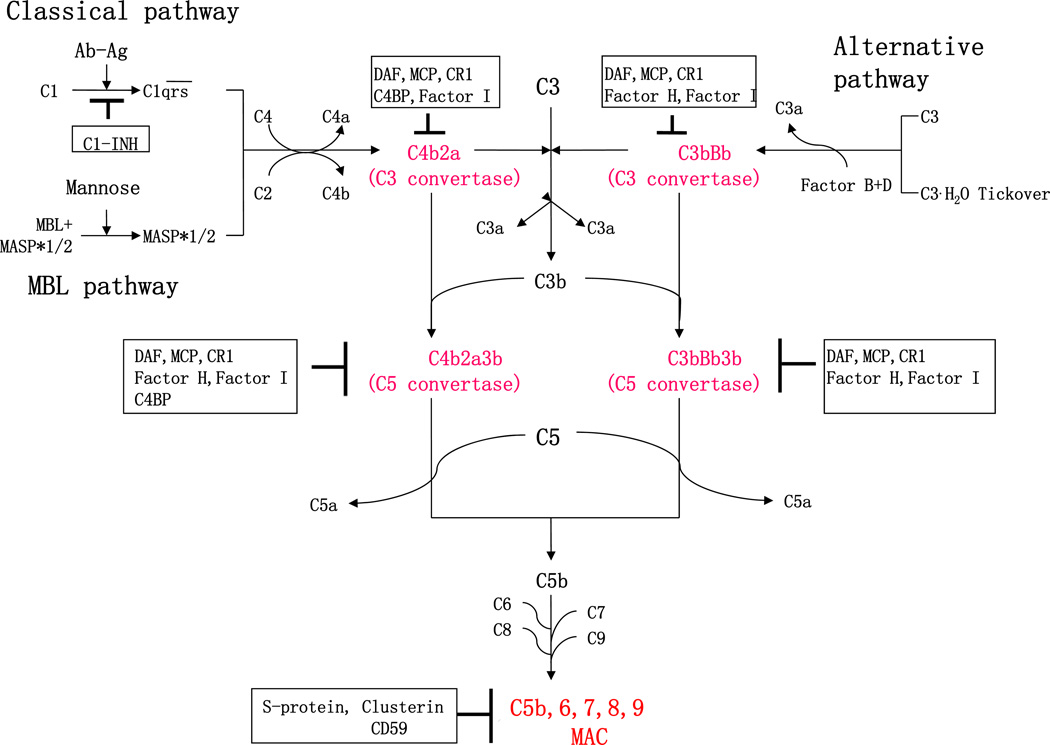
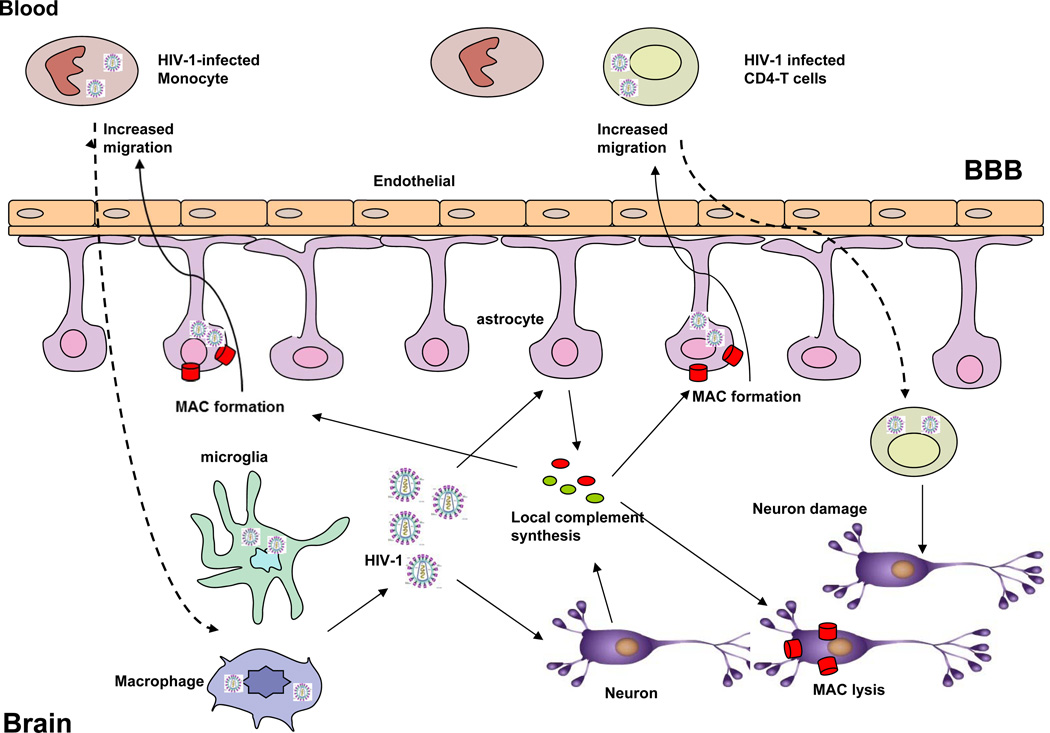
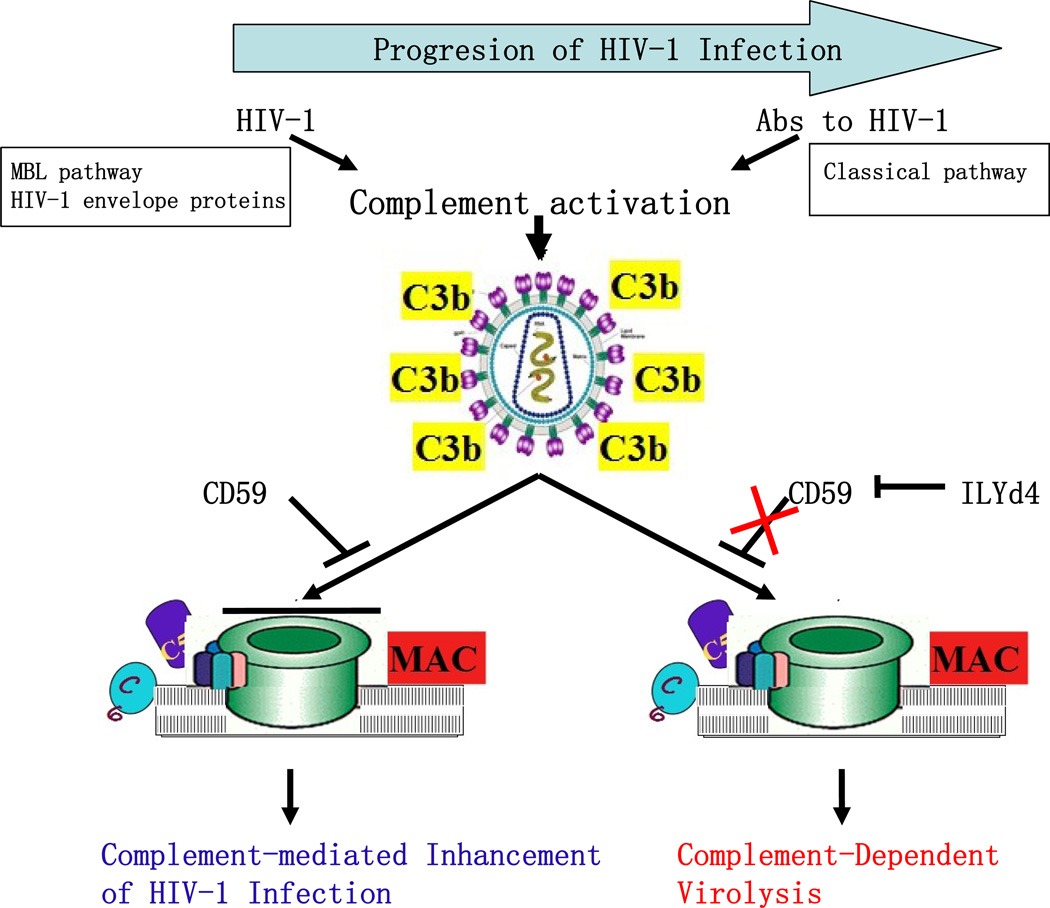
The various neurological complications associated with HIV-1 infection, specifically HIV-associated neurocognitive disorders (HAND) persist as a major public health burden worldwide. Despite the widespread use of anti-retroviral therapy, the prevalence of HAND is significantly high. HAND results from the direct effects of an HIV-1 infection as well as secondary effects of HIV-1-induced immune reaction and inflammatory response. Complement, a critical mediator of innate and acquired immunity, plays important roles in defeating many viral infections by the formation of a lytic pore or indirectly by opsonization and recruitment of phagocytes. While the role of complement in the pathogenesis of HIV-1 infection and HAND has been previously recognized for over 15 years, it has been largely underestimated thus far. Complement can be activated through HIV-1 envelope proteins, mannose-binding lectins (MBL), and anti-HIV-1 antibodies. Complement not only fights against HIV-1 infection but also enhances HIV-1 infection. In addition, HIV-1 can hijack complement regulators such as CD59 and CD55 and can utilize these regulators and factor H to escape from complement attack. Normally, complement levels in brain are much lower than plasma levels and there is no or little complement deposition in brain cells. Interestingly, local production and deposition of complement are dramatically increased in HIV-1-infected brain, indicating that complement may contribute to the pathogenesis of HAND. Here, we review the current understanding of the role of complement in HIV-1 infection and HAND, as well as potential therapeutic approaches targeting the complement system for the treatment and eradications of HIV-1 infection.
与 HIV-1 感染相关的各种神经并发症,特别是与 HIV 相关的认知障碍(HAND),仍然是全球范围内的一个主要公共卫生负担。尽管广泛使用抗逆转录病毒疗法,但 HAND 的患病率仍然很高。HAND 是由 HIV-1 感染的直接影响以及 HIV-1 诱导的免疫反应和炎症反应的继发影响共同导致的。补体是先天和获得性免疫的关键介质,通过形成裂解孔或通过调理作用和吞噬细胞的募集,在抵抗许多病毒感染方面发挥着重要作用。尽管补体在 HIV-1 感染和 HAND 的发病机制中的作用已经被认识了超过 15 年,但迄今为止,它在很大程度上被低估了。补体可以通过 HIV-1 包膜蛋白、甘露糖结合凝集素(MBL)和抗 HIV-1 抗体被激活。补体不仅可以对抗 HIV-1 感染,还可以增强 HIV-1 感染。此外,HIV-1 可以劫持补体调节剂,如 CD59 和 CD55,并可以利用这些调节剂和因子 H 来逃避补体攻击。通常情况下,大脑中的补体水平远低于血浆水平,脑细胞中几乎没有或很少有补体沉积。有趣的是,HIV-1 感染的大脑中补体的局部产生和沉积显著增加,表明补体可能有助于 HAND 的发病机制。在这里,我们综述了补体在 HIV-1 感染和 HAND 中的作用的现有认识,以及针对补体系统的潜在治疗方法,以治疗和根除 HIV-1 感染。