Spieler Derek, Kaffe Maria, Knauf Franziska, Bessa José, Tena Juan J, Giesert Florian, Schormair Barbara, Tilch Erik, Lee Heekyoung, Horsch Marion, Czamara Darina, Karbalai Nazanin, von Toerne Christine, Waldenberger Melanie, Gieger Christian, Lichtner Peter, Claussnitzer Melina, Naumann Ronald, Müller-Myhsok Bertram, Torres Miguel, Garrett Lillian, Rozman Jan, Klingenspor Martin, Gailus-Durner Valérie, Fuchs Helmut, Hrabě de Angelis Martin, Beckers Johannes, Hölter Sabine M, Meitinger Thomas, Hauck Stefanie M, Laumen Helmut, Wurst Wolfgang, Casares Fernando, Gómez-Skarmeta Jose Luis, Winkelmann Juliane
Institute of Human Genetics, Helmholtz Zentrum München, German Research Center for Environmental Health, 85764 Neuherberg, Germany;
Genome Res. 2014 Apr;24(4):592-603. doi: 10.1101/gr.166751.113. Epub 2014 Mar 18.
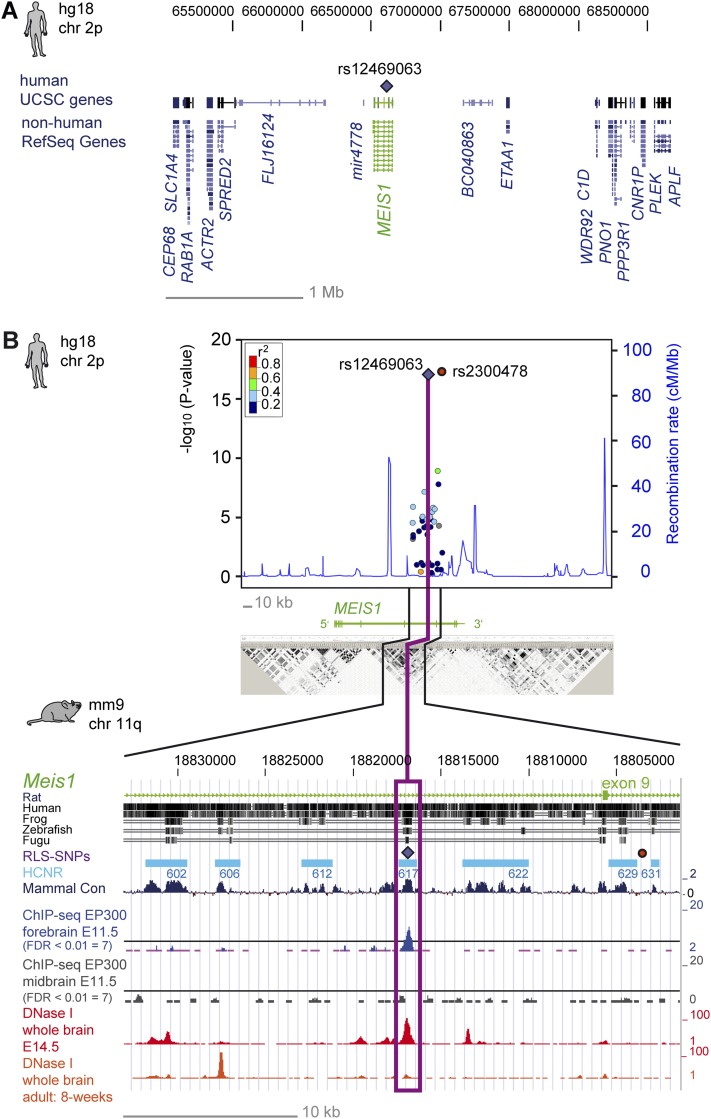
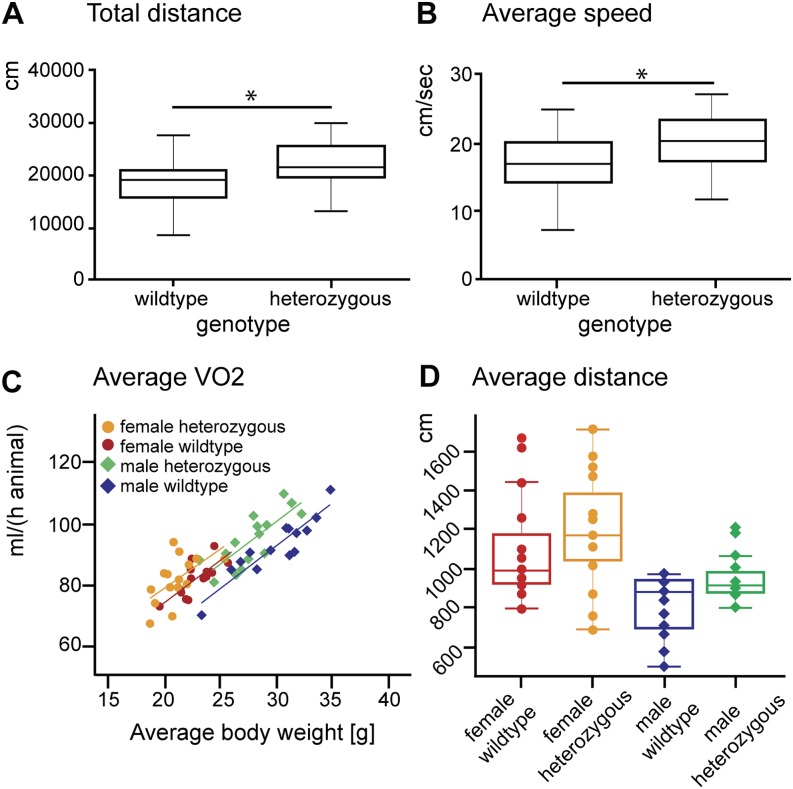
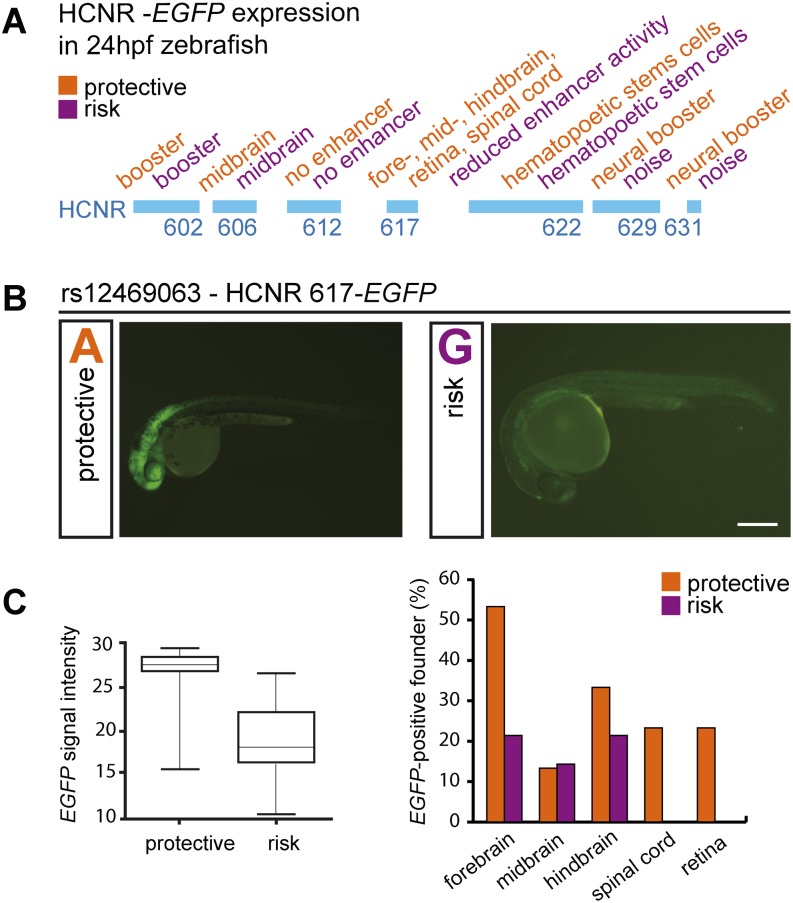
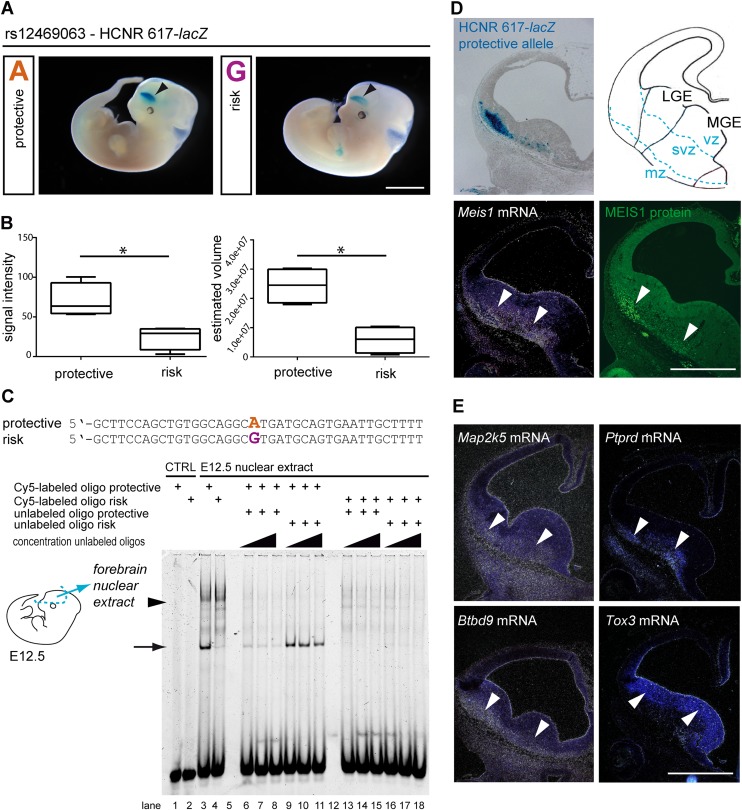
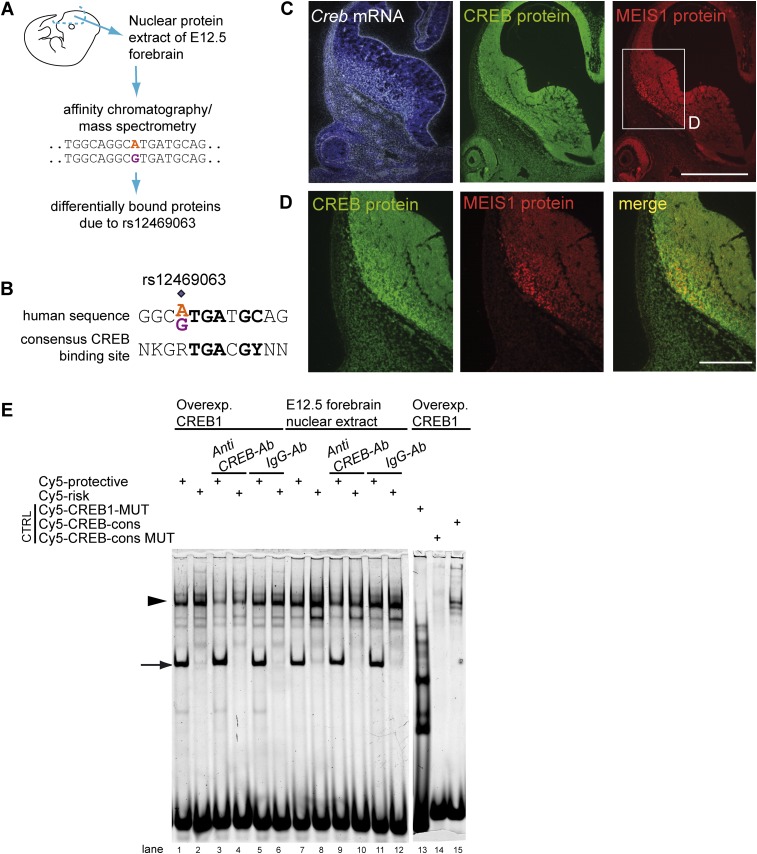
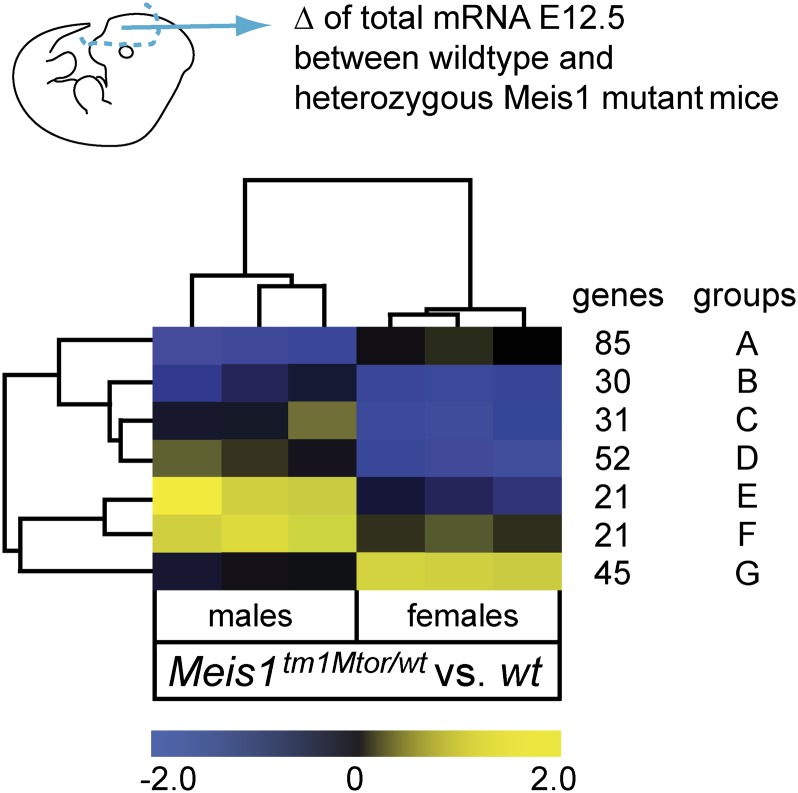
Genome-wide association studies (GWAS) identified the MEIS1 locus for Restless Legs Syndrome (RLS), but causal single nucleotide polymorphisms (SNPs) and their functional relevance remain unknown. This locus contains a large number of highly conserved noncoding regions (HCNRs) potentially functioning as cis-regulatory modules. We analyzed these HCNRs for allele-dependent enhancer activity in zebrafish and mice and found that the risk allele of the lead SNP rs12469063 reduces enhancer activity in the Meis1 expression domain of the murine embryonic ganglionic eminences (GE). CREB1 binds this enhancer and rs12469063 affects its binding in vitro. In addition, MEIS1 target genes suggest a role in the specification of neuronal progenitors in the GE, and heterozygous Meis1-deficient mice exhibit hyperactivity, resembling the RLS phenotype. Thus, in vivo and in vitro analysis of a common SNP with small effect size showed allele-dependent function in the prospective basal ganglia representing the first neurodevelopmental region implicated in RLS.
全基因组关联研究(GWAS)确定了不宁腿综合征(RLS)的MEIS1基因座,但因果单核苷酸多态性(SNP)及其功能相关性仍不清楚。该基因座包含大量潜在起顺式调控模块作用的高度保守非编码区(HCNR)。我们分析了这些HCNR在斑马鱼和小鼠中的等位基因依赖性增强子活性,发现先导SNP rs12469063的风险等位基因降低了小鼠胚胎神经节隆起(GE)的Meis1表达域中的增强子活性。CREB1结合该增强子,且rs12469063在体外影响其结合。此外,MEIS1靶基因提示其在GE中神经祖细胞的特化中起作用,杂合子Meis1缺陷小鼠表现出多动,类似于RLS表型。因此,对效应大小较小的常见SNP进行体内和体外分析,显示了在代表RLS中涉及的第一个神经发育区域的预期基底神经节中的等位基因依赖性功能。