Mobegi Victor A, Duffy Craig W, Amambua-Ngwa Alfred, Loua Kovana M, Laman Eugene, Nwakanma Davis C, MacInnis Bronwyn, Aspeling-Jones Harvey, Murray Lee, Clark Taane G, Kwiatkowski Dominic P, Conway David J
Pathogen Molecular Biology Department, London School of Hygiene and Tropical Medicine, London, United KingdomMedical Research Council Unit, Fajara, Banjul, The Gambia.
Pathogen Molecular Biology Department, London School of Hygiene and Tropical Medicine, London, United Kingdom.
Mol Biol Evol. 2014 Jun;31(6):1490-9. doi: 10.1093/molbev/msu106. Epub 2014 Mar 18.
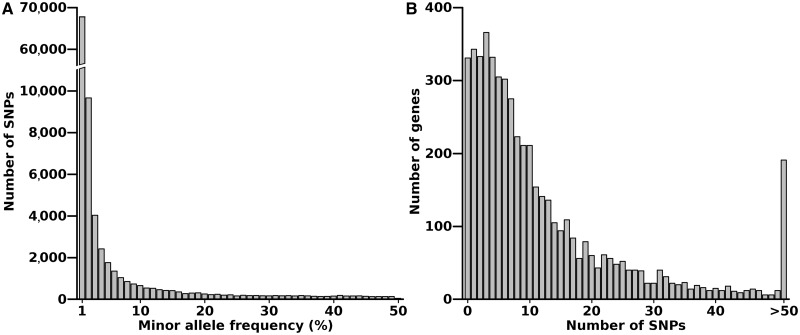
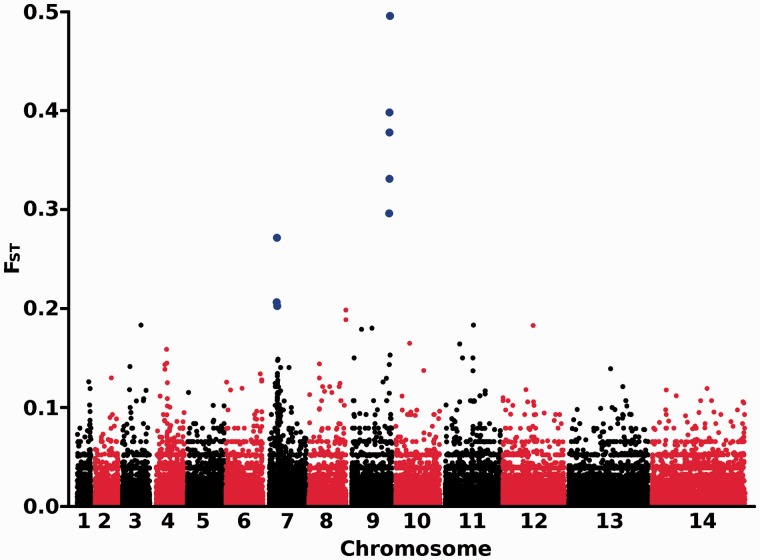
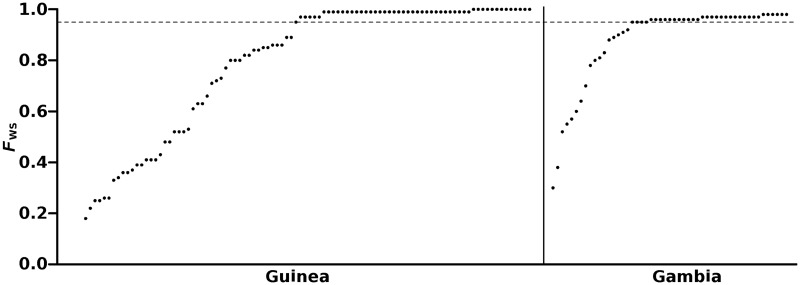
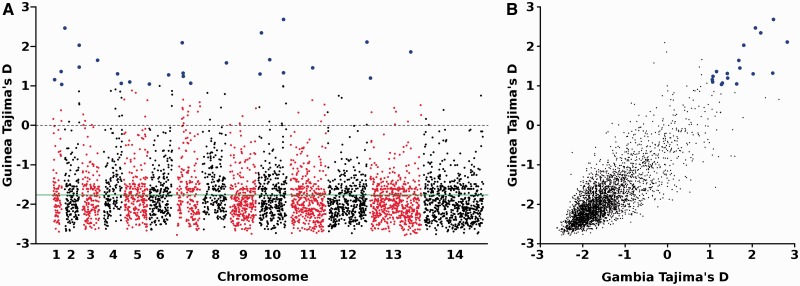
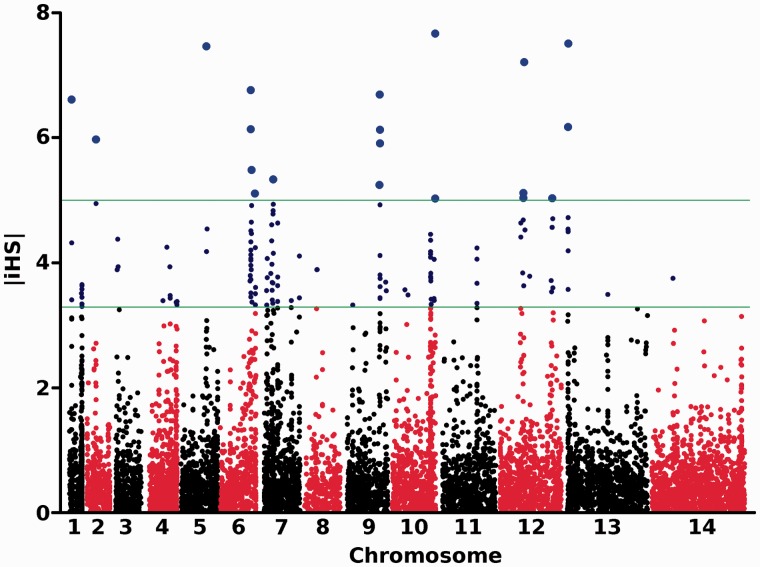
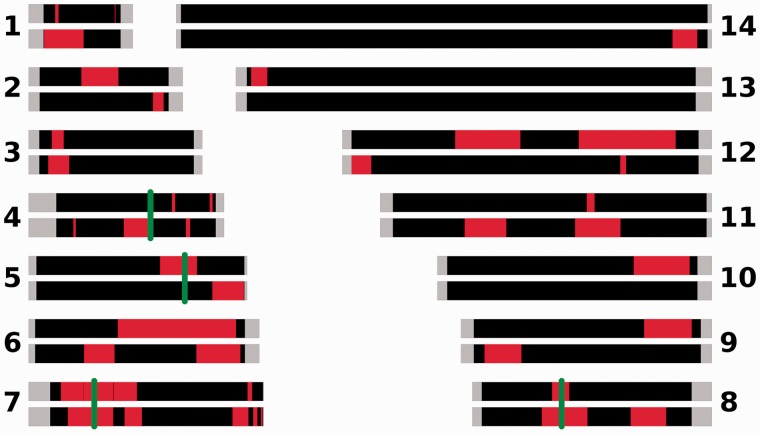
Locally varying selection on pathogens may be due to differences in drug pressure, host immunity, transmission opportunities between hosts, or the intensity of between-genotype competition within hosts. Highly recombining populations of the human malaria parasite Plasmodium falciparum throughout West Africa are closely related, as gene flow is relatively unrestricted in this endemic region, but markedly varying ecology and transmission intensity should cause distinct local selective pressures. Genome-wide analysis of sequence variation was undertaken on a sample of 100 P. falciparum clinical isolates from a highly endemic region of the Republic of Guinea where transmission occurs for most of each year and compared with data from 52 clinical isolates from a previously sampled population from The Gambia, where there is relatively limited seasonal malaria transmission. Paired-end short-read sequences were mapped against the 3D7 P. falciparum reference genome sequence, and data on 136,144 single nucleotide polymorphisms (SNPs) were obtained. Within-population analyses identifying loci showing evidence of recent positive directional selection and balancing selection confirm that antimalarial drugs and host immunity have been major selective agents. Many of the signatures of recent directional selection reflected by standardized integrated haplotype scores were population specific, including differences at drug resistance loci due to historically different antimalarial use between the countries. In contrast, both populations showed a similar set of loci likely to be under balancing selection as indicated by very high Tajima's D values, including a significant overrepresentation of genes expressed at the merozoite stage that invades erythrocytes and several previously validated targets of acquired immunity. Between-population FST analysis identified exceptional differentiation of allele frequencies at a small number of loci, most markedly for five SNPs covering a 15-kb region within and flanking the gdv1 gene that regulates the early stages of gametocyte development, which is likely related to the extreme differences in mosquito vector abundance and seasonality that determine the transmission opportunities for the sexual stage of the parasite.
病原体上局部变化的选择可能归因于药物压力、宿主免疫力、宿主间传播机会或宿主体内基因型间竞争强度的差异。在整个西非,人类疟原虫恶性疟原虫高度重组的群体密切相关,因为在这个流行地区基因流动相对不受限制,但明显不同的生态和传播强度应该会导致不同的局部选择压力。对来自几内亚共和国一个高度流行地区的100株恶性疟原虫临床分离株样本进行了全基因组序列变异分析,该地区每年大部分时间都有传播,并与来自冈比亚先前采样群体的52株临床分离株的数据进行了比较,冈比亚的季节性疟疾传播相对有限。将双末端短读序列与3D7恶性疟原虫参考基因组序列进行比对,获得了136,144个单核苷酸多态性(SNP)的数据。群体内分析确定显示近期正向选择和平衡选择证据的位点,证实抗疟药物和宿主免疫力是主要的选择因子。标准化综合单倍型分数反映的许多近期正向选择特征是群体特异性的,包括由于两国历史上抗疟药物使用不同导致的耐药位点差异。相比之下,两个群体都显示出一组类似的可能处于平衡选择下的位点,如非常高的 Tajima's D 值所示,包括在侵入红细胞的裂殖子阶段表达的基因以及几个先前已验证的获得性免疫靶点的显著过度表达。群体间 FST 分析确定了少数位点等位基因频率的异常分化,最明显的是覆盖调节配子体发育早期阶段的 gdv1 基因及其侧翼一个15 kb 区域的五个 SNP,这可能与决定寄生虫有性阶段传播机会的蚊媒丰度和季节性的极端差异有关。