Department of Chemical Pathology, School of Medical Sciences, Universiti Sains Malaysia, Health Campus, 16150 Kubang Kerian, Kelantan, Malaysia.
BMC Complement Altern Med. 2014 Mar 19;14:106. doi: 10.1186/1472-6882-14-106.
The Malaysian Tualang honey (TH) is not only cytotoxic to human breast cancer cell lines but it has recently been reported to promote the anticancer activity induced by tamoxifen in MCF-7 and MDA-MB-231 cells suggesting its potential as an adjuvant for the chemotherapeutic agent. However, tamoxifen produces adverse effects that could be due to its ability to induce cellular DNA damage. Therefore, the study is undertaken to determine the possible modulation of the activity of 4-hydroxytamoxifen (OHT), an active metabolite of tamoxifen, by TH in non-cancerous epithelial cell line, MCF-10A, in comparison with MCF-7 cells.
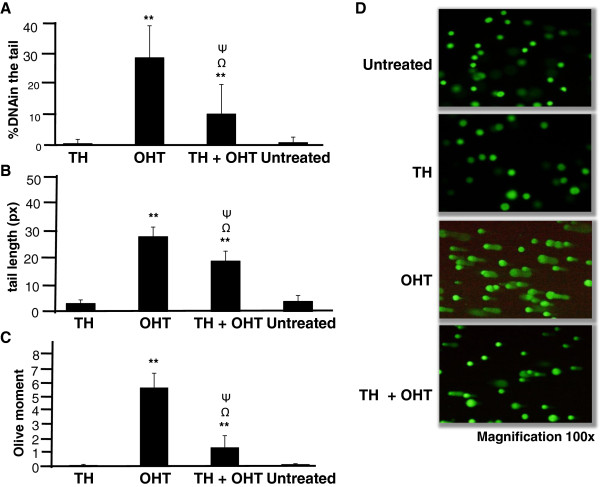
MCF-7 and MCF-10A cells were treated with TH, OHT or the combination of both and cytotoxicity and antiproliferative activity were determined using LDH and MTT assays, respectively. The effect on cellular DNA integrity was analysed by comet assay and the expression of DNA repair enzymes was determined by Western blotting.
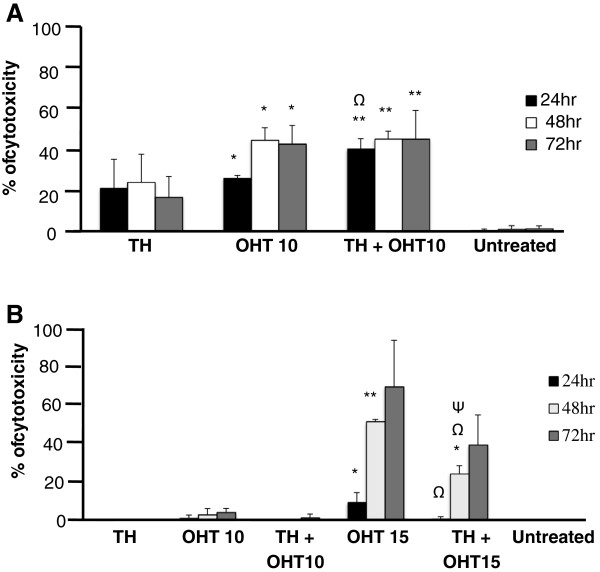
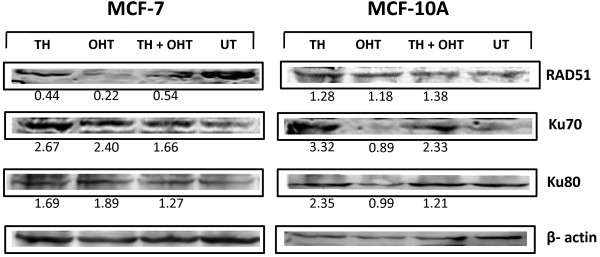
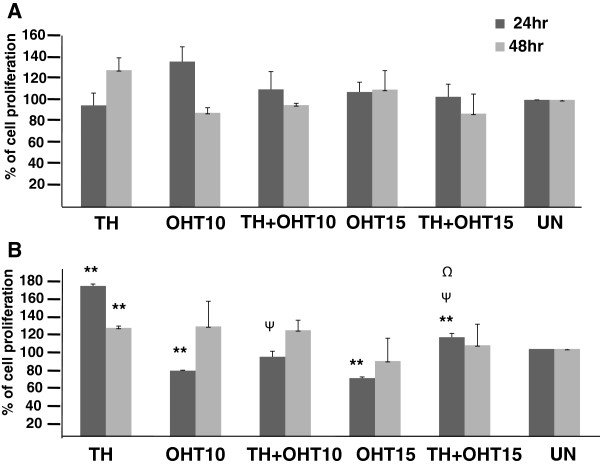
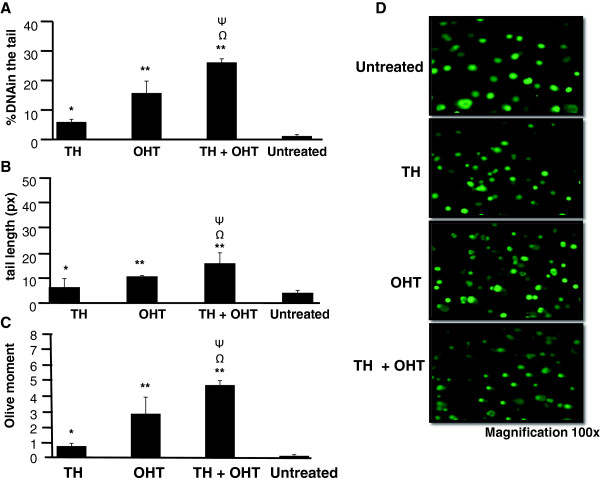
OHT exposure was cytotoxic to both cell lines whereas TH was cytotoxic to MCF-7 cells only. TH also significantly decreased the cytotoxic effect of OHT in MCF-10A but not in MCF-7 cells. TH induced proliferation of MCF10A cells but OHT caused growth inhibition that was abrogated by the concomitant treatment with TH. While TH enhanced the OHT-induced DNA damage in the cancer cells, it dampened the genotoxic effect of OHT in the non-cancerous cells. This was supported by the increased expression of DNA repair proteins, Ku70 and Ku80, in MCF-10A cells by TH.
The findings indicate that TH could afford protection of non-cancerous cells from the toxic effects of tamoxifen by increasing the efficiency of DNA repair mechanism in these cells.
马来西亚特兰蜂蜜(TH)不仅对人乳腺癌细胞系具有细胞毒性,而且最近有报道称,它能促进 MCF-7 和 MDA-MB-231 细胞中他莫昔芬的抗癌活性,这表明它有作为化疗药物佐剂的潜力。然而,他莫昔芬会产生不良反应,这可能是由于其诱导细胞 DNA 损伤的能力。因此,本研究旨在确定特兰蜂蜜(TH)是否能调节他莫昔芬的活性代谢物 4-羟基他莫昔芬(OHT)在非癌细胞系 MCF-10A 中的活性,与 MCF-7 细胞进行比较。
用 TH、OHT 或两者的混合物处理 MCF-7 和 MCF-10A 细胞,分别用 LDH 和 MTT 测定细胞毒性和抗增殖活性。彗星试验分析细胞 DNA 完整性的变化,Western blot 测定 DNA 修复酶的表达。
OHT 暴露对两种细胞系均具有细胞毒性,而 TH 仅对 MCF-7 细胞具有细胞毒性。TH 还显著降低了 OHT 在 MCF-10A 中的细胞毒性作用,但在 MCF-7 细胞中没有。TH 诱导 MCF10A 细胞增殖,但 OHT 引起生长抑制,而 TH 的同时处理则消除了这种抑制作用。TH 增强了 OHT 在癌细胞中的 DNA 损伤,而在非癌细胞中则减弱了 OHT 的遗传毒性作用。TH 增加了 MCF-10A 细胞中 DNA 修复蛋白 Ku70 和 Ku80 的表达,这为上述结论提供了支持。
这些发现表明,TH 可以通过提高这些细胞中 DNA 修复机制的效率,为非癌细胞提供保护,使其免受他莫昔芬的毒性作用。