Xu Gang, Baines Richard, Westacott Rachel, Selby Nick, Carr Susan
John Walls Renal Unit, University Hospitals of Leicester NHS Trust Leicester, Leicester, UK.
BMJ Open. 2014 Mar 20;4(3):e004388. doi: 10.1136/bmjopen-2013-004388.
To assess the impact of a quality improvement project that used a multifaceted educational intervention on how to improve clinician's knowledge, confidence and awareness of acute kidney injury (AKI).
2 large acute teaching hospitals in England, serving a combined population of over 1.5 million people.
All secondary care clinicians working in the clinical areas were targeted, with a specific focus on clinicians working in acute admission areas.
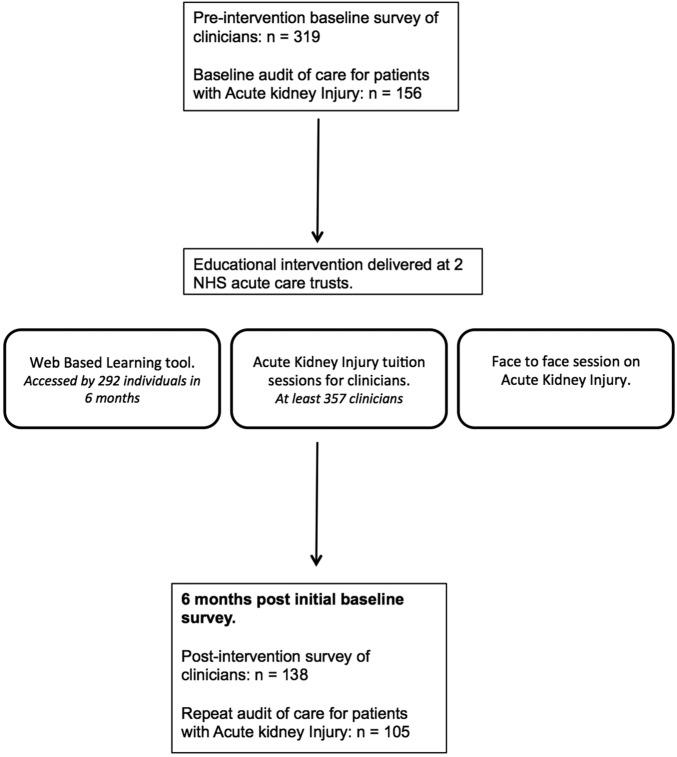
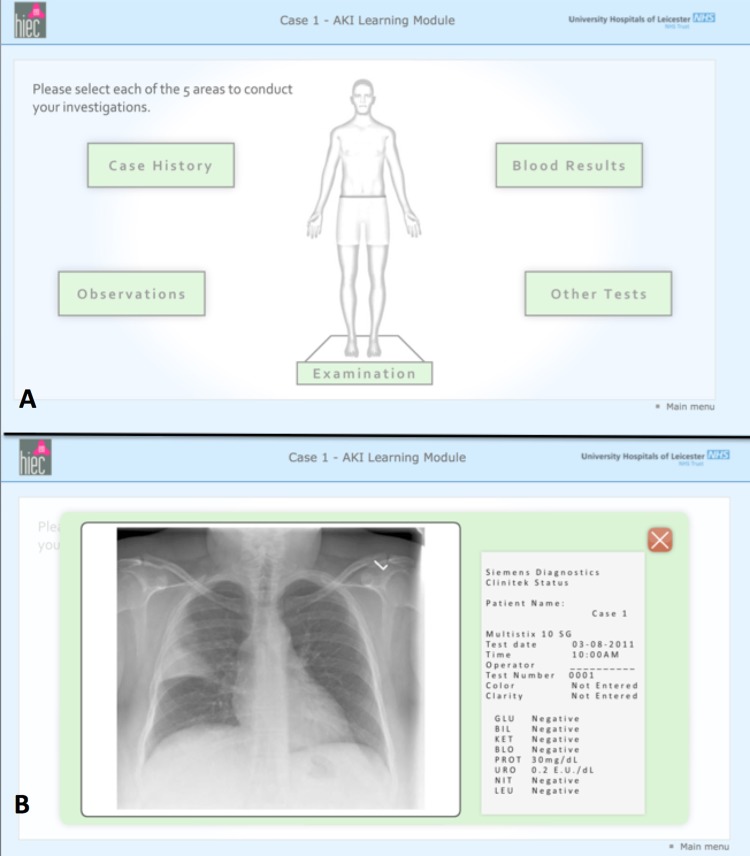
A multifaceted educational intervention consisting of traditional didactic lectures, case-based teaching in small groups and an interactive web-based learning resource.
We assessed clinicians' knowledge of AKI and their self-reported clinical behaviour using an interactive questionnaire before and after the educational intervention. Secondary outcome measures included clinical audit of patient notes before and after the intervention.
26% of clinicians reported that they were aware of local AKI guidelines in the preintervention questionnaire compared to 64% in the follow-up questionnaire (χ²=60.2, p<0.001). There was an improvement in the number of clinicians reporting satisfactory practice when diagnosing AKI, 50% vs 68% (χ²=12.1, p<0.001) and investigating patients with AKI, 48% vs 64% (χ²=9.5, p=0.002). Clinical audit makers showed a trend towards better clinical practice.
This quality improvement project utilising a multifaceted educational intervention improved awareness of AKI as demonstrated by changes in the clinician's self-reported management of patients with AKI. Elements of the project have been sustained beyond the project period, and demonstrate the power of quality improvement projects to help initiate changes in practice. Our findings are limited by confounding factors and highlight the need to carry out formal randomised studies to determine the impact of educational initiatives in the clinical setting.
评估一项使用多方面教育干预措施的质量改进项目对提高临床医生关于急性肾损伤(AKI)的知识、信心和意识的影响。
英国两家大型急性教学医院,服务总人口超过150万。
针对所有在临床区域工作的二级护理临床医生,特别关注在急性入院区域工作的临床医生。
一项多方面教育干预措施,包括传统的讲授式讲座、小组案例教学和基于网络的交互式学习资源。
在教育干预前后,我们使用交互式问卷评估临床医生对AKI的知识及其自我报告的临床行为。次要结局指标包括干预前后对患者病历的临床审核。
在干预前问卷中,26%的临床医生报告他们知晓当地AKI指南,而在随访问卷中这一比例为64%(χ²=60.2,p<0.001)。报告在诊断AKI时实践满意的临床医生数量有所增加,从50%增至68%(χ²=12.1,p<0.001),在对AKI患者进行调查方面,从48%增至64%(χ²=9.5,p=0.002)。临床审核指标显示临床实践有改善趋势。
这项使用多方面教育干预措施的质量改进项目提高了对AKI的认识,这体现在临床医生对AKI患者自我报告的管理变化上。该项目的一些要素在项目期后仍得以持续,并证明了质量改进项目有助于引发实践变革的力量。我们的研究结果受到混杂因素的限制,并强调需要开展正式的随机研究以确定教育举措在临床环境中的影响。