School of Kinesiology and Health Science, York University, 4700 Keele Street, Toronto, Ontario M3J 1P3, Canada.
Cell Commun Signal. 2014 Mar 23;12:19. doi: 10.1186/1478-811X-12-19.
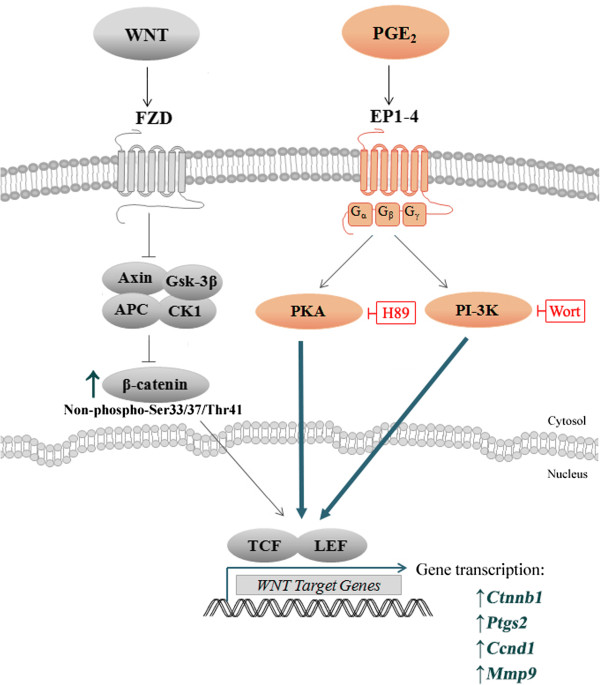
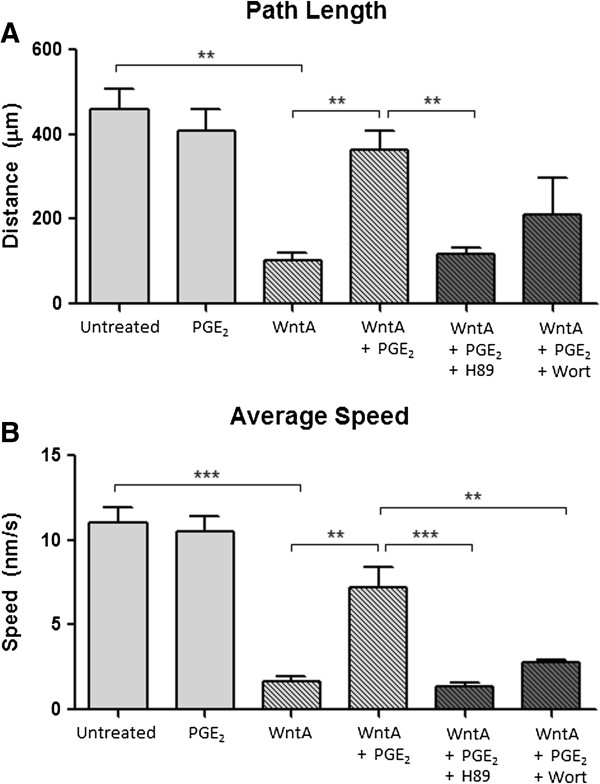
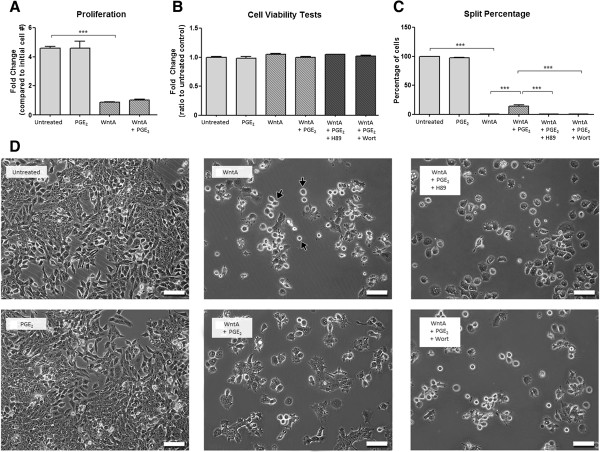
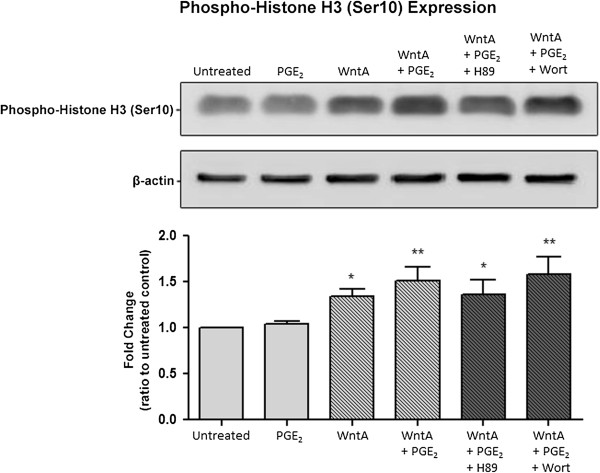
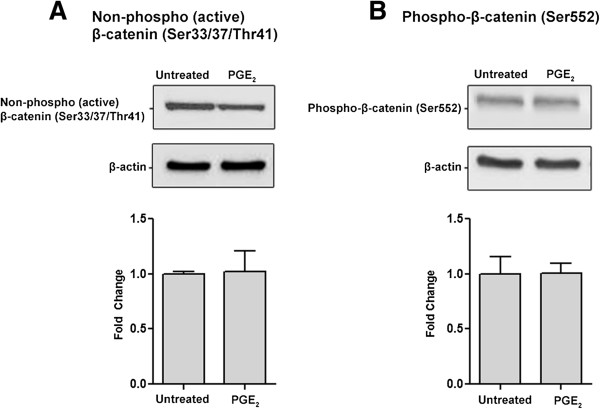
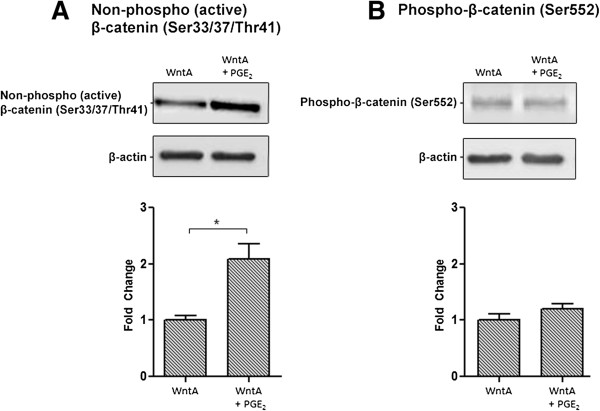
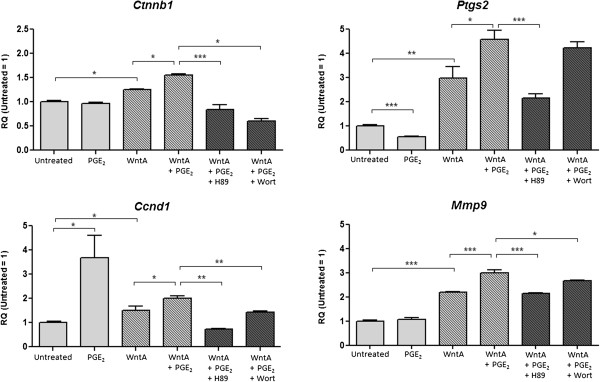
Prostaglandin E2 (PGE2) is a natural lipid-derived molecule that is involved in important physiological functions. Abnormal PGE2 signalling has been associated with pathologies of the nervous system. Previous studies provide evidence for the interaction of PGE2 and canonical Wnt signalling pathways in non-neuronal cells. Since the Wnt pathway is crucial in the development and organization of the brain, the main goal of this study is to determine whether collaboration between these pathways exists in neuronal cell types. We report that PGE2 interacts with canonical Wnt signalling through PKA and PI-3K in neuroectodermal (NE-4C) stem cells. We used time-lapse microscopy to determine that PGE2 increases the final distance from origin, path length travelled, and the average speed of migration in Wnt-activated cells. Furthermore, PGE2 alters distinct cellular phenotypes that are characteristic of Wnt-induced NE-4C cells, which corresponds to the modified splitting behaviour of the cells. We also found that in Wnt-induced cells the level of β-catenin protein was increased and the expression levels of Wnt-target genes (Ctnnb1, Ptgs2, Ccnd1, Mmp9) was significantly upregulated in response to PGE2 treatment. This confirms that PGE2 activated the canonical Wnt signalling pathway. Furthermore, the upregulated genes have been previously associated with ASD. Our findings show, for the first time, evidence for cross-talk between PGE2 and Wnt signalling in neuronal cells, where PKA and PI-3K might act as mediators between the two pathways. Given the importance of PGE2 and Wnt signalling in prenatal development of the nervous system, our study provides insight into how interaction between these two pathways may influence neurodevelopment.
前列腺素 E2(PGE2)是一种天然的脂质衍生分子,参与重要的生理功能。异常的 PGE2 信号与神经系统疾病有关。先前的研究为 PGE2 与经典 Wnt 信号通路在非神经元细胞中的相互作用提供了证据。由于 Wnt 途径在大脑的发育和组织中至关重要,本研究的主要目标是确定这些途径是否存在于神经元细胞类型中。我们报告 PGE2 通过神经外胚层(NE-4C)干细胞中的 PKA 和 PI-3K 与经典 Wnt 信号通路相互作用。我们使用延时显微镜确定 PGE2 增加了 Wnt 激活细胞的最终起始距离、行进路径长度和平均迁移速度。此外,PGE2 改变了 Wnt 诱导的 NE-4C 细胞的独特细胞表型,这与细胞分裂行为的改变相对应。我们还发现,在 Wnt 诱导的细胞中,β-连环蛋白蛋白水平增加,并且 PGE2 处理后 Wnt 靶基因(Ctnnb1、Ptgs2、Ccnd1、Mmp9)的表达水平显著上调。这证实了 PGE2 激活了经典 Wnt 信号通路。此外,上调的基因以前与 ASD 有关。我们的研究结果首次表明,在神经元细胞中 PGE2 和 Wnt 信号之间存在串扰,PKA 和 PI-3K 可能作为两种途径之间的介质。鉴于 PGE2 和 Wnt 信号在神经系统的产前发育中的重要性,我们的研究提供了关于这两种途径之间的相互作用如何影响神经发育的见解。