Subudhi Andrew W, Bourdillon Nicolas, Bucher Jenna, Davis Christopher, Elliott Jonathan E, Eutermoster Morgan, Evero Oghenero, Fan Jui-Lin, Jameson-Van Houten Sonja, Julian Colleen G, Kark Jonathan, Kark Sherri, Kayser Bengt, Kern Julia P, Kim See Eun, Lathan Corinna, Laurie Steven S, Lovering Andrew T, Paterson Ryan, Polaner David M, Ryan Benjamin J, Spira James L, Tsao Jack W, Wachsmuth Nadine B, Roach Robert C
Altitude Research Center, Department of Emergency Medicine, University of Colorado Anschutz Medical Campus, Aurora, Colorado, United States of America; Department of Biology, University of Colorado Colorado Springs, Colorado Springs, Colorado, United States of America.
Institute of Sports Sciences and Department of Physiology, Faculty of Biology and Medicine, University of Lausanne, Lausanne, Switzerland.
PLoS One. 2014 Mar 21;9(3):e92191. doi: 10.1371/journal.pone.0092191. eCollection 2014.
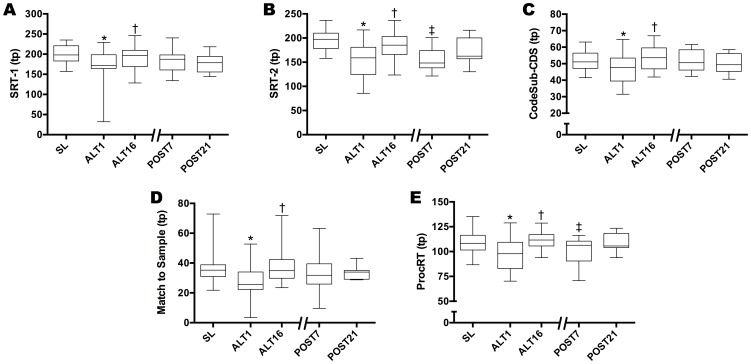
An understanding of human responses to hypoxia is important for the health of millions of people worldwide who visit, live, or work in the hypoxic environment encountered at high altitudes. In spite of dozens of studies over the last 100 years, the basic mechanisms controlling acclimatization to hypoxia remain largely unknown. The AltitudeOmics project aimed to bridge this gap. Our goals were 1) to describe a phenotype for successful acclimatization and assess its retention and 2) use these findings as a foundation for companion mechanistic studies. Our approach was to characterize acclimatization by measuring changes in arterial oxygenation and hemoglobin concentration [Hb], acute mountain sickness (AMS), cognitive function, and exercise performance in 21 subjects as they acclimatized to 5260 m over 16 days. We then focused on the retention of acclimatization by having subjects reascend to 5260 m after either 7 (n = 14) or 21 (n = 7) days at 1525 m. At 16 days at 5260 m we observed: 1) increases in arterial oxygenation and [Hb] (compared to acute hypoxia: PaO2 rose 9±4 mmHg to 45±4 while PaCO2 dropped a further 6±3 mmHg to 21±3, and [Hb] rose 1.8±0.7 g/dL to 16±2 g/dL; 2) no AMS; 3) improved cognitive function; and 4) improved exercise performance by 8±8% (all changes p<0.01). Upon reascent, we observed retention of arterial oxygenation but not [Hb], protection from AMS, retention of exercise performance, less retention of cognitive function; and noted that some of these effects lasted for 21 days. Taken together, these findings reveal new information about retention of acclimatization, and can be used as a physiological foundation to explore the molecular mechanisms of acclimatization and its retention.
了解人类对缺氧的反应对于全球数百万前往高海拔缺氧环境旅行、生活或工作的人的健康至关重要。尽管在过去100年里进行了数十项研究,但控制对缺氧适应的基本机制在很大程度上仍然未知。“高原组学”项目旨在填补这一空白。我们的目标是:1)描述成功适应的表型并评估其持续性;2)将这些发现作为后续机制研究的基础。我们的方法是通过测量21名受试者在16天内适应5260米海拔过程中动脉氧合、血红蛋白浓度[Hb]、急性高山病(AMS)、认知功能和运动表现的变化来表征适应过程。然后,我们通过让受试者在1525米海拔停留7天(n = 14)或21天(n = 7)后再次升至5260米,来关注适应的持续性。在5260米海拔停留16天时,我们观察到:1)动脉氧合和[Hb]增加(与急性缺氧相比:PaO2从9±4 mmHg升至45±4,而PaCO2进一步下降6±3 mmHg至21±3,[Hb]从1.8±0.7 g/dL升至16±2 g/dL);2)无急性高山病;3)认知功能改善;4)运动表现提高8±8%(所有变化p<0.01)。再次上升时,我们观察到动脉氧合得以保持,但[Hb]未保持,对急性高山病有保护作用,运动表现得以保持,认知功能保持较少;并注意到其中一些影响持续了21天。综上所述,这些发现揭示了关于适应持续性的新信息,并可作为探索适应及其持续性分子机制的生理学基础。