State Key Laboratory of Oral Diseases, West China Hospital of Stomatology, Sichuan University, Chengdu, China.
PLoS One. 2014 Mar 21;9(3):e91867. doi: 10.1371/journal.pone.0091867. eCollection 2014.
Human beta-defensin-1 (hBD-1) has recently been considered as a candidate tumor suppressor in renal and prostate cancer. The aim of this study was to investigate the role of hBD-1 in the progression of oral squamous cell carcinoma (OSCC) and its potential as diagnostic/prognostic biomarker and therapeutic target for OSCC.
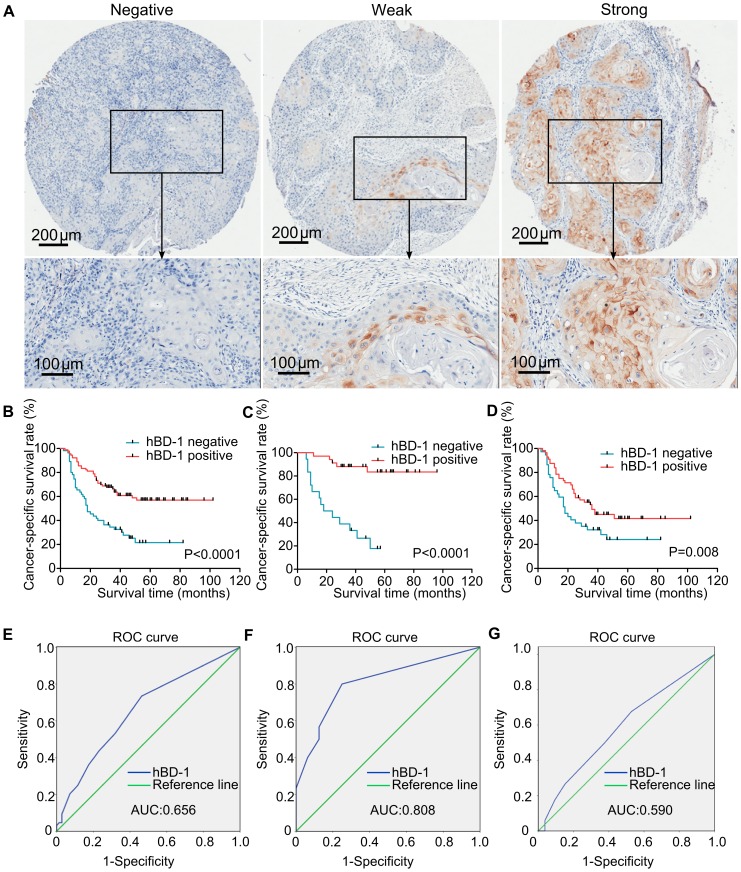
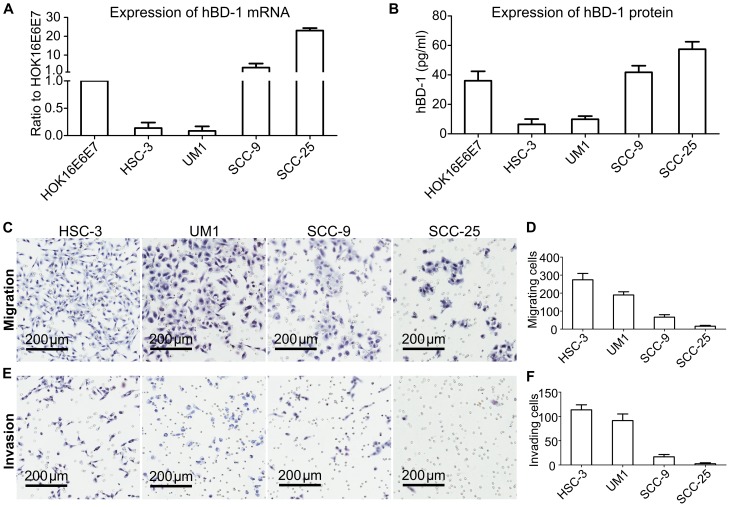
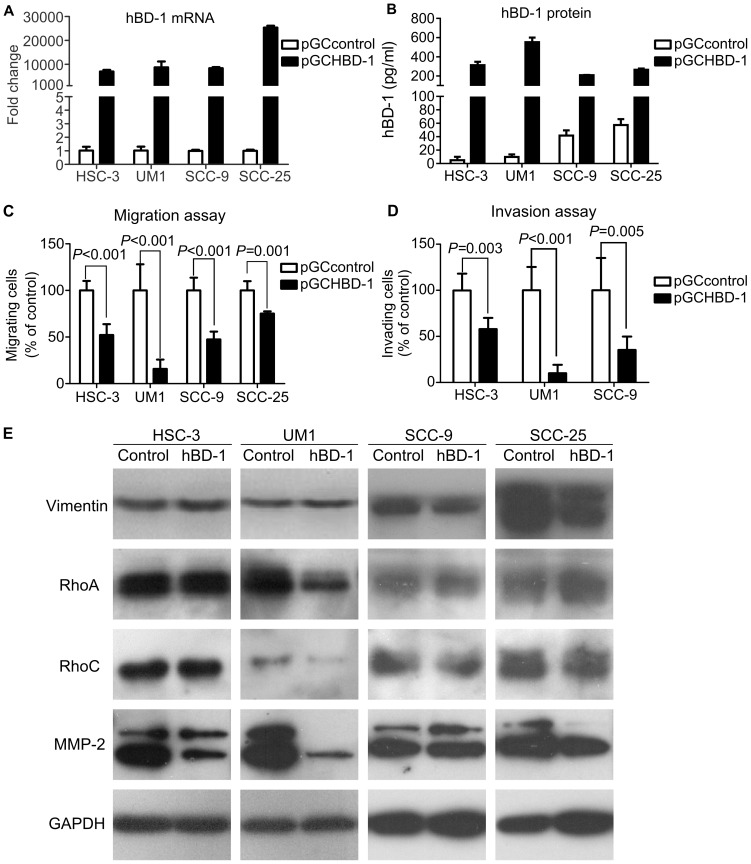
HBD-1 expression in tissues at different stages of oral carcinogenesis, as well as OSCC cell lines was examined. HBD-1 was overexpressed in HSC-3, UM1, SCC-9 and SCC-25 cells and subjected to cell growth, apoptosis, migration and invasion assays. Tissue microarray constructed with tissues from 175 patients was used to examine clinicopathological significance of hBD-1 expression in OSCC.
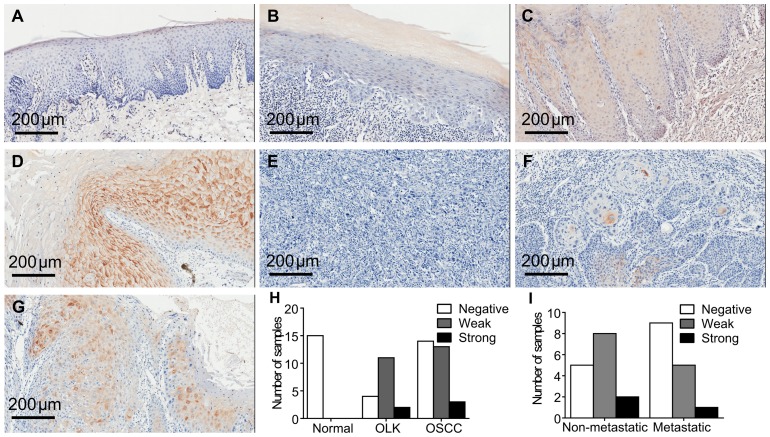
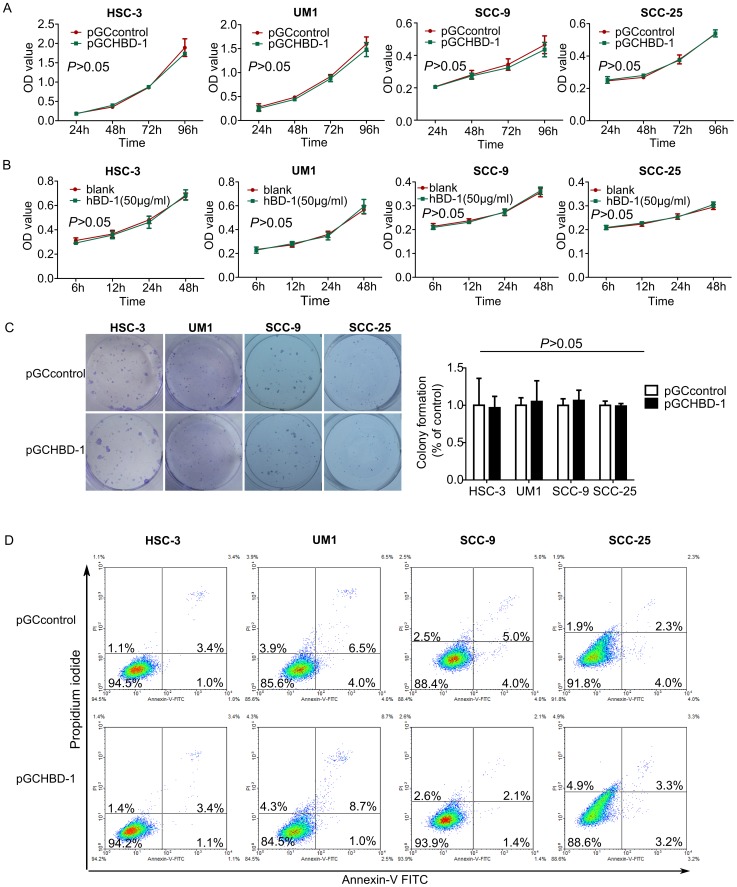
HBD-1 expression decreased from oral precancerous lesions to OSCC and was lower in OSCC with lymph node metastasis than those without metastasis. In vitro, the expression of hBD-1 was related to the invasive potential of OSCC cell lines. Induction of exogenous expression of hBD-1 inhibited migration and invasion of OSCC cells, probably by regulation of RhoA, RhoC and MMP-2; but had no significant effect on proliferation or apoptosis. In a cohort of patients with primary OSCC, cases with no expression of hBD-1 had more chance to be involved in lymph node metastasis. Eventually, the positive expression of hBD-1 was associated with longer survival of patients with OSCC, and multivariate analysis and ROC curve analysis confirmed hBD-1 positivity to be an independent prognostic factor of OSCC, especially OSCC at early stage.
Overall, these data indicated that hBD-1 suppressed tumor migration and invasion of OSCC and was likely to be a prognostic biomarker and a potential target for treatment of OSCC.
人β防御素-1(hBD-1)最近被认为是肾和前列腺癌的候选肿瘤抑制因子。本研究旨在探讨 hBD-1 在口腔鳞状细胞癌(OSCC)进展中的作用及其作为 OSCC 诊断/预后生物标志物和治疗靶点的潜力。
检测不同口腔癌变阶段组织以及 OSCC 细胞系中的 hBD-1 表达。在 HSC-3、UM1、SCC-9 和 SCC-25 细胞中转染 hBD-1 过表达载体,并进行细胞生长、凋亡、迁移和侵袭实验。使用包含 175 例患者组织的组织微阵列检测 hBD-1 在 OSCC 中的表达与临床病理特征的关系。
hBD-1 表达从口腔癌前病变到 OSCC 逐渐降低,并且有淋巴结转移的 OSCC 组织中表达低于无淋巴结转移的 OSCC 组织。体外,hBD-1 的表达与 OSCC 细胞系的侵袭潜能相关。诱导外源性 hBD-1 表达抑制 OSCC 细胞的迁移和侵袭,可能是通过调节 RhoA、RhoC 和 MMP-2 实现的;但对增殖或凋亡没有显著影响。在一组原发性 OSCC 患者中,hBD-1 无表达的病例更有可能发生淋巴结转移。最终,hBD-1 的阳性表达与 OSCC 患者的生存时间延长相关,多因素分析和 ROC 曲线分析证实 hBD-1 阳性是 OSCC 的独立预后因素,尤其是早期 OSCC。
总体而言,这些数据表明 hBD-1 抑制 OSCC 的肿瘤迁移和侵袭,可能是 OSCC 的预后生物标志物和潜在治疗靶点。